Tracking and reaching for sensory balls in a shallow water tray during tummy time (0–12 months)
Sensory Play
Communication and Language
Tummy Time
The adult sits on the mat beside the baby and keeps the shallow tray steady on the towel. Two large sensory balls drift on the warm water, and the mirror behind the tray catches the light as the surface ripples. The baby lifts their head and fixes on the bumpy ball; the adult says, “bumpy… splash,” then goes quiet. The baby reaches, pats the water once, and pauses to watch the rings spread until they touch the second ball.
This tummy time invitation uses a shallow tray of water with a small selection of sensory balls for babies to watch, reach towards, and explore with their hands. The water adds gentle movement and sound, which can hold attention and change how objects travel. A mirror placed behind the tray can offer an extra visual focus that may support babies to lift and turn their head while they explore.
Step-by-Step Guidance
1. Prepare the space on the floor with a towel or waterproof mat, leaving enough room for the baby to lie comfortably on their tummy with their arms free.
2. Place the shallow tray on the mat and add a small amount of warm water so the base is covered but the tray remains shallow.
3. Choose a small set of sensory balls with clear differences in size and texture, and place them into the water with space between them.
4. Position a baby-safe mirror behind the tray at a slight angle so the baby can see reflections while looking towards the water.
5. Place the baby on their tummy facing the tray, close enough to see the balls clearly but far enough that their face cannot dip into the water.
6. Let the baby look first. If they pause, gently move one ball a short distance to create a slow ripple, then stop and wait.
7. Follow the baby’s focus. If they reach, allow time for effort before adjusting the tray position slightly to keep it within comfortable reach.
8. Use simple, descriptive language as the baby explores: name the ball, the movement, and the sound of the water.
9. Offer short breaks by rolling the baby onto their side or back if they show signs of fatigue, then return to tummy time if they are settled.
10. End by lifting the tray away, drying the baby’s hands and arms, and wiping the area so the floor is not slippery.
Learning Objectives
Physical Development: babies may practise lifting their head and chest, shifting weight through their arms, and reaching with increasing control during tummy time. Communication and Language: babies may show attention by tracking movement, pausing, and responding to the adult’s voice as the adult names what is happening. The activity also offers early opportunities to notice cause and effect as balls move differently on water.
Adult Role
Stay close and at the baby’s level so you can respond quickly and keep the water tray safely out of face range. Tune in to cues of comfort and fatigue, offering pauses and repositioning without pushing for longer tummy time than the baby can manage. Model calm, simple language that matches what the baby is doing, such as “ball moving”, “splash”, “you’re reaching”, and leave space for the baby to look and try. Step back when the baby is focused and repeating actions, and scaffold only when needed by slightly adjusting the tray, moving one ball briefly, or changing the baby’s position for better support. Observe how the baby tracks, props, and reaches over time, and use what you notice to choose ball size, tray distance, and session length next time.
Observation Cues
Does the baby track a ball with their eyes from side to side or up and down?; Does the baby prop on forearms or hands for longer before resting?; Do they reach with one hand, then the other, or use both hands together?; Do they swipe, pat, grasp, or mouth a ball, and do they repeat a movement that makes the water ripple?; Do they turn towards the mirror image or shift their head position to look again?
Time & Space
5–15 minutes, depending on the baby’s comfort with tummy time.
A clear floor space for tummy time with room for an adult to sit close, plus a stable area for a shallow tray and a mirror behind it.
Materials
Safety
Age adaptations
Budding Adventurers
Use a shallow water tray on a low table or on the floor with kneeling space, and include balls that behave differently (floating, sinking, slow-rolling). Keep the mirror behind as a prompt for noticing, and add a simple boundary such as a taped rectangle for where the tray sits so the child can help return it if it shifts. The adult narrates cause and effect in short phrases and pauses to let the child test their own ideas.
Curious Investigators
Provide a larger water tray with a small set of textured balls and space for the child to arrange them. Keep the mirror behind the tray and add a second mirror to the side if available so the child can notice reflections from different angles. The adult supports language for describing movement and texture, and steps back while the child repeats pushes, rolls, and gentle splashes to see what changes.
Confident Discoverers
Set up a wide, shallow water tray with a curated set of balls that vary by size, texture, and how they move in water. Place the mirror behind the tray and offer a cloth for drying so the child can manage their own comfort and continue exploring. The adult uses brief prompts that invite prediction, such as “What do you think will happen if you push it slowly?”, then observes and reflects back what the child notices.
EYFS Links
Physical Development: tummy time with reaching and propping offers repeated chances for babies to practise head control, shoulder strength, and coordinated arm movements in a meaningful context. Communication and Language: the adult’s calm, responsive commentary supports attention and early understanding as babies link words to what they see and feel. The changing movement of balls on water also offers early experiences of cause and effect, which connects to Understanding the World through noticing how materials behave.
Ethos adaptations

Place a small tray on a defined mat area with only two large, contrasting sensory balls and a very shallow layer of water, keeping everything within the baby’s comfortable reach line. Position the mirror securely behind the tray at a slight angle, and place a folded drying cloth at the edge of the mat so the adult can dry hands without moving the tray; remove extra props so the visual field stays simple.
The adult chooses one consistent starting position (baby settled, tray steady, adult hands in lap) and gives one slow, silent demonstration by nudging a ball once, then stopping. The adult decides to keep language minimal and consistent, using a few repeated words that match the baby’s actions and avoiding questions or extra prompts. The adult watches for concentration, repetition, and small adjustments in reach and grip, and responds with only necessary changes: re-centring the tray if it drifts, swapping the two balls to restore clear contrast, or increasing the distance if the baby wriggles closer to the water.
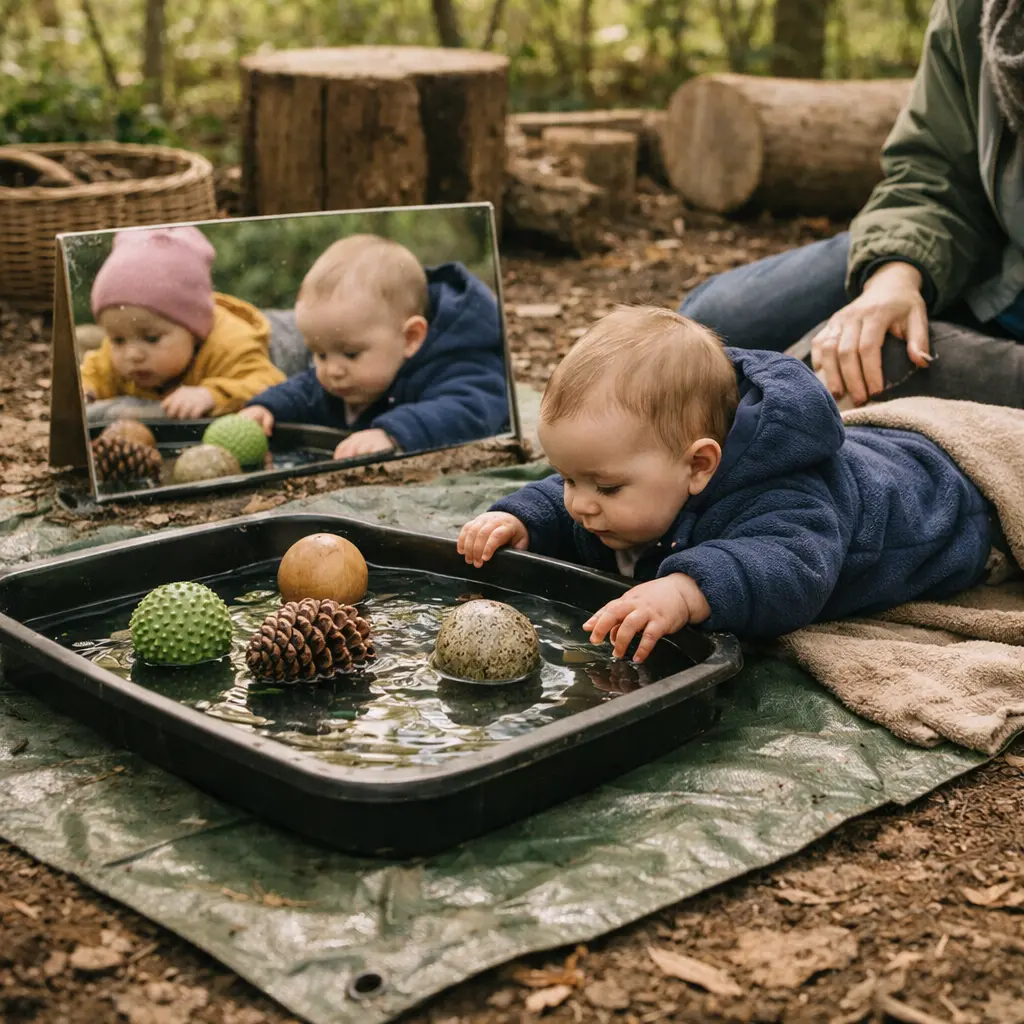
In a sheltered outdoor spot on a groundsheet, use a shallow tray with a small amount of water and add a few natural, ball-like objects that are safe and large enough to handle, such as smooth pine cones or rounded seed pods alongside one textured ball. Place a mirror safely behind the tray or use a reflective metal tray edge as a visual point, accepting that light, wind, and temperature will change how the water looks and moves.
The adult stays close for water safety and ground hazards, but allows the baby’s attention to lead, pausing rather than directing. The adult names what is happening in short phrases and notices how the baby responds to outdoor sounds and shifting reflections, adjusting position for comfort and warmth and removing any object that becomes unsafe or too tempting to mouth.

Create a low “water and reflection” area by placing the shallow tray on a dark cloth, with a large mirror fixed behind it and a second reflective surface nearby (for example, a stainless-steel tray or foil-wrapped board) so the baby can meet reflections from more than one direction. Arrange a small open basket with 3–5 balls beside the tray, leaving clear floor space around the invitation so an adult can sit close without crowding the baby’s view.
The adult decides not to demonstrate at the start and instead follows the baby’s gaze, using reflective commentary such as “I can see you watching it drift” and “You touched it and the water changed,” then waiting for the baby’s next move. The adult notices which ball the baby returns to, how long they stay with one action, and whether they shift their body to change the view in the mirror, responding by swapping the position of one material, adjusting the mirror angle slightly, or moving the basket closer for shared choosing. The adult makes a brief note or photo of a repeated action to revisit with colleagues or family, keeping the baby’s concentration as the priority.
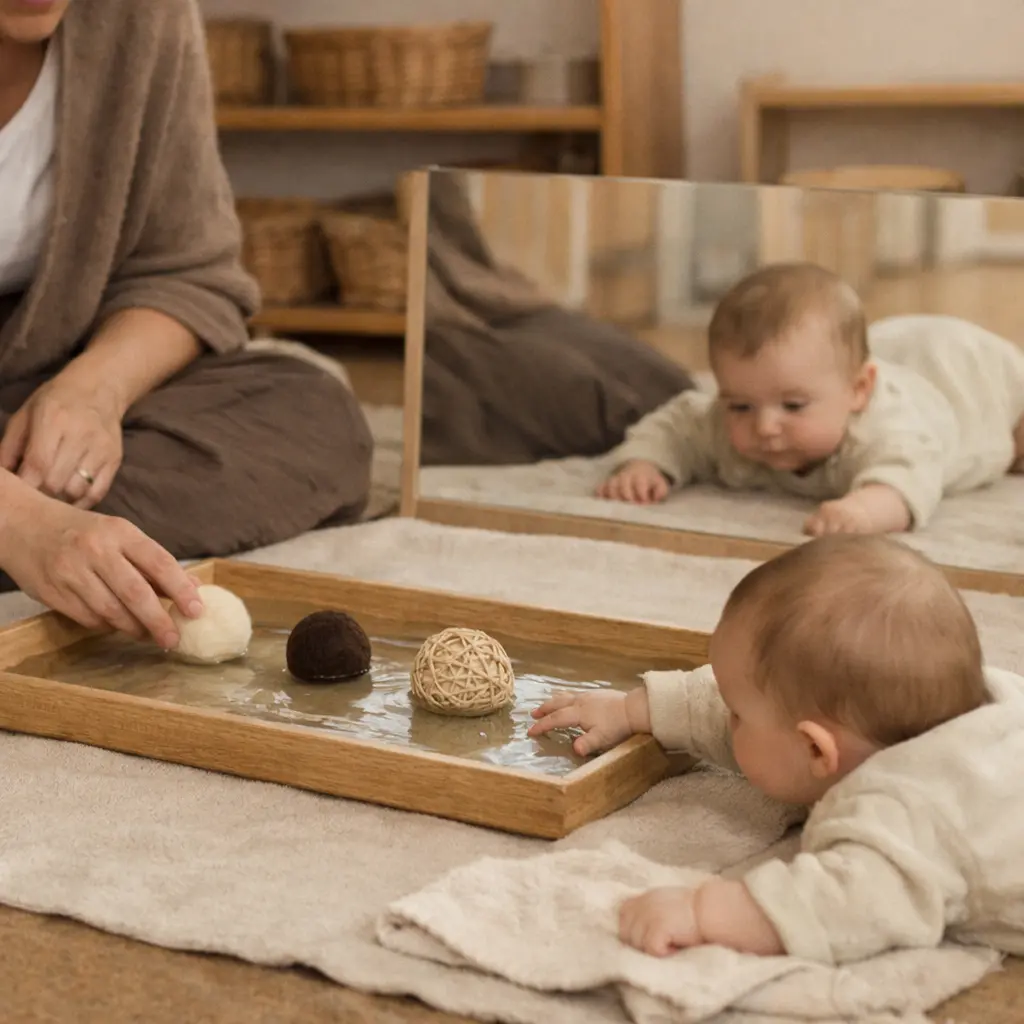
Lay a neutral cloth on the floor and place a shallow tray with warm water on top, with only two or three simple balls made from natural materials such as felted wool, plus a shatterproof mirror behind the tray. Keep the space uncluttered and quiet so the baby can notice small ripples, weight, and texture without competing sounds or bright plastic.
The adult sits close as a calm anchor and demonstrates one gentle movement of a ball through the water, then becomes still and lets the baby imitate in their own time. The adult uses minimal, steady language and watches for repeated reaching, pauses to look at the reflection, and signs of tiredness, stepping in to reposition safely or to offer a brief rest before returning.