Taking a slow summer nature walk with babies to notice light, shade, sounds and textures outdoors
Sensory Play
Communication and Language
An adult slows the pram beside a tree where the ground shifts from bright sun into shade. The baby’s eyes follow the moving leaves overhead, then the baby turns towards a sudden birdsong. The adult says, “bird… listen,” and waits. After a moment, the adult kneels and lets the baby’s fingertips brush the grass, watching for a squeeze, a pull-back, or a second reach before deciding whether to stay a little longer.
This is a slow, baby-paced walk outdoors where children can look, listen, touch and pause in a natural summer environment. It offers repeated chances to notice changes in light and shade, feel gentle textures, and hear outdoor sounds. The experience can be revisited in the same place so familiar features become meaningful. Adults support by keeping the pace calm and following what babies show interest in.
Step-by-Step Guidance
1. Choose a familiar outdoor route with natural features such as trees, grass, and patches of shade, and plan for a slow pace with frequent stops.
2. Check the ground and immediate area for hazards before placing a baby down or allowing hand contact with plants.
3. Begin the walk with the baby positioned so they can see ahead and to the sides (pram, carrier, or supported walking for older babies).
4. Pause at the first natural feature the baby notices (for example, moving leaves or dappled light). Wait quietly to see where their eyes go.
5. Offer one safe sensory experience at a time: bring the baby close to feel grass with fingertips, notice a breeze on cheeks, or listen under a tree canopy.
6. Use short, concrete language linked to what is happening: “shade”, “warm”, “leaf”, “wind”, “bird”, then pause to allow the baby to respond with gaze, movement, or sound.
7. Follow the baby’s cues for when to stay, move on, or change position. Keep transitions slow and predictable.
8. Include a brief seated or lying pause on a blanket/mat if the baby is comfortable, so they can look up at branches or sky.
9. End the walk with a calm return and a simple closing routine such as wiping hands and naming one thing the baby spent time noticing.
Learning Objectives
Children may use their senses to explore an outdoor environment, linking to Understanding the World through noticing natural features and changes. Children may practise early communication and language by turning towards sounds, sharing attention with an adult, and responding to simple words linked to what they can see and feel. Children may build physical development through supported movement, posture changes, and reaching or grasping safe natural items.
Adult Role
Stay emotionally attuned by matching the baby’s pace, noticing signs of tiredness or overstimulation, and offering closeness or a pause when needed. Model simple, specific words for what the baby is already attending to, then leave space for the baby’s response rather than filling the silence. Scaffold lightly by adjusting the baby’s position for a better view or safer reach, and step back when the baby is calmly watching or exploring. Observe in the moment for what draws attention (sound, movement, light, texture) and revisit those features without trying to move the baby on. Hold responsibility for safety by checking the ground and plants before contact, managing sun exposure, and keeping the baby within arm’s reach during any floor time.
Observation Cues
Baby turns head or stills body when a bird, breeze, or distant voices are heard.
Baby tracks moving leaves or shifting sunlight with their eyes.
Baby reaches to touch grass, bark, or a leaf and changes grip or pressure after feeling the texture.
Baby shows preference by leaning towards shade/sun, or by vocalising when the adult pauses at a chosen spot.
Baby looks back to the adult after noticing something, then looks again at the same feature (shared attention).
Baby repeats a movement such as patting grass or rubbing fingers together after touching a new surface.
Time & Space
10–30 minutes, depending on the child’s pace and comfort.
Outdoor space with natural features such as trees, grass, plants, or a small green area; suitable for a slow walk with stopping points.
Materials
Safety
Age adaptations
Budding Adventurers
Allow the child to lead the direction for parts of the walk, returning to a safe boundary when needed. Invite the child to compare what they notice in two nearby spots, such as “under the tree” and “in the sun”, using short phrases and plenty of waiting time. Offer a brief seated pause where the child can handle one found item that the adult has checked (for example, a dry leaf), then return it to the ground.
Curious Investigators
Encourage the child to slow down and notice small changes, such as different shades of green or different sounds in open space versus near bushes. Use open prompts that do not demand a correct answer, such as “What can you hear here?” and “Where is it cooler?” and follow the child’s ideas. Add a simple “same place, different day” revisit so the child can notice what has changed in summer conditions.
Confident Discoverers
Invite the child to plan a gentle route with stopping points and to explain their choices using descriptive language. Support the child to notice patterns such as where shade falls at different times, or how wind changes what they can hear and see. Offer a short moment of shared reflection at the end where the child chooses one thing to describe in detail, using sensory words.
EYFS Links
Communication and Language: Adults model simple, concrete words linked to what the baby is attending to (for example, “wind”, “leaf”, “bird”), supporting shared attention and early back-and-forth. Physical Development: Babies practise posture changes, reaching, grasping, and supported walking, with adults adjusting positioning and pacing to match the child. Understanding the World: Children notice natural features and changes in the outdoor environment, such as light and shade, movement in plants, and outdoor sounds, building familiarity through repeated visits.
Ethos adaptations

Prepare a very simple, predictable route with one or two planned stopping points and minimal extra items, so the outdoor environment stays the main focus. Use a small mat as a defined workspace for any pause, and offer one clear sensory invitation at a time (for example, fingertips on grass), then remove the item and move on when the child shows they are finished.
Demonstrate slowly once how to touch gently with two fingers, then become quiet and allow the child to repeat without prompts. Keep language minimal and factual, naming only what the child is already looking at. Observe for concentration, repetition, and self-correction such as the child adjusting pressure or withdrawing from a texture, and respond by offering time rather than more input.
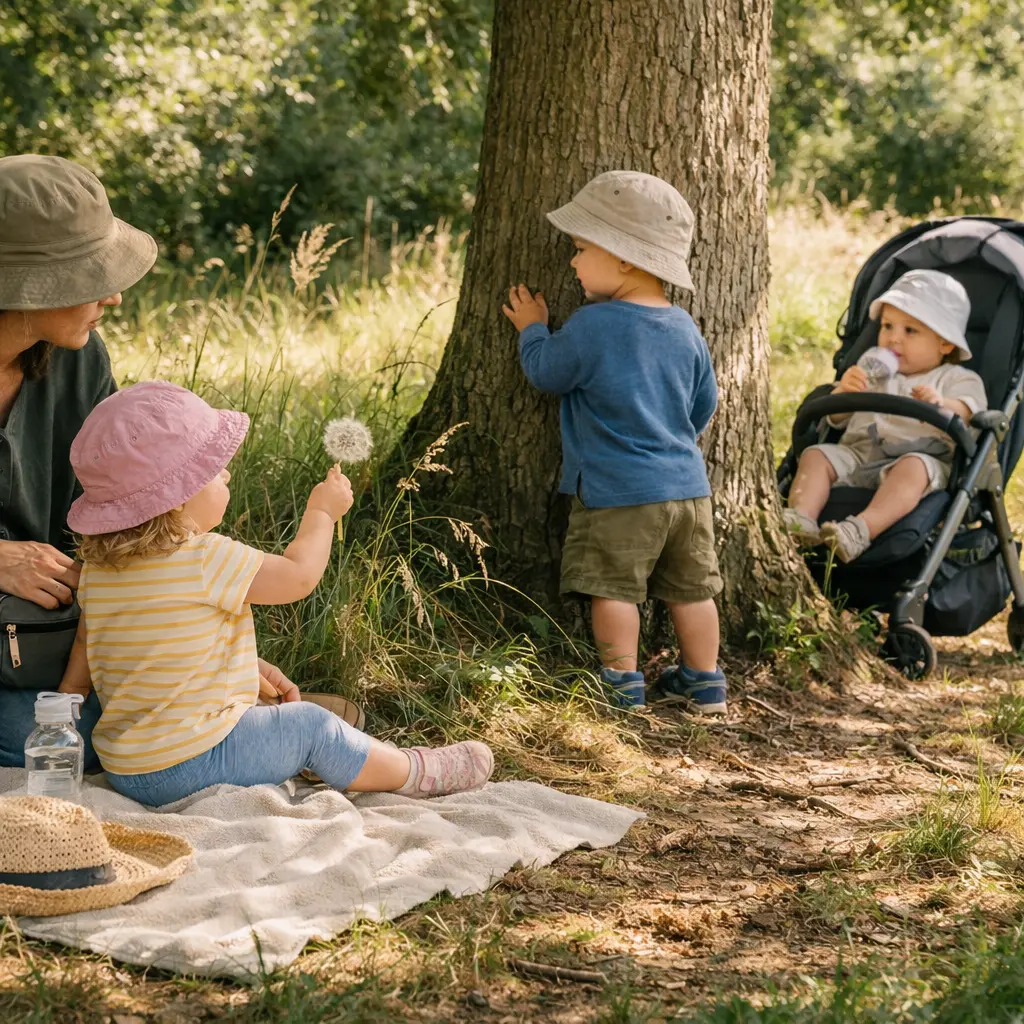
Use an outdoor green space as the main setting, including uneven ground, long grass edges, and a sheltered spot under a tree, rather than keeping to a smooth path only. Provide a small ground cloth and allow children to choose where to pause, with natural materials available as they are found (fallen leaves, grass heads, safe sticks) rather than pre-selected objects.
The adult stays close to manage risk, scanning for hazards and positioning themselves downhill or between the child and any boundary. Language stays brief and responsive, with comments like “I can hear…” or “That feels rough”, rather than directing what to notice next. The adult watches how children test footing, approach new textures, and decide when to move on, stepping in only to support safe handling or to slow the pace when excitement increases risk.

Set up the physical environment to invite stopping and revisiting: place a small mat in a chosen “listening spot” and another in a “shade spot”, and keep them in the same places across sessions. Add a simple documentation point at the edge of the route, such as a clipboard with paper and a pencil for the adult, so observations can be captured without interrupting the walk.
The adult follows the child’s focus and uses co-researcher language such as “You’re watching the leaves move” and “What changes when we stand here?” without steering towards a single answer. When children offer a theory (“It’s cooler here”), the adult tests it alongside them by moving between spots and naming what they both notice. The adult observes how children negotiate where to stop, how they communicate interest to others, and which features they return to, then uses those patterns to shape the next walk.
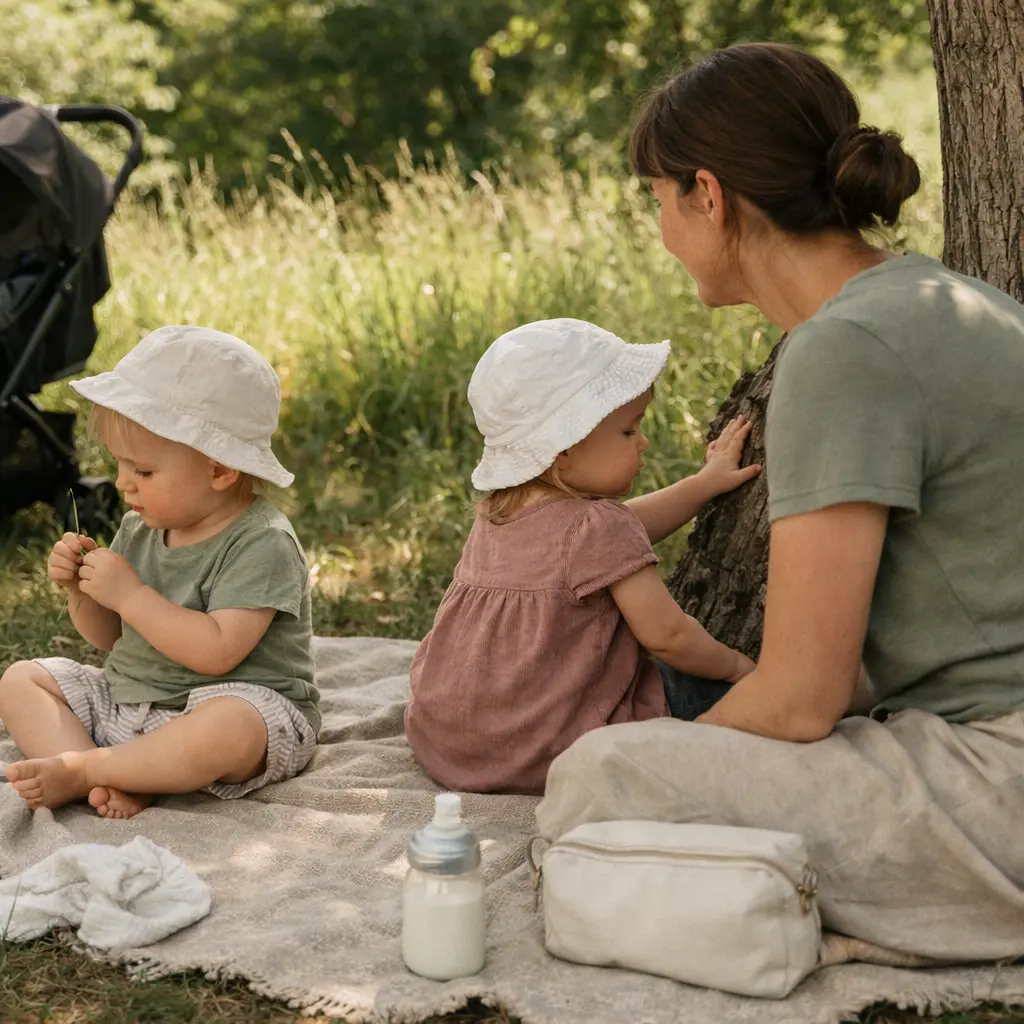
Choose a calm, uncluttered outdoor route and keep the materials minimal: a small natural-fibre blanket for pauses and weather-appropriate clothing, with no extra toys. Select quieter stopping places where natural sounds and gentle movement are easy to notice, such as under a tree canopy or beside long grass.
The adult models a slow pace and gentle touch without giving step-by-step verbal direction, staying close and steady as an anchor. Language is simple and rhythmic, naming what is present (“warm sun”, “cool shade”, “soft grass”) and then allowing silence. The adult watches for when the child settles into repeated looking or touching, and responds by extending the pause rather than adding new stimuli.