Squeezing wet sponge strips using hand-held citrus squeezers for early fine motor control
Sensory Play
An adult kneels beside a low table where a towel sits under two bowls. A child lifts a heavy, wet sponge strip from the water and holds it up, watching it drip. The adult turns the citrus squeezer so the hinge faces away and says, “Sponge in… squeeze… open,” then stays quiet. The child presses the handles with both hands and leans in to watch the water run into the empty bowl. Another child reaches for a second sponge strip and waits, eyes on the squeezer, as the first child pulls the sponge out and turns it to try again.
Children explore collecting wet foam sponge strips and using a hand-held citrus squeezer to press water out. The repeated squeeze-and-release action gives a clear cause-and-effect experience and invites children to test different amounts of pressure. Children often return to the same movement pattern, adjusting their grip and noticing what changes when the sponge is fuller or drier.
Step-by-Step Guidance
1. Prepare a low, stable water-play area with a towel or mat underneath, and place a shallow tray/bowl of water within easy reach.
2. Soak the sponge strips in the water so they are clearly wet but still easy to lift.
3. Place an empty bowl or jug next to the water tray as the “catch” container so children can see where the water goes.
4. Put one citrus squeezer on the table/tray and add a small number of sponge strips nearby to keep the choice manageable.
5. Show the action once: lift a sponge strip, place part of it into the squeezer, close the handles slowly, then open and remove the sponge. Keep the demonstration brief.
6. Invite the child to choose a sponge strip, collect it from the water, and try positioning it in the squeezer. Allow time for trial and error.
7. As children squeeze, keep the catch bowl visible so they can notice dripping or streaming water. Let them decide whether to re-soak, re-squeeze, or swap sponges.
8. If a child struggles, offer a small scaffold: hold the squeezer steady while they press, or suggest moving the sponge deeper into the squeezer, then step back again.
9. Rotate turns if needed by offering a second squeezer or setting a simple waiting point (e.g., “squeezer on the tray means it’s free”).
10. End with a clear tidy routine: sponges into a bowl, water tipped away by the adult, and hands dried together.
Learning Objectives
This activity offers repeated practice of hand strength, grip adjustment and two-handed coordination within Physical Development. It also creates natural moments for Communication and Language as children describe what they notice (wet/dry, more/less, full/empty) and ask for help or a turn. Children may begin to plan their actions, such as choosing which sponge to pick up next or how to position it in the squeezer.
Adult Role
Stay close and calm, especially around water, and notice when a child is becoming frustrated or tired so you can offer a pause or a simpler option. Model short, useful language that matches what the child can see: “wet”, “drip”, “squeeze”, “open”, “more water”, “all gone”, “try again”. Step in to stabilise the squeezer or help with positioning when the child is stuck, then step back quickly so the child keeps control of the action. Observe how the child grips, whether they swap hands, and how they solve the problem of getting the sponge to sit in the squeezer. Keep responsibility for safe use of the squeezer and for managing water on the floor to prevent slips.
Observation Cues
Does the child use one hand or two hands to operate the squeezer, and does this change over time?
Does the child adjust grip position to get more pressure or a steadier squeeze?
Does the child experiment with different sponge sizes or how much water is in the sponge before squeezing?
Do they watch the water as it drips/streams and repeat the action to recreate the effect?
Do they use words or gestures to request a turn, ask for help, or comment on wet/dry and full/empty?
Time & Space
10–25 minutes
A low table with a water-play tray, or a wipe-clean floor area with a mat underneath; access to a sink for filling and emptying water.
Materials
Safety
Age adaptations
Budding Adventurers
Offer longer sponge strips and two containers: one for soaking and one for collecting squeezed water. Add a slotted spoon so children can scoop a sponge from the water and transfer it without using fingers every time. The adult can introduce simple comparisons in the moment: “That one is very wet”, “This one feels drier”, and step back while children repeat and test their own ideas.
Curious Investigators
Provide two citrus squeezers so children can work side-by-side and negotiate turns. Offer sponge strips in two widths so children can problem-solve which fits best and how to fold or position the sponge to squeeze more water out. The adult can model language for planning and reflection: “You’re turning it”, “You’re trying it folded”, “What changed when it was wetter?”
Confident Discoverers
Add a simple challenge that stays child-led: children choose a container and try to collect water from squeezing, then decide when to re-soak or swap sponges. Offer a small jug for children to pour the collected water back into the soaking tray if they choose, keeping the cycle going. The adult can support more precise vocabulary such as “pressure”, “harder/softer squeeze”, and “almost empty” while still letting children set their own goal.
EYFS Links
Physical Development: children practise grip strength, hand control and coordination as they collect wet sponges, position them, and squeeze with controlled pressure. Communication and Language: children often comment on what they see and feel (wet/dry, drip, more/less) and use gestures or words to request help, negotiate turns, or explain what they are trying. Personal, Social and Emotional Development: children may persist through trial and error, manage frustration when the sponge slips, and practise waiting and turn-taking when equipment is shared.
Ethos adaptations

Place one citrus squeezer, one small soaking bowl, and one clear catch bowl on a tray, with three sponge strips only, laid left-to-right in a consistent order. The adult chooses a defined workspace (a small mat or the tray), positions the tray so the child can reach everything without standing, and keeps extra sponges out of sight so the child can see what belongs and can return each item to the same place. The adult adds a control of error by using a transparent catch bowl and a marked rest spot for the squeezer, and by offering sponge strips cut to a consistent width so fit and overhang are easy to judge.
The adult demonstrates the full movement once with slow, precise hands and minimal words, then sits back and avoids prompting, praising, or asking questions. The adult watches for repetition, grip changes, and self-correction such as repositioning the sponge deeper into the squeezer, swapping hands, or pausing to re-soak before trying again, and decides whether to reduce support further by not holding the tool steady. The adult intervenes only for safety at the hinge, to quietly reset the tray if items drift, or to replace a torn sponge strip, then withdraws again so the child controls the pace.
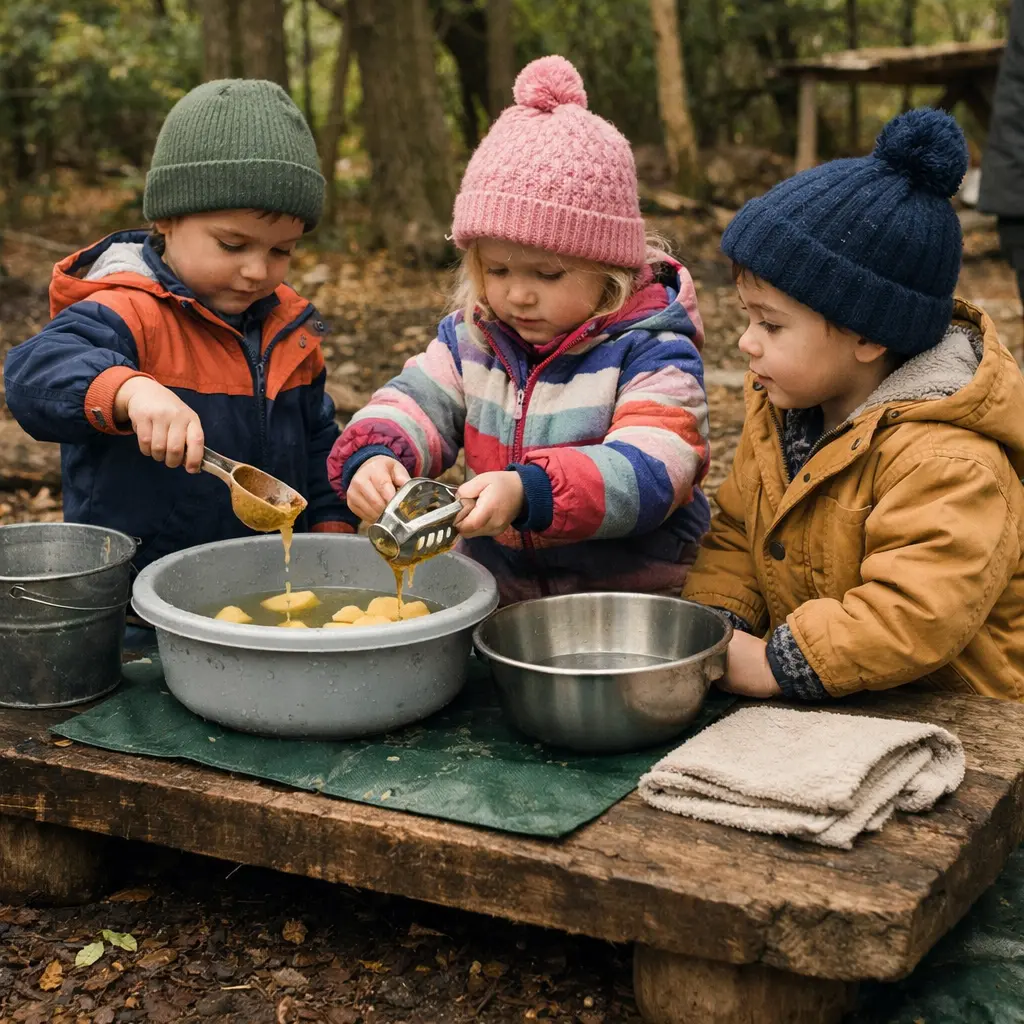
Set the activity outdoors on a firm, level surface (bench, stump table, or groundsheet) with a clear boundary for where water stays. The adult chooses a sheltered spot if wind is strong, positions the soaking tub and catch bucket so children do not need to step through wet patches, and keeps a spare dry cloth nearby for wiping hands and the tool. Materials shift to what suits the site: clean cloth strips or natural sponge, a sturdy metal citrus squeezer, and a small bucket for carrying water from a tap or water butt.
The adult makes several risk-managed decisions up front: checks the ground for slip and trip hazards, agrees a simple carrying route and a one-at-a-time rule for moving full containers, and keeps the squeezer in one visible place when not in use. The adult stays close but uses brief commentary rather than instruction, responding to children’s choices such as squeezing over different containers, testing how wet the strip needs to be, or moving to a drier patch of ground. The adult watches for children adjusting their stance on uneven ground and handling the tool with care, stepping in to pause play if the area becomes too slippery, to re-set the boundary, or to model safe tool handling once before stepping back again.
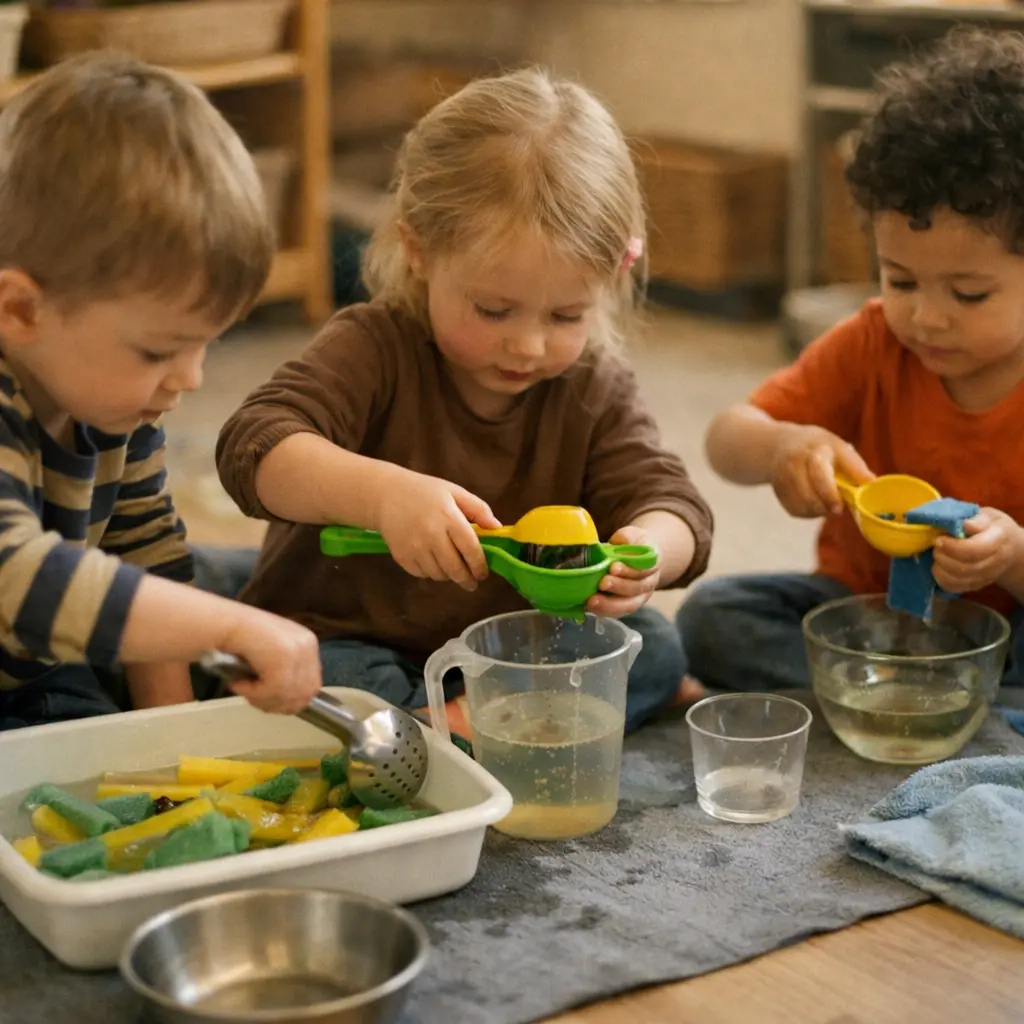
Create a water investigation area with two or three stations: a soaking tray, a squeezing station with one or two citrus squeezers, and a collection area with clear containers placed at different heights. Add open-ended tools nearby, such as a slotted spoon, small bowls, and a cloth for wiping, so children can choose how to transport and manage water. Keep materials visible and reachable so children can enter the experience from different points rather than following one set route.
The adult listens and follows children’s theories about what makes “more water” come out, using reflective language such as “You’re folding it before you squeeze” and “You’re watching the drips”. The adult documents briefly in the moment with a note or photo of a child’s chosen method, then offers it back as a prompt: “Yesterday you squeezed it flat first—do you want to try that again?” The adult responds to collaboration, noticing when children copy each other’s strategies or negotiate equipment, and supports shared problem-solving without taking over.
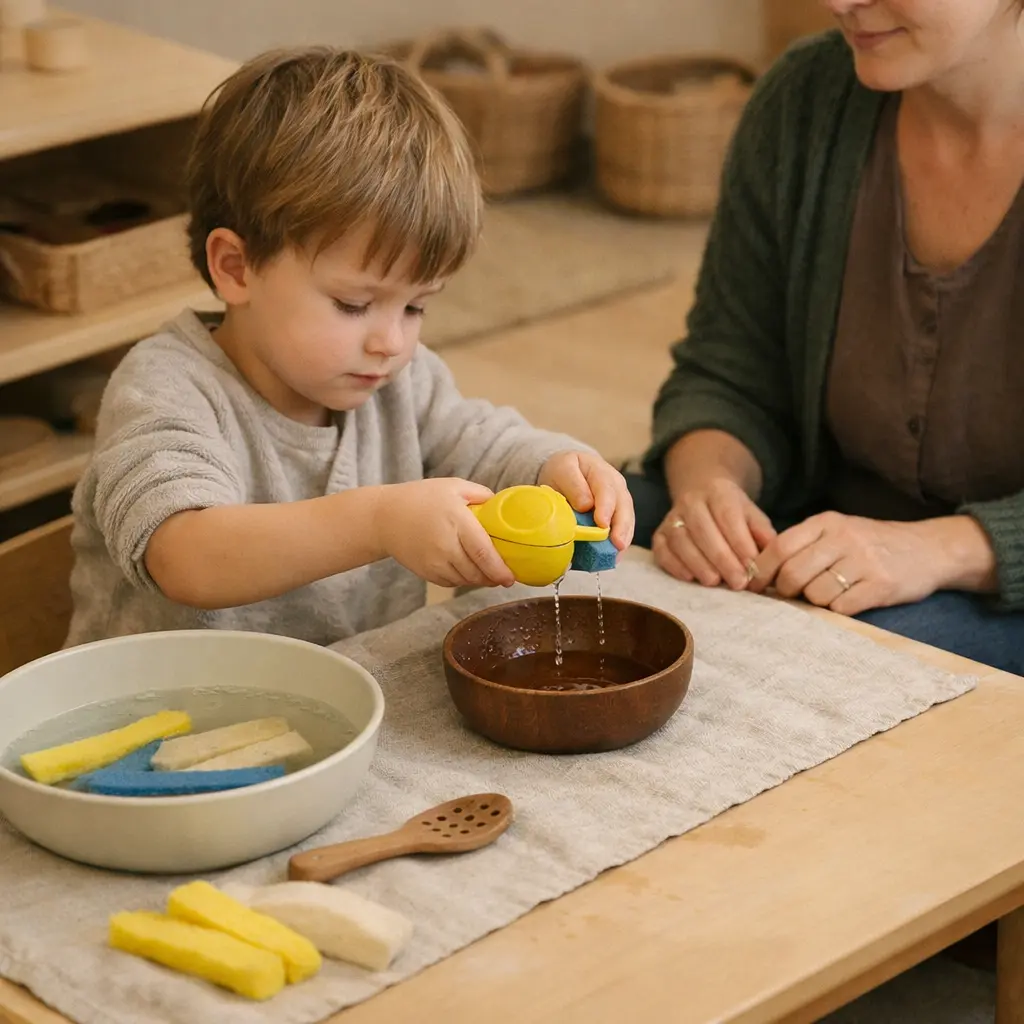
Arrange a calm water-play space with a neutral cloth under two bowls and a single citrus squeezer, keeping the surface uncluttered. Use simple, natural-looking materials where possible, such as plain cloth strips alongside the sponge strips, and limit the number offered at one time so the focus stays on the steady squeeze and release.
The adult demonstrates the movement quietly and slowly, then remains nearby with minimal language, allowing the child to repeat the action at their own pace. The adult watches for rhythm in the child’s play, such as returning to soak-squeeze-soak, and responds by modelling a slower squeeze or offering a fresh cloth when the child seems ready for a change. Intervention stays practical and safety-led, mainly around wet floors and finger placement.