Outdoor nature picnic for tummy time and sensory exploration with simple snack preparation
Sensory Play
Communication and Language
Tummy Time
Children spend time on an outdoor picnic base where babies may explore tummy time and older children may move between energetic play and calmer noticing. Natural sounds, smells and textures offer a different sensory experience from indoors, and adults can tune in to what draws attention or helps children settle. Simple shared snack routines can sit alongside collecting and examining a small number of safe natural finds.
Children spend time outdoors on a picnic-style base where they can notice different sounds, smells, textures and light. Babies can explore tummy time in a new sensory environment, with adults supporting comfort and positioning. Toddlers and older children can use the larger space to move their bodies, investigate natural finds, and take part in simple snack preparation for the trip. The experience can be repeated in the same spot to help children notice change over time.
Step-by-Step Guidance
1. Choose an outdoor spot with clear boundaries, shade options, and a surface that can take a blanket. Check for hazards such as animal mess, sharp litter, thorny plants, standing water, or heavy foot traffic.
2. Lay out the picnic base. Create a calmer baby area with extra padding and a slightly separate edge for bags and food.
3. Bring children to the base and allow time to settle. For babies, offer tummy time on the padded area, adjusting position so the chest is supported and the face stays clear.
4. Offer a small selection of safe sensory items already present outdoors (grass to touch, a leaf to hold, a smooth stone to look at) and keep items close to the base so children can return to a familiar point.
5. For toddlers and older children, open up the larger space for movement. Allow running, climbing on safe low features, and carrying items back to the picnic base.
6. Invite older children to help prepare simple snacks for the trip using pre-portioned, low-risk foods. Keep preparation close to the base so adults can supervise and children can move between exploring and helping.
7. Pause for a shared picnic moment. Support children to sit or rest on the base, notice what they can hear and smell, and eat and drink at their own pace.
8. Return to exploration. Some children may prefer repeated tummy time or sitting play; others may move out and back with natural finds.
9. Close the activity with a clear tidy-up routine. Sort natural finds back to the environment, collect rubbish, wipe hands, and transition back indoors or to the next outdoor routine.
Learning Objectives
Children may build confidence moving and resting in an outdoor environment, supporting Physical Development. They may explore sensory differences between indoor and outdoor spaces, supporting Understanding the World. Children may use gestures, sounds and words to share attention and preferences, supporting Communication and Language. Older children may practise simple self-care routines around eating together outdoors, supporting Personal, Social and Emotional Development.
Adult Role
Stay emotionally attuned by watching for signs of overstimulation, cold, heat, hunger, or tiredness, and offer a calm return to the picnic base. Model simple language that matches what children notice, such as naming sounds, textures, and body movements, and leave space for children’s own gestures and vocalisations. Scaffold only when needed: support babies with safe positioning for tummy time, and support older children with carrying, sharing space, and simple food routines; step back when children are absorbed in noticing and repeating actions. Observe in the moment by tracking what draws attention outdoors, how children move on the surface, and what helps them regulate. Hold responsibility for safety by checking the ground regularly, supervising mouthing and food, and keeping boundaries clear around where children can explore.
Observation Cues
Notices and turns towards outdoor sounds (birds, wind, distant voices) and pauses to listen.
Reaches, pats, rubs or mouths safe natural textures and shows preference or avoidance.
Shifts weight, lifts head, rolls, crawls, walks or runs differently on outdoor surfaces.
Uses pointing, eye gaze, vocalising or single words to request items or share discoveries.
Shows emerging awareness of routines (sits on the base, waits for food, brings items back to the picnic area).
Time & Space
20–45 minutes, depending on weather, travel time, and children’s regulation needs.
Outdoor space with a safe surface for a blanket and enough room for toddlers and older children to move within clear boundaries.
Materials
Safety
Age adaptations
Budding Adventurers
Offer a slightly wider exploration boundary and a simple job list linked to the picnic routine, such as carrying the water bottle, placing food containers on the blanket, or collecting leaves into a basket. Encourage noticing differences in natural finds (big/small, rough/smooth, wet/dry) without turning it into a quiz. Support turn-taking with shared items and help children return finds to the environment at the end. Keep expectations flexible so children can switch between high-energy movement and calmer base play.
Curious Investigators
Add a purposeful “nature finds” focus by offering a basket and a small sorting area on the blanket (e.g. a corner for leaves, a corner for stones). Invite children to help plan the picnic base layout, deciding where shoes, bags, and food sit to keep the space workable. Extend snack preparation with simple choices, such as selecting between two fruits or counting out pieces into a container, while maintaining hygiene routines. Observe how children negotiate space and ideas, and support with language for collaboration and boundaries.
Confident Discoverers
Offer children responsibility for parts of the routine, such as checking the blanket edges are flat, helping set a boundary marker, and leading a tidy-up sweep for litter (with adult oversight). Encourage children to compare the outdoor environment across visits, noticing changes in sound, light, or plant materials. Extend snack preparation with more steps that remain low-risk, such as peeling a banana with support or portioning items into cups. Support children to explain their choices and to include peers who prefer quieter base play.
EYFS Links
Physical Development: Babies can practise lifting and turning the head in tummy time, and older children can explore running, balancing, and changing direction on outdoor ground. Communication and Language: Adults can model simple words for what children notice (sounds, textures, movements) and support shared attention through pointing and naming. Personal, Social and Emotional Development: The picnic routine supports turn-taking, waiting, and settling together, with adults helping children regulate between energetic movement and calm base time. Understanding the World: Children can explore natural materials and notice outdoor changes in smell, sound, light, and weather, building familiarity with the local environment.
Ethos adaptations
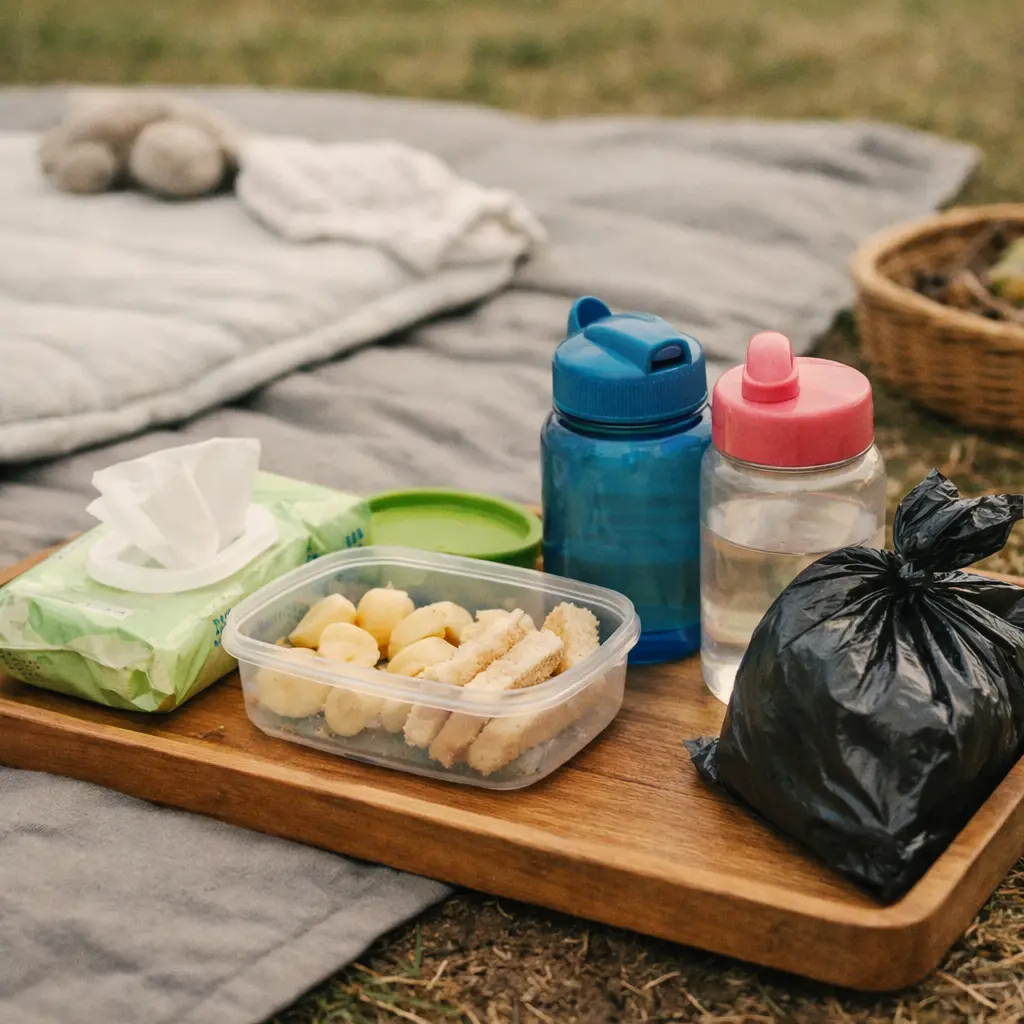
Prepare one defined base: spread the blanket with the baby mat at one corner and the finds basket at the opposite corner. Reduce to essentials: hand wipes, one child-safe food container with uniform pieces per child, one water container per child, and a rubbish bag tied to a blanket corner. Set them in a simple left-to-right order: clean → eat → drink → tidy. Place comfort items in the same spot. Use containers the child can see into so “empty” is obvious, and keep clear ground around the blanket for independent movement and return.
Give one slow, quiet demonstration at the blanket edge: clean hands, sit, open container, take one piece, close lid, sip water, place litter in the bag, return items, then step back. For babies, place on the mat, pause so they settle, then observe. Keep words for safety or care only. Watch head lifts, weight-shifts, reaching and calm breathing; for older children, notice independent hand cleaning, opening/closing, seated eating, returning waste, repeated basket trips, and steady attention to outdoor sounds and light.
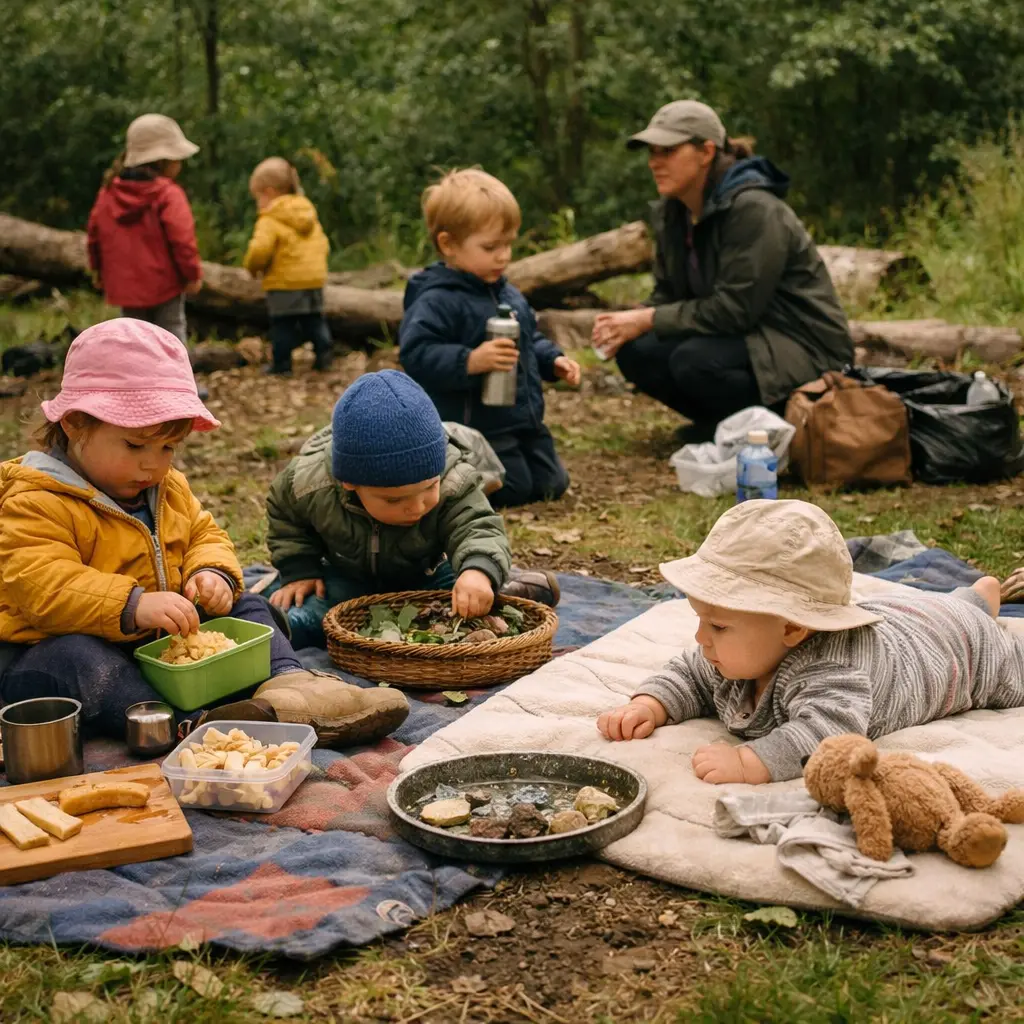
In an outdoor or nature-integrated space, the picnic base is set on grass or a sheltered patch with slight slopes and varied surfaces so babies and toddlers experience different textures and light. Materials such as a blanket, baby mat, folded towels, natural loose parts (leaves, pebbles, small sticks), a shallow water dish and stones are provided in an open-ended way rather than pre-arranged; simple snack ingredients (peeled banana pieces, soft bread strips) and child-safe containers are available for on-site preparation and sharing.
The adult observes from close by, supervising and offering minimal, responsive prompts or single-word labels, checking comfort and hygiene and intervening only for safety or to support independence. Children choose where to rest, move or gather finds, explore tummy time on the mat, and take turns preparing or serving snacks at their own pace; the adult comments briefly, models calm handling, and carries out necessary safety checks and handwashing support.

Arrange the outdoor spot as a series of invitation zones: a soft tummy-time pad on the blanket, a movement area with clear floor space, and reachable baskets of loose natural materials (leaves, smooth stones, sticks, fabric scraps) and simple snack items laid out for choice. Materials sit openly in small trays so children can take, return or combine them; nothing is pre-assembled or prescriptive. The layout invites repetition and return visits so babies practise head lifting and older children explore balance and sensory contrasts between sun, shade, grass and blanket.
The adult steps back as observer and co-researcher, using commentary like "I can see your hand reaching for the leaf" or "You’re trying to balance on the edge" and occasional open prompts such as "What happens if you put this here?" rather than instructions. The child may invent snack rituals, use natural finds as props, or move between zones at will; these choices reveal preferences, communication attempts and motor patterns. Observation cues are embedded in the flow: frequency of returns to tummy time, changes in vocalising, gripping or balancing strategies, and social sharing during snack.
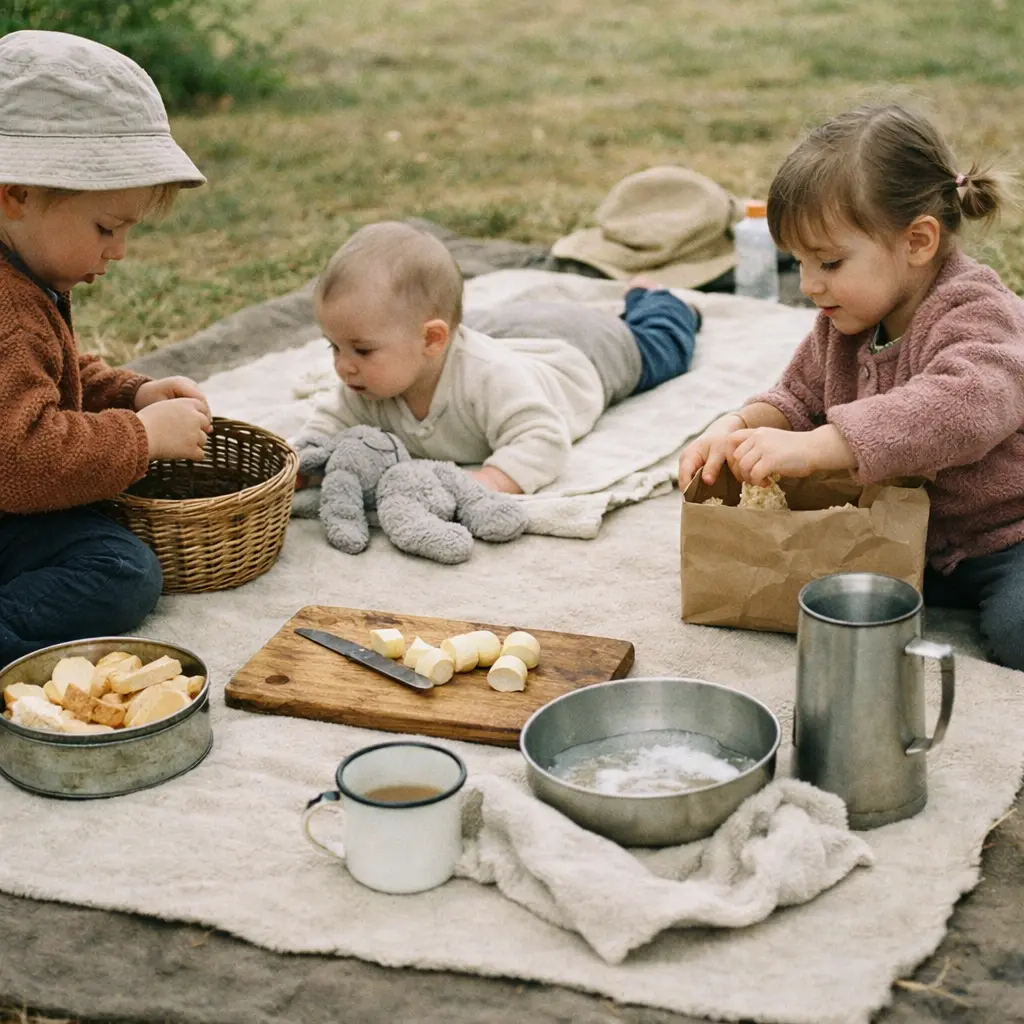
Choose a familiar patch of grass and define a calm base with an undyed wool blanket; if ground is damp, place a waxed-cotton cloth beneath. Only a few items are set out: a small wicker basket for natural finds, a wooden board with a blunt butter knife, a cotton cloth for handwashing beside a metal bowl of warm water and mild soap, enamel cups, a metal flask of water, peeled banana pieces and soft bread strips in a lidded metal tin, and a cotton muslin or wool toy for babies. Hats and sun cream remain at the edge for safety.
The adult demonstrates simple actions quietly—laying the cloth, washing hands with the bowl and cloth, tearing bread, peeling banana on the board—then sits nearby, adjusting a baby’s position for comfort when needed. Babies rest and return to tummy time, watching light and feeling the blanket; toddlers move out and back with the basket to gather leaves or small sticks, help pour and share, and place scraps in a paper bag. The flow repeats unhurriedly: settle, explore, snack, tidy, noticing small changes each visit.