Messy jelly play with mashers, spoons and plates linked to jelly on a plate song
Sensory Play
Music and movement
Communication and Language
Children handle set jelly on plates using spoons and mashers, with some choosing hands to explore wobble, squash and slide. Adults keep a calm boundary around the messy area, offer a familiar “Jelly on a Plate” song as an optional shared focus, and model short descriptive words. Practitioners watch for repeated actions, tool control, and how children manage turn-taking and sensory comfort.
Children explore the feel and movement of set jelly using simple kitchen tools and plates. The experience invites noticing changes as jelly wobbles, breaks, slides and gathers, with plenty of opportunity for repeated actions. A familiar song can sit alongside the play to support shared attention and playful rhythm without directing what children must do.
Step-by-Step Guidance
1. Prepare the space with a wipe-clean surface and a clear boundary for where jelly and tools stay. Place aprons nearby and set out a hand-wiping station.
2. Portion the set jelly into a shallow tray or bowl so it can be accessed easily. Offer plates or shallow bowls at each place, leaving some empty plates available for children who want to transfer or compare.
3. Present a small selection of tools at first (for example, spoons and one masher), keeping the rest nearby to add in response to children’s interest.
4. Invite children to approach and explore at their own pace. Allow hands-first exploration if chosen, and offer a tool by placing it within reach rather than handing it directly.
5. Introduce “Jelly on a Plate” as a shared reference point. Use it to support rhythm and attention, not to direct actions; pause the song if it becomes distracting.
6. Add or swap tools as children’s play changes (for example, introduce a ladle when children begin scooping, or add extra plates when children start transporting).
7. Support children to notice what is happening by naming observable changes (wobble, squash, slide, break, drip) and by reflecting their actions.
8. Close the activity with a clear end point. Offer a final moment to look at what is on plates, then guide children to wipe hands and help return tools to a washing tub.
Learning Objectives
Children may develop confidence with sensory materials and build familiarity with different textures through hands-on exploration (Physical Development). Children may practise listening and joining in with a familiar song and simple words linked to what they can see and feel (Communication and Language). Children may begin to notice simple cause and effect as tools change the jelly’s shape and movement (Understanding the World).
Adult Role
Stay emotionally attuned by noticing children’s comfort with mess and responding calmly to hesitation, excitement, or frustration. Model simple, descriptive language that matches what children can see and feel, and keep questions minimal so children can stay in the sensory experience. Scaffold only when needed: offer a tool, stabilise a plate, or demonstrate gentle pressure, then step back to allow repetition and experimentation. Observe closely for emerging preferences (hands vs tools, pressing vs scooping), early turn-taking, and any signs of sensory overload. Hold responsibility for hygiene and safety by supervising tool use, managing slipping risks, and keeping jelly pieces age-appropriate.
Observation Cues
Reaches for jelly with fingers or tools and repeats a preferred action (mashing, scooping, tapping). Notices wobble or movement and pauses to watch, smile, or reposition the plate. Uses gestures, sounds, single words or short phrases linked to the experience (e.g. wet, cold, wobbly, more). Adjusts grip and pressure on a masher or spoon to change what happens. Shares space or materials by offering a tool, waiting, or watching another child’s approach.
Time & Space
15–35 minutes, depending on children’s tolerance for messy play and access to handwashing.
Wipe-clean table area or a protected floor space with enough room for children to sit or stand around a central jelly tray and individual plates.
Materials
Safety
Age adaptations
Budding Adventurers
Add more plates and bowls to encourage transporting, sorting, and combining, and include ladles alongside mashers and spoons. Offer a choice of jelly colours or flavours if available, keeping pieces large enough to handle easily. Use the song to support rhythm and playful movement (tapping plate, wobbling plate on the table) without requiring everyone to join in. Adult supports by introducing comparative language (more/less, big/small pieces, smooth/lumpy) and by observing emerging schemas such as transporting, enveloping, or trajectory.
Curious Investigators
Include a wider tool set (masher, ladle, serving spoon) and a small number of plates of different sizes to prompt noticing capacity and overflow. Offer a simple “tool parking” area so children can manage choices independently. Use the song as a group anchor at the start or end, and invite children to suggest actions that match the rhythm without turning it into a performance. Adult supports by encouraging children to describe what changed and why it might have changed, and by helping children plan how to keep jelly on the plate when they want to transport it.
Confident Discoverers
Add a limited challenge such as a set of serving plates and smaller side plates so children can explore portioning and careful transfer. Provide a simple visual prompt card with tool pictures so children can organise and return equipment independently. Use the song as a shared cultural reference and invite children to lead tempo changes or choose verses, keeping participation optional. Adult supports by extending vocabulary (wobble, jiggle, compress, slide) and by observing collaboration, negotiation, and self-set goals such as keeping a plate clean or creating a preferred texture.
EYFS Links
Communication and Language: Adults model simple, descriptive words linked to what children can see and feel, supporting attention and early vocabulary in a meaningful context. Physical Development: Children practise hand and arm control through pressing, scooping and transferring, adjusting grip and pressure as the jelly changes shape. Understanding the World: Children notice cause and effect as different tools and forces change the jelly’s texture and movement. Expressive Arts and Design: The song offers a shared rhythm and playful sound pattern that children may join in with, adapt, or use to support their own exploration.
Ethos adaptations

Place one large piece of set jelly on each child’s plate to reduce sharing demands and isolate pressing and scooping. Offer just two tools per child (one masher, one spoon), set left-to-right beside the plate; keep spare tools out of reach but visible on a separate surface. Use a wipe-clean mat to define each workspace, with the damp cloths and warm water bowl at one side for independent clean-up and the open bin bag nearby. If using the song, place the single audio/print option where children can start or ignore it themselves.
Give a slow, single demonstration without commentary: press the jelly once, pause to watch the wobble, scoop a small amount, return each tool to its place, wipe hands, and stop. Step back; use brief words only for safety or care of materials and avoid questions or leading the rhythm. Watch for repetition, changing grip and pressure, controlled movements at the wrist, noticing wobble versus mash, self-initiated clean-up, and any spontaneous words or tune fragments linked to what the child is doing.
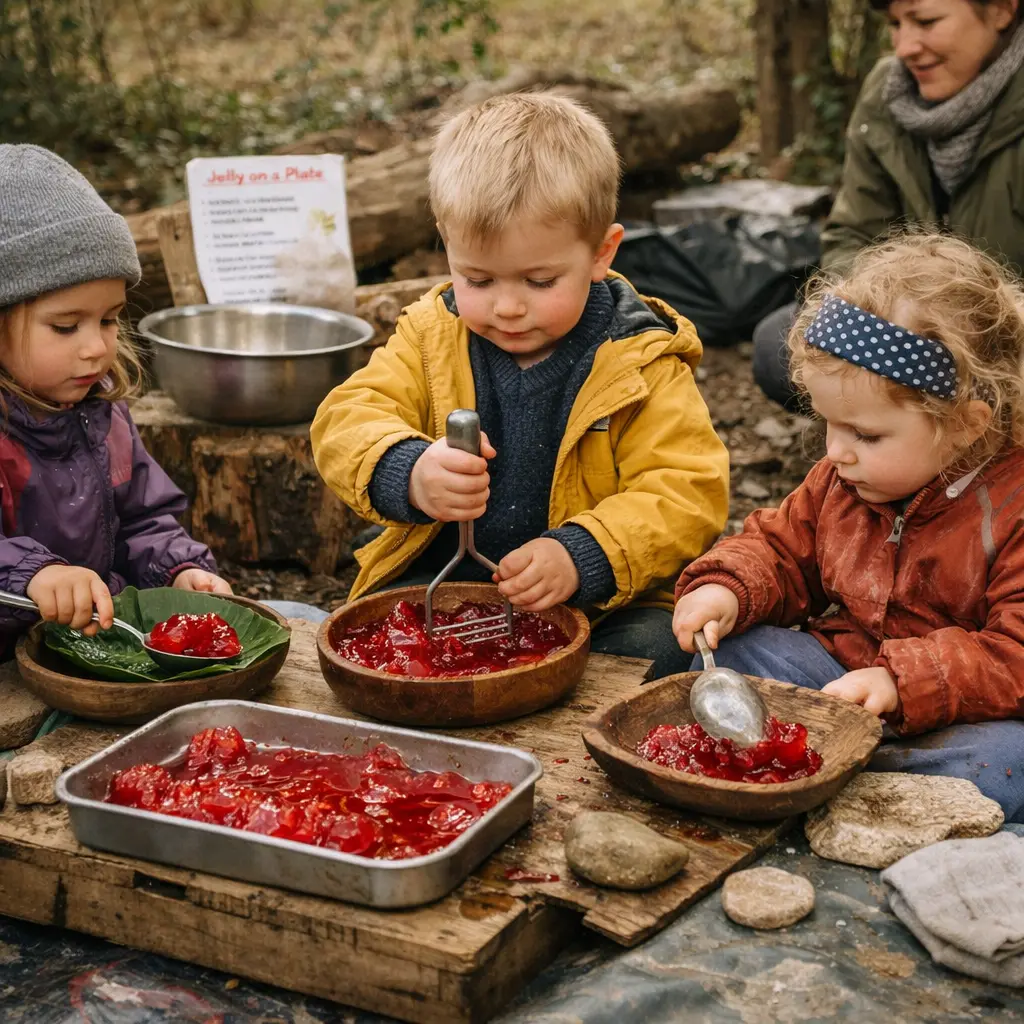
In an outdoor or nature-integrated space, set shallow trays of prepared jelly on low crates, tree-stump tables or a tarp on grass so surfaces are slightly uneven and textured. Materials are arranged using real, open-ended items: wooden bowls, large leaves or shallow bark dishes instead of plastic plates, metal or wooden spoons and child-safe mashers, ladles and a few larger scoops; cloth aprons and warm water for hands are nearby. Natural elements such as stones or sticks can be used as anchors or scooping aids so pieces vary in size and texture.
The adult observes from close by, checking anchors and hygiene, offering one-word prompts or short questions only when needed and stepping in for safety rather than instruction. Children may choose tools, swap containers, repeat actions and sing or hum the familiar song as part of play; they explore cause and effect by pressing, scooping and lifting at their own pace while the adult responds with concise observations and gentle risk management.
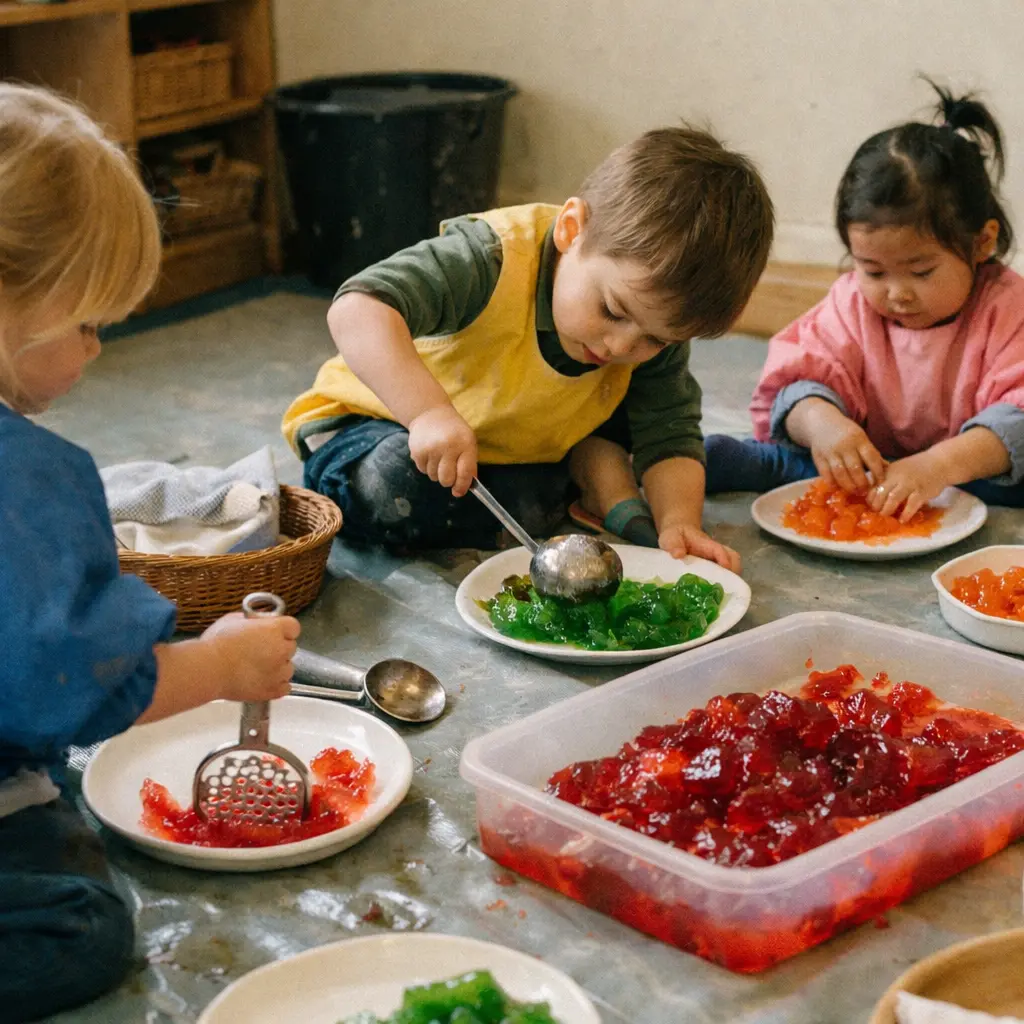
Ethos adaptation: Arrange low, separate exploration zones with shallow trays and plates laid out so children can move between stations independently; materials are visible on open trays rather than handed out. Replace single-use tools with a selection of loose parts—varied mashers, spoons, ladles, serving spoons, fabric scraps and small bowls—so the child may combine tools and surfaces in new ways. Keep protective coverings and warm water accessible; retain the activity’s EYFS intent by preserving sensory, language and cause-effect opportunities while removing a fixed outcome.
The adult steps back as an observer and co-researcher, offering short, descriptive comments and open invitations to think: "I can see the jelly wobbling," "You’re trying to scoop and it stretches," "What happens if you press here?" The child may choose to press, scoop, sing, repeat or abandon an action and return later; the space allows parallel, overlapping explorations. The adult notices persistence, language attempts, shifts in grip and tool selection and records these behaviours as they naturally occur.
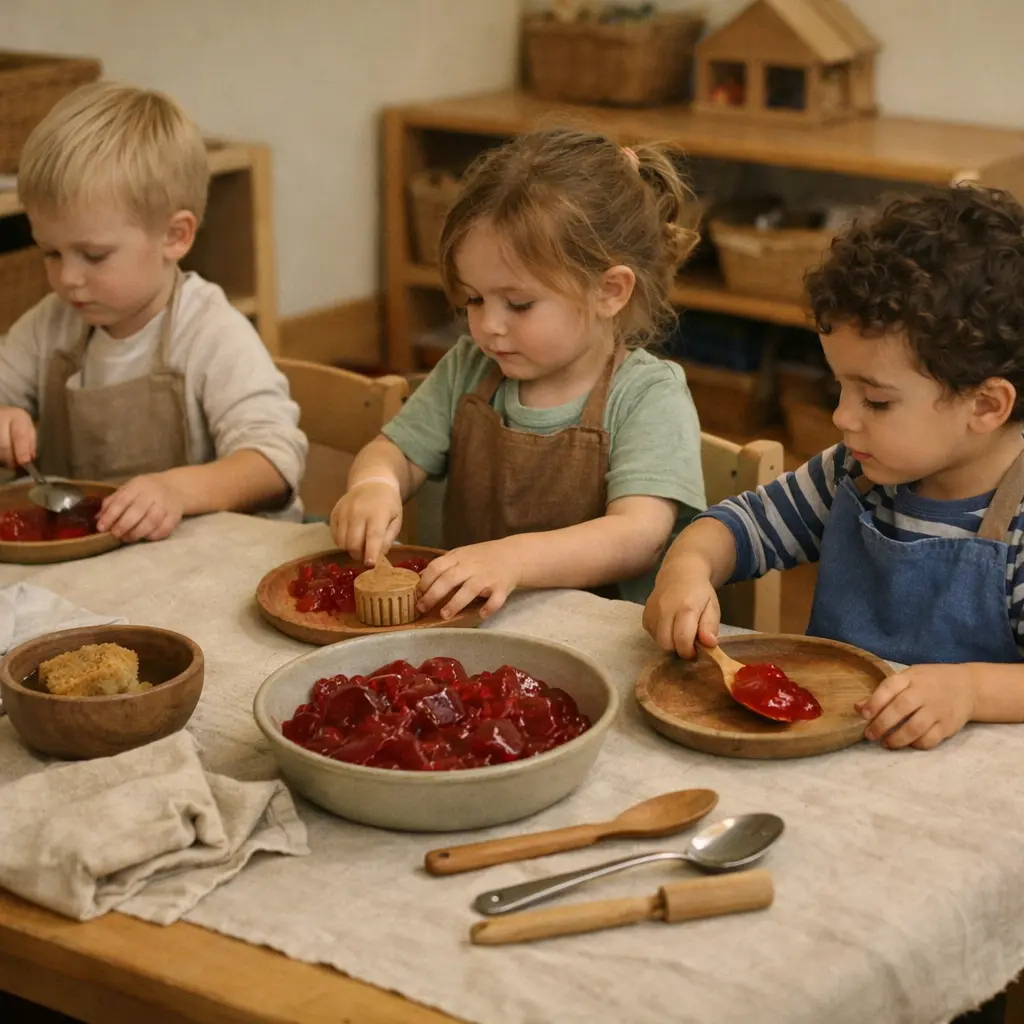
A quiet table is set with a neutral cotton cloth to define the space. The materials are arranged simply: a shallow stoneware or glass bowl with set jelly in large pieces, a few wooden plates, one wooden masher, and one or two metal or wooden spoons or a ladle. Cotton aprons, a small bowl of warm water with a natural sponge, and a dry cloth sit at the edge for hands. No recorded music or prints are used; the focus stays on the cool wobble, slide, and gentle sound of the jelly and tools.
The adult demonstrates once, slowly pressing and lifting, then quietly returns the tool and observes. Language is minimal and grounded in what is happening, offering occasional simple words such as wobble, smooth, press, scoop while maintaining calm presence and ensuring hygiene and safety. The child sets the pace, repeating actions, transferring jelly between bowl and plate, watching it gather or break, and joining a softly hummed or lightly sung line of the familiar song as desired, then helping return tools to the cloth at the close.