Fly a kite in a windy day to explore weather and how a kite stays in the air
Autumn
Nature/rainbows and weather
Outdoor exploration
Outdoor kite play introduces wind, lift and direction through child-led exploration. Adults model calm language and support turn-taking, noting moments of curiosity and cooperation. This preview provides a glimpse into the setup and observation focus without revealing full instructional details.
This outdoor activity invites children to observe how wind moves air and supports kite flight. They notice how gusts lift the kite and how air conditions change height, naming simple weather terms as they play. Adults model calm language and invite discussion about cause and effect in a real-world setting.
Step-by-Step Guidance
1. Find a safe open grassy area away from roads and trees. 2. Check wind conditions and weather forecast. 3. Lay out a kite on the ground with its tail extended and set up wind indicators. 4. Demonstrate how to hold the string and release gradually to catch a gust. 5. Invite a child to take their turn, with adult support. 6. Run together to generate lift and encourage naming wind-related words. 7. Observe how changes in wind change height and direction. 8. Take turns, pause, and reflect on what helps the kite stay up. 9. When finished, gently lower the kite, collect equipment, and store safely.
Learning Objectives
Children may begin to notice weather cues and wind direction, and discuss how wind causes the kite to move. This activity supports language development by naming weather terms and describing movement, and supports Understanding the World through simple observations of air, wind and lift. It also builds gross motor skills as children run, hold the string, and steer the kite, with opportunities for collaborative play as they take turns. EYFS areas engaged: Understanding the World; Communication and Language; Physical Development
Adult Role
Maintain close supervision and clear safety boundaries while allowing children to lead. Model weather-related language (wind, gust, lift, direction) and invite discussion with open-ended questions. Scaffold turns and cooperative play, ensure safe distances from others, and quickly intervene if the kite behaves unpredictably. Document quick observations for reflection and planning.
Observation Cues
Child uses weather vocabulary (wind, gust, lift) during talk; Child points to wind direction or kite height and indicates changes; Child runs with effort to keep the kite aloft and shows balance; Child asks questions or makes predictions about how wind affects flight; Child shares the kite with others or takes turns with patience
Time & Space
20–40 minutes
Open grassy outdoor space large enough for running without obstacles, away from roads and power lines; clear area for kite launching and landing; a sheltered zone for rest and observation if wind shifts
Materials
Safety
Age adaptations
Budding Adventurers
Environment and materials: A low, stable kite with a longer handle to allow the child to participate actively; An open area free of hazards is prepared with a simple boundary; The adult supports the child in running short distances to generate lift and provides opportunities to adjust the kite angle with guidance. The child is encouraged to take a more active role with the string under supervision. Adult interaction: Provide clear, simple instructions, then step back to let the child lead; Use supportive language to describe actions and outcomes; Observe motor control, turn-taking, and emerging problem-solving when the kite stalls or crashes and discuss quick adjustments.
Curious Investigators
Environment and materials: Offer two kite options or a single kite with adjustable tail length; Provide a lightweight wind meter or simple indicator to discuss wind strength; Create a small ‘flight station’ area with chalk or paper for drawing wind directions and gusts; The adult models inquiry and invites experimentation with kite angle and running speed. Adult interaction: Encourage questions and predictions (What happens if the wind is stronger? Which angle helps lift more?), provide minimal but precise prompts, and support collaborative play. Observe curiosity-driven talk, trial-and-error problem solving, and the ability to describe cause and effect.
Confident Discoverers
Environment and materials: A field setup that supports independent initiation, with a more challenging wind indicator and a simple weather log for recording wind height and direction; Allow the child to lead a short fly sequence with minimal prompts and a safety checklist to follow; The setup supports reflection on past attempts and planning for future flights. Adult interaction: Use low-frequency prompts, ask evaluative questions about what worked and what didn’t, delegate small leadership roles (timekeeper, note-taker, boundary monitor), and encourage peer feedback. Observe independent planning, data recording, and sustained focus on flight adjustments.
EYFS Links
Understanding the World: children observe wind, weather and how air moves; they consider seasonal cues and the outdoor environment. Communication and Language: children describe what they see, use weather vocabulary, and ask questions. Physical Development: running, steering, and controlling the kite supports gross motor skills. Personal, Social and Emotional Development: turn-taking, cooperation, and risk assessment are practiced in a real-world outdoor setting.
Ethos adaptations

Materials are reduced to one simple kite with tail, one neatly coiled length of string on a small reel, and a single wind indicator mounted on a short pole. Place the kite and reel on a low tray or small table at child height beside a clearly marked launch line in the open grass so the child can access items independently and return them to their place. Remove extra toys and limit helpers so the focus is on feeling wind, holding the string and steering; the setup makes tension and direction visually obvious.
The adult gives a single, slow demonstration of how to hold the reel and release enough line, then steps back to a respectful distance and limits language to short, factual phrases. The adult does not direct play or ask prompting questions, instead watches for how the child manages line tension, repeats launches, shifts body to face wind, or pauses before trying again. Observe turn-taking, persistent attempts, and signs of concentration or frustration to know when to offer a brief practical repeat demonstration.

In an outdoor grassy area with varied surfaces and nearby trees, the activity is run as a nature-integrated kite session rather than a manicured field event; small clearings, slight slopes and a sheltered spot for resting are used. Materials are arranged using real items: kites with cloth tails, long string tied to a natural stick anchor or a stone weight, and ribbons or strips of fabric tied to branches as wind indicators instead of only manufactured wind socks. Children may collect small safe natural markers (twigs, leaves) to note gusts and directions as part of play.
The adult observes from a safe distance, remaining nearby to manage risk and offer minimal, responsive prompts such as short questions or single-word descriptors, rather than step-by-step instruction. The adult ties off string or checks anchors when needed, models calm handling and then steps back to listen and notice. Children choose roles, take turns launching and running, experiment with holding angles and string tension, and may describe what they see as they test how wind lifts the kite while the adult responds with concise observations.
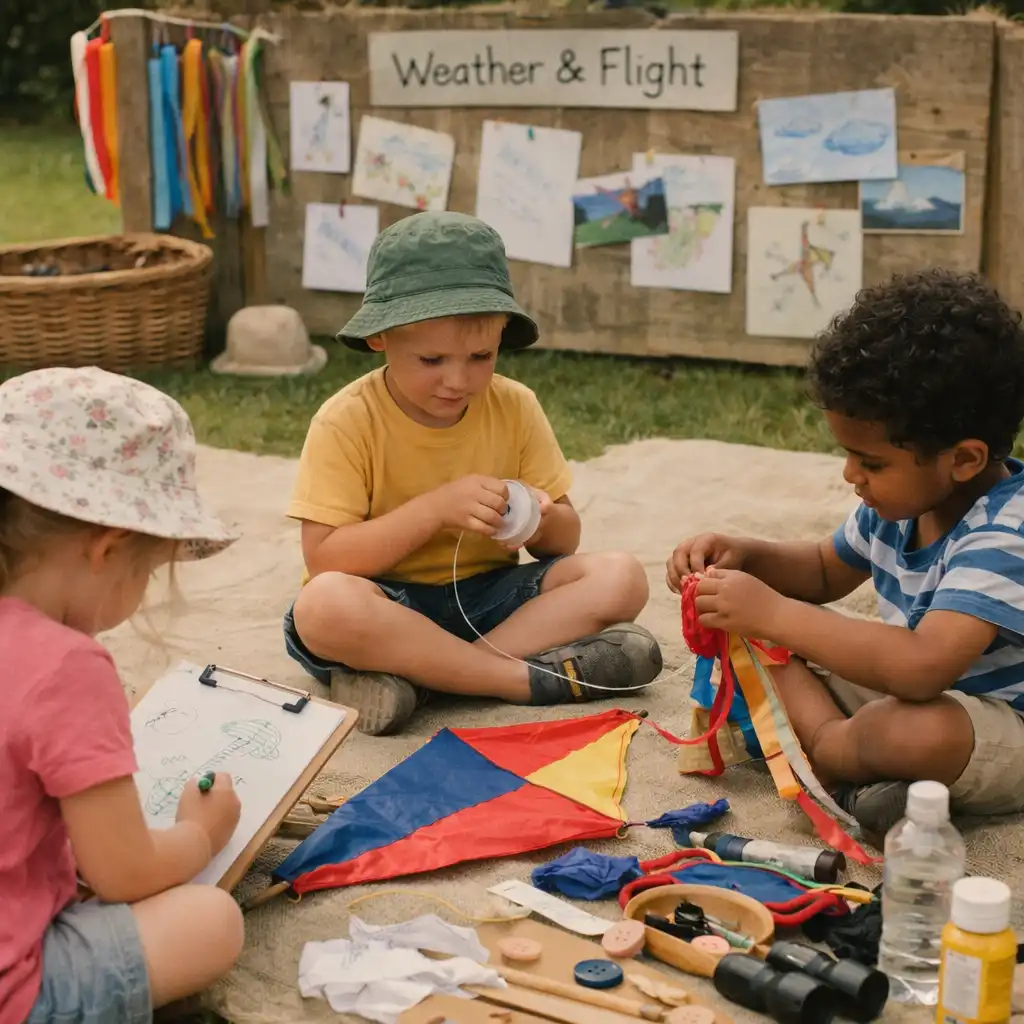
Reconfigure the outdoor area into purpose-built zones: a launch strip with several kites and loose parts (fabric tails, spare string reels, scarves, paper shapes), a wind‑watch station with low ribbons and simple vanes, and spaced runways for safe flying and turning. Place materials in visible baskets and low trays so children choose, combine and modify parts; leave options for repairing or redesigning kites. The setup invites multiple entry points (running, repairing, observing) while keeping sunscreen, hats and water accessible for safety.
Adults take a listening, observing stance and use reflective commentary rather than instructions: “I can see the kite pull that way,” “You’re trying a longer tail—what happens if…?” The child may decide to test different tails, change launch points, trade roles, pause and return or repeat trials; these choices naturally prompt language about wind, direction and lift. Observation cues are embedded: shifts in attention, repeated adjustments, negotiation during turns, and vocabulary emerging around gusts and force.
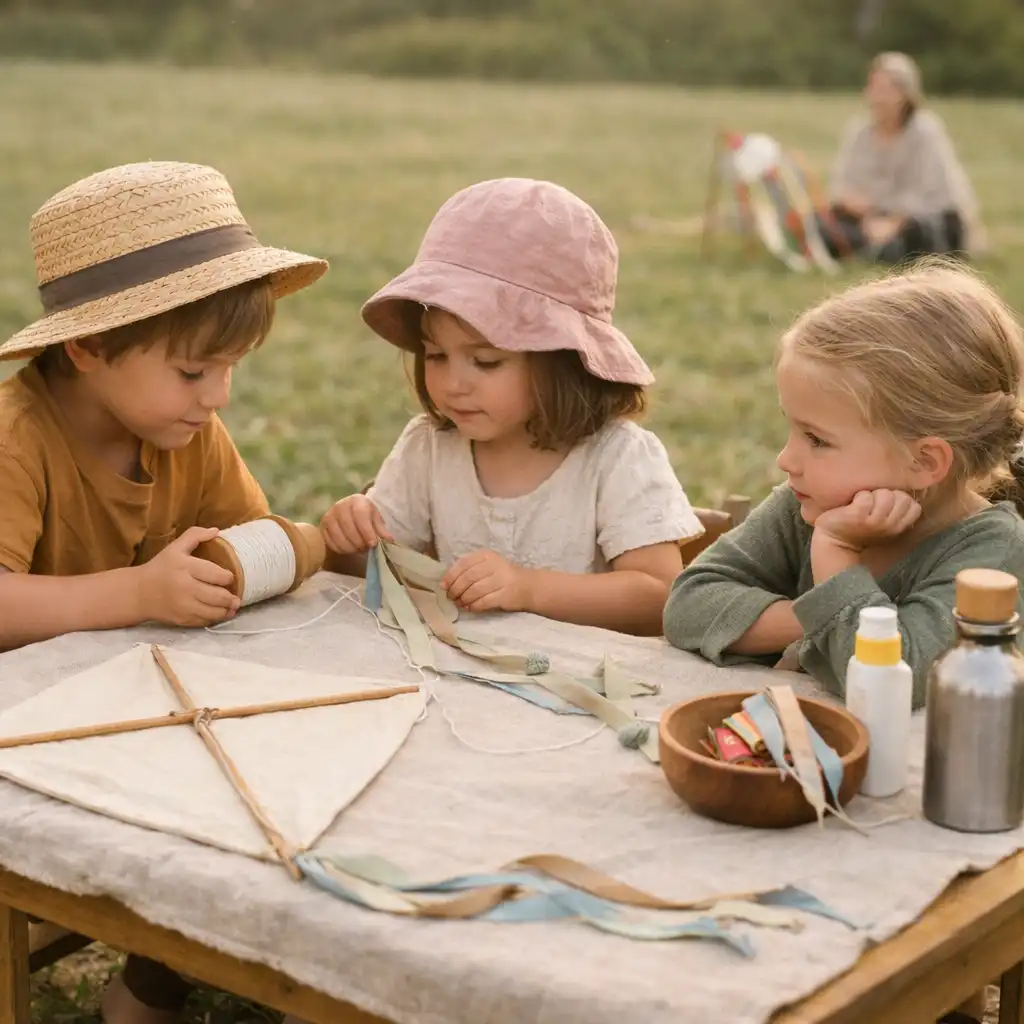
A small, clearly marked patch of the open grassy space is set aside with a neutral cloth laid as the launch base; only the kite, a spool of natural twine, and a single wind indicator are placed on the cloth to keep the area uncluttered. The kite is made from cotton or silk with a light wooden frame and a cotton tail; wind indicators are wool streamers or natural-feather markers. Sunscreen, hats and water remain available at the edge for safety.
The adult demonstrates a simple, calm launch and steady handling of the string without step-by-step instruction, remaining close but quiet and observant. The child returns to running with the kite, holding the twine, and watching the wool streamer, naming wind and weather words as they play; the adult intervenes only for safety or to model a steady movement, allowing repeated, child-led trials and pauses.