Face-to-face repetitive song time with simple songs for babies and toddlers
Communication and Language
An adult sits on a floor mat with a baby supported against their raised knees, both facing a low mirror. The adult hums a steady line, then shifts into a familiar song and keeps their lips easy to see. The baby kicks, then stills and watches; the adult pauses and waits. The baby makes a soft “ga” sound, and the adult repeats “ga” once in the same rhythm before continuing the song. Nearby, a toddler picks up a photo card from a small pile and holds it out toward the adult.
This is a short, face-to-face song time where an adult sings a small set of repeated, soothing songs with a baby or toddler close by. The focus is on shared attention, turn-taking sounds, and the child noticing the adult’s facial expressions and voice. Repetition can help children settle into the rhythm and begin to join in with looks, movements, or early vocalisations.
Step-by-Step Guidance
1. Choose a calm time and a comfortable spot on the floor or a low seat where you can stay close without strain.
2. Decide on the child’s position: either lie side-by-side facing each other, or sit with the child resting safely against your raised knees so your faces are close.
3. Reduce distractions in the immediate area so the child can focus on your face and voice.
4. Start with one short, soothing song and keep your pace slow and steady. Hold your face where the child can see your mouth clearly.
5. Repeat the same song a few times. Keep the words and tune consistent so the child can predict what comes next.
6. Build on what the child offers. If they babble, pause briefly and echo one sound back, then continue the song. If they change expression, mirror it gently.
7. Add simple facial expression changes (wide smile, surprised face, soft closed-mouth hum) and wait a moment to see if the child responds.
8. If the child turns away, stiffens, or fusses, soften your voice, slow down, or switch to humming. Offer a pause and let them re-orient.
9. End with the same closing line or a quiet hum so the routine has a clear finish. Stay close for a moment before moving away.
Learning Objectives
In Communication and Language, children have repeated chances to listen closely, watch a speaking/singing face, and respond with sounds, looks, or gestures. In Personal, Social and Emotional Development, the close, predictable interaction can support connection and co-regulation (the adult helping the child settle through calm voice and presence). In Expressive Arts and Design, children explore rhythm, pitch, and musical patterns through familiar songs and playful vocal sounds.
Adult Role
Stay emotionally attuned by watching the child’s cues for closeness, pace, and volume, and adjust quickly if they show signs of overload or tiredness. Model simple, clear language through repeated song lines and responsive echoing of the child’s babbles, keeping your mouth visible and your tone calm. Scaffold lightly by pausing for the child’s turn, mirroring a sound or expression, and then stepping back into the song without over-prompting. Observe in the moment for signs of shared attention, turn-taking, and preference, and use these observations to choose which songs to repeat next time. Hold responsibility for safe positioning, steady support, and stopping if the child’s breathing, comfort, or mood suggests they need a break.
Observation Cues
Does the child seek the adult’s face or hold eye contact for longer moments?
Do they pause, then vocalise as if taking a turn after a repeated line?
Do they copy a sound, mouth shape, or simple action (e.g. opening mouth wide, sticking tongue out, clapping, bouncing)?
Do they show preferences by leaning in, smiling, stilling their body, or turning away when they have had enough?
Do they babble with changing pitch or rhythm during familiar parts of the song?
Do they calm, breathe more evenly, or relax their shoulders as the routine becomes predictable?
Time & Space
3–10 minutes, depending on the child’s cues and tolerance for close interaction.
A quiet corner with enough floor space for an adult and child to lie or sit facing each other, or a low seat with room for knees raised and safe support.
Materials
Safety
Age adaptations
Budding Adventurers
Keep the face-to-face start, then allow the child to shift position while staying connected (sitting opposite, leaning in, moving back). Use 3–5 short songs and invite the child to lead a sound effect or a repeated word, copying their version rather than correcting it. Build on their babbling by turning it into a playful call-and-response: you sing a line, they answer with a sound, and you sing it back in the song’s rhythm. If they want more energy, include a predictable “fast/slow” contrast and watch whether they can signal for a change.
Curious Investigators
Use a small set of repeated songs and let the child choose the order, keeping the routine predictable. Add expressive elements the child can control, such as deciding the volume (quiet/loud) or the emotion face (happy/surprised/sleepy) for one verse. Pause for the child to add their own words or silly sounds, then reflect back what you heard and weave it into the next repetition. Notice whether they begin to match rhythm, remember lines, or negotiate turn-taking when they want to sing over you.
Confident Discoverers
Keep the interaction close and conversational, using the same repeated songs but offering the child a leadership role. The child can set the tempo, start the song, or decide where to pause for “your turn/my turn” singing. Build on their ideas by echoing their invented lyrics and asking one open prompt that keeps the song going (e.g. “What sound shall we add next?”). Observe how they manage turn-taking, adjust their voice to match yours, and stay with a predictable routine even when they add variations.
EYFS Links
Communication and Language: children listen to a familiar voice, watch facial movements, and practise early back-and-forth through pauses and echoed babbles. Personal, Social and Emotional Development: the predictable, close routine can help children feel safe enough to connect, settle, and signal preferences, with the adult responding sensitively to cues. Expressive Arts and Design: children explore musical elements such as rhythm, pitch, and repetition, and may begin to join in with sounds, actions, or remembered phrases.
Ethos adaptations

Prepare a simple, consistent space: one mat or blanket, one comfortable sitting position, and a small, fixed set of the same 2–3 songs used each time. Keep the environment uncluttered so the child’s attention rests on the adult’s face and voice, and keep the routine identical from start to finish, including a short opening and closing hum.
Introduce with a brief demonstration rather than lots of talk: begin singing softly and steadily, then pause to allow the child to respond without prompting. Limit questions and avoid performing for a reaction; instead, observe concentration, repeated attempts to copy a sound, and the child’s choice to lean in or move away. If the child repeats a sound, echo it once and return to the song, allowing the child to control how long they stay with the interaction.

Use a sheltered outdoor spot or an open doorway so the child can see and hear the natural environment while staying close and warm. Sit on a ground mat or blanket with the child against your knees, and choose songs that can include what is happening around you (wind sounds, birds, rain on leaves) without needing extra props.
Keep adult language minimal and responsive, using short sung phrases that match the child’s attention (a pause when they look up, a quieter hum when they settle). Observe how the child shifts between watching your face and noticing the environment, and follow their lead by weaving their pointed finger, gaze, or vocalisation into the next repeated line. Manage risk by choosing stable ground, checking for cold or damp, and moving position if the child becomes uncomfortable.

Create a song space that changes how children move and choose: tape a soft mat area near a window for natural light, position a low mirror at child height, and place two small stools so children can sit opposite each other as well as with the adult. Put photo cards, blank card, and a chunky pencil in open baskets on a low shelf beside the mat, leaving a clear walkway so children can enter, leave, and return without asking.
The adult follows the child’s direction by waiting for a child to bring a card or point to the mirror before starting, and by using short commentary (“You’re watching your mouth in the mirror”, “You moved closer when it got quiet”) instead of instructions. The adult notices children’s ideas about sound and distance (turning away, covering ears, leaning in, swapping seats) and responds by changing one element at a time, such as shifting to the other stool, turning slightly toward the window, or pausing to let a child’s sound lead the next line. The adult captures one moment with a quick note or the child’s mark on a card and places it back in the basket for children to revisit together.
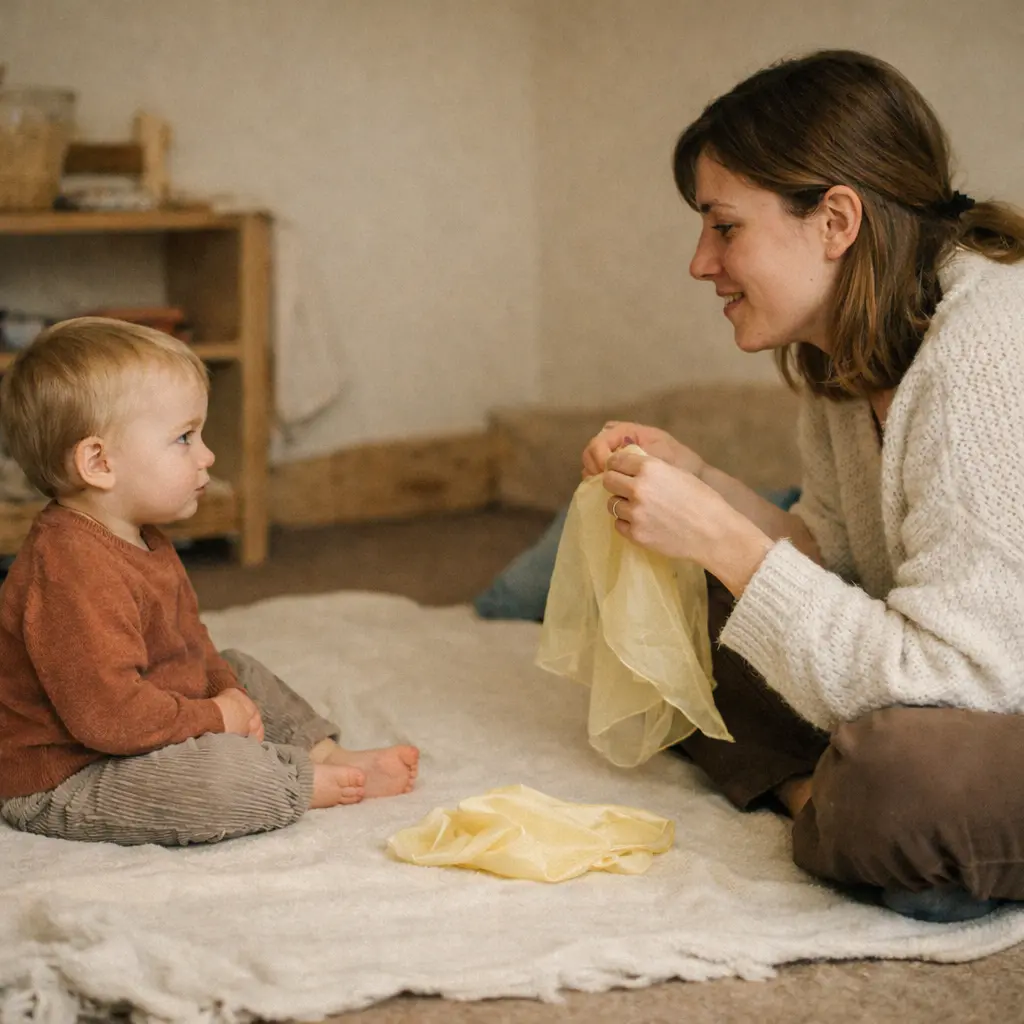
Lay a wool or cotton blanket in a quiet corner and keep the space uncluttered, with only a small silk cloth and the blanket within reach. Choose one or two simple songs with a narrow pitch range, and keep the same opening and closing hum so the session has a steady rhythm.
The adult makes calm, consistent decisions: they begin with humming before words, they demonstrate one slow gesture with the silk cloth and then let their hands rest, and they keep their voice and tempo even rather than speeding up to match excitement. The adult watches breathing, gaze, and body tension, and responds by repeating the same verse, lengthening a pause for the child’s sound, or shifting the child’s position for comfort without adding new actions. If the child turns away or stiffens, the adult lowers volume, returns to humming, and stays nearby until the child chooses to re-join or end.