Exploring spring egg shakers with simple music for babies and toddlers
Sensory Play
Spring
The adult sits on the mat with a small basket of egg shakers nearby and picks one up. They make two gentle shakes, then hold still so the sound fades. A baby reaches forward and pats the basket, then grips a shaker with both hands and brings it to their mouth while the adult stays close and says, “shake… stop.” A toddler stands, shakes quickly, and laughs at the louder rattle; the adult lowers their own shaker and waits, then mirrors the toddler’s fast rhythm for a few beats before pausing again.
Children explore egg-shaped shakers as sound-making objects, noticing how movement changes what they hear and feel. The experience can sit alongside a short piece of music or a familiar song, with plenty of space for children to pause, repeat and copy each other. It offers a simple way to combine listening with hand and arm movement, without needing a finished outcome.
Step-by-Step Guidance
1. Prepare a clear floor space with a mat or rug so children can sit, crawl, or stand safely while holding shakers.
2. Place the egg shakers in a low basket or on a tray within easy reach, with only the number you plan to use visible.
3. Sit nearby and pick up one shaker. Make a small, slow shake, then pause so children can notice the sound and the silence.
4. Offer the basket/tray and allow children to choose a shaker. Let them explore freely, including mouthing, tapping, rolling, or shaking.
5. If using music, start it quietly once most children have a shaker. Keep the track short and allow children to move in their own way.
6. Add simple, occasional modelling: a gentle shake, a stop, then a different movement (for example, up/down then side/side). Leave space for children to copy or ignore.
7. Follow children’s lead. If a child is focused on tapping or rolling rather than shaking, stay with that exploration and name what you see.
8. Bring the experience to a calm close by lowering the volume or finishing the song, then collecting shakers into the basket with children who want to help.
Learning Objectives
Within Physical Development, children can have repeated chances to practise grasping, holding and moving an object with control. Within Communication and Language, children can listen to changes in sound and begin to respond through movement, vocalising or simple words. Within Expressive Arts and Design, children can explore making sounds and joining in with rhythm in their own way.
Adult Role
Stay close and emotionally available, especially for babies who may startle at sudden sound or become unsure in a group. Model simple language that matches what children are doing, such as “shake”, “stop”, “loud”, “quiet”, “fast”, and “slow”, and mirror children’s rhythms without taking over. Scaffold only when needed: offer a shaker into an open hand, steady a child’s balance if they stand to shake, or reduce the number of shakers if the space becomes busy. Step back when a child is repeating a movement or listening closely, and protect that concentration by limiting interruptions. Observe grip changes, hand switching, copying, and listening pauses, and use these observations to decide whether to simplify (quieter, fewer children) or extend (short music, turn-taking). Maintain safety by checking shakers regularly, supervising mouthing, and managing spacing so shakers do not hit faces.
Observation Cues
Does the child change their wrist or arm movement to make the sound louder or quieter?
Do they swap hands, adjust grip, or use two hands to steady the shaker?
Do they pause to listen, then repeat a movement that made an interesting sound?
Do they watch another child and copy a shaking pattern or tempo?
Do they respond to music with bouncing, swaying, or shaking in time for a few beats?
Do they offer a shaker to an adult or peer, or show a preference for one sound over another?
Time & Space
5–15 minutes, with the option to repeat later in the day.
A clear floor space with a soft mat or rug, with enough room for children to sit, crawl, or stand and move their arms without hitting others.
Materials
Safety
Age adaptations
Budding Adventurers
Introduce a simple start/stop game using your hands as a visual cue (hands up to shake, hands down to stop), keeping it playful and optional. Offer two or three short music clips with different tempos and let children choose which one to repeat. Add movement options like marching, tiptoeing, or swaying while holding the shaker, with plenty of space for big body movement. Notice and name children’s own patterns, such as “two shakes, then a tap”, and mirror them back.
Curious Investigators
Invite children to explore how different movements change the sound, such as shaking near the ear (with supervision), shaking low to the floor, or shaking while walking. Offer a simple call-and-response pattern where the adult makes a short rhythm and children choose whether to copy or invent their own. Encourage children to describe what they notice using sound words like “rattly”, “soft”, or “noisy”, and to listen for when the music is fast or slow. Support small-group collaboration by letting children lead a short “band” moment while others listen.
Confident Discoverers
Add a child-led rhythm circle where children take turns being the leader for a few beats, choosing fast/slow or loud/quiet. Offer a simple way to record ideas, such as drawing a line for “shake” and a dot for “tap”, and letting children follow their own marks. Encourage children to notice together how starting and stopping at the same time changes the group sound. Keep it flexible so children can move between leading, playing, and listening.
EYFS Links
Physical Development: children practise grasping, holding and moving the egg shaker, which can build hand strength and coordination through repeated action. Communication and Language: children listen to sound changes and may respond with movement, vocalising, or simple words as the adult models clear, relevant language. Expressive Arts and Design: children explore making sounds and joining in with rhythm, choosing their own ways to participate alongside music or singing.
Ethos adaptations

Place a small number of identical egg shakers on a tray on a low shelf, with a defined floor mat as the workspace and no other musical items available. The adult decides the exact quantity (for example, one per child plus one spare) and keeps the layout consistent so children can take, use, and return the shaker independently. The adult also chooses one clear “control of error” by using shakers with an obvious sound change, so children can notice when their movement is too forceful or too slight.
The adult demonstrates one slow shake and one pause without commentary, then withdraws to a steady observing position rather than staying in the play space. The adult limits language to a few precise words only when needed (for example, “shake”, “stop”), and avoids prompting children to copy or perform. The adult watches for repetition, grip refinement, and sustained concentration, and responds by protecting the child’s workspace (moving others back), replacing a dropped shaker safely, or offering a quieter spot if the sound level rises.
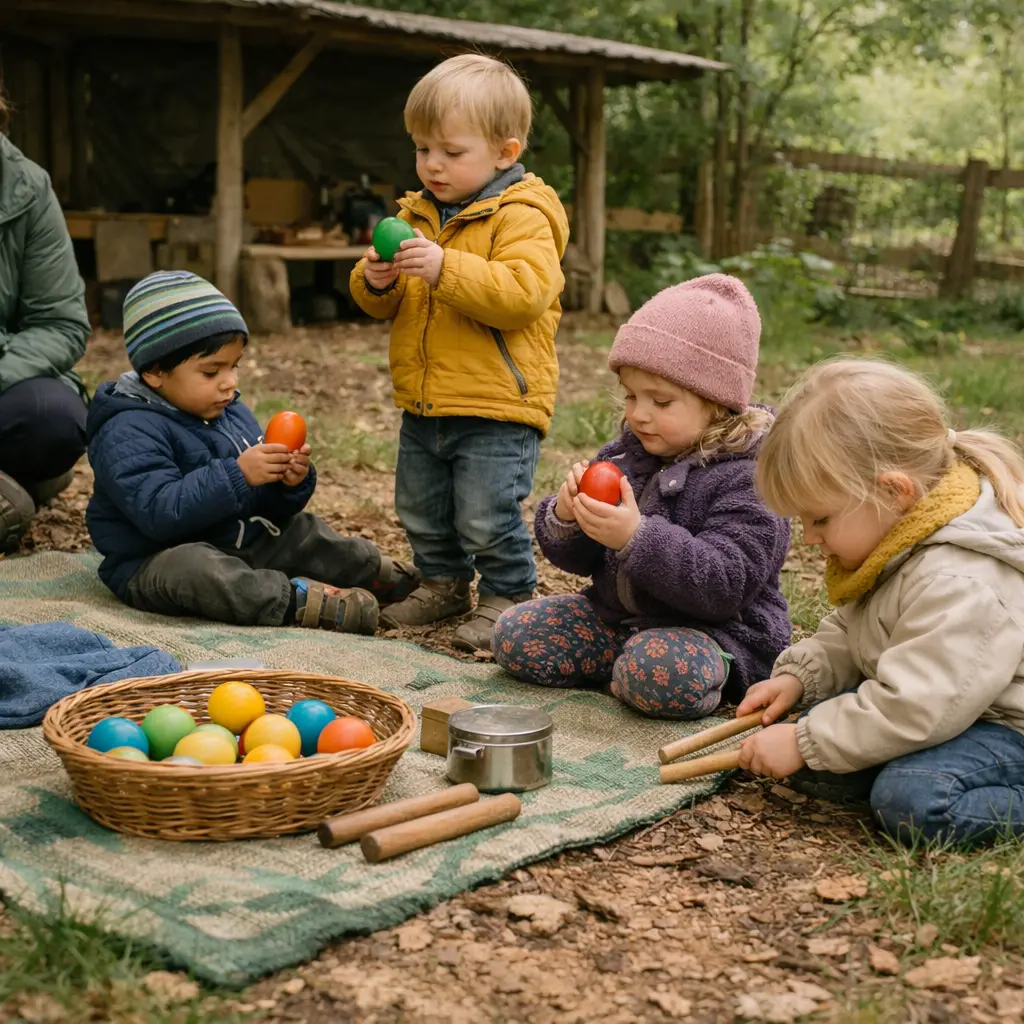
Use an outdoor space such as a garden or yard where children can move freely on grass, bark, or firm ground, with a sheltered spot for quieter listening. Provide egg shakers in a small basket alongside a few natural sound-makers such as two smooth sticks for tapping and a small tin for drumming, keeping the selection limited and robust for outdoor use.
The adult stays nearby to manage spacing and ground hazards, modelling calm handling and then allowing children to choose how they make sound while they walk, crouch, or sway. Use short observational comments like “that’s louder on the path” or “you stopped to listen” rather than directing a sequence. Notice how children adjust force, choose surfaces, and respond to wind and outdoor noise, stepping in to support turn-taking only when conflict appears or to move the group away from a busy area.

Set up a sound invitation area with a large mat and a low table or two crates that create clear zones: one for shakers, one for movement, and one for quiet listening. Arrange egg shakers with a few open-ended additions such as scarves, a shallow tray to place shakers on, and paper with chunky crayons for children who want to make marks while they listen, keeping everything visible and reachable.
The adult listens and co-explores, using reflective language such as “I can hear your shaker change when you lift it higher” and “you’re making a pattern: shake, shake, stop”. Follow children’s theories about sound and rhythm, allowing them to reorganise the space, choose partners, or create a group “band” moment without a set outcome. Document brief observations in the moment (a note or quick photo) and return to them with children by naming what you noticed and inviting them to try again if they choose.
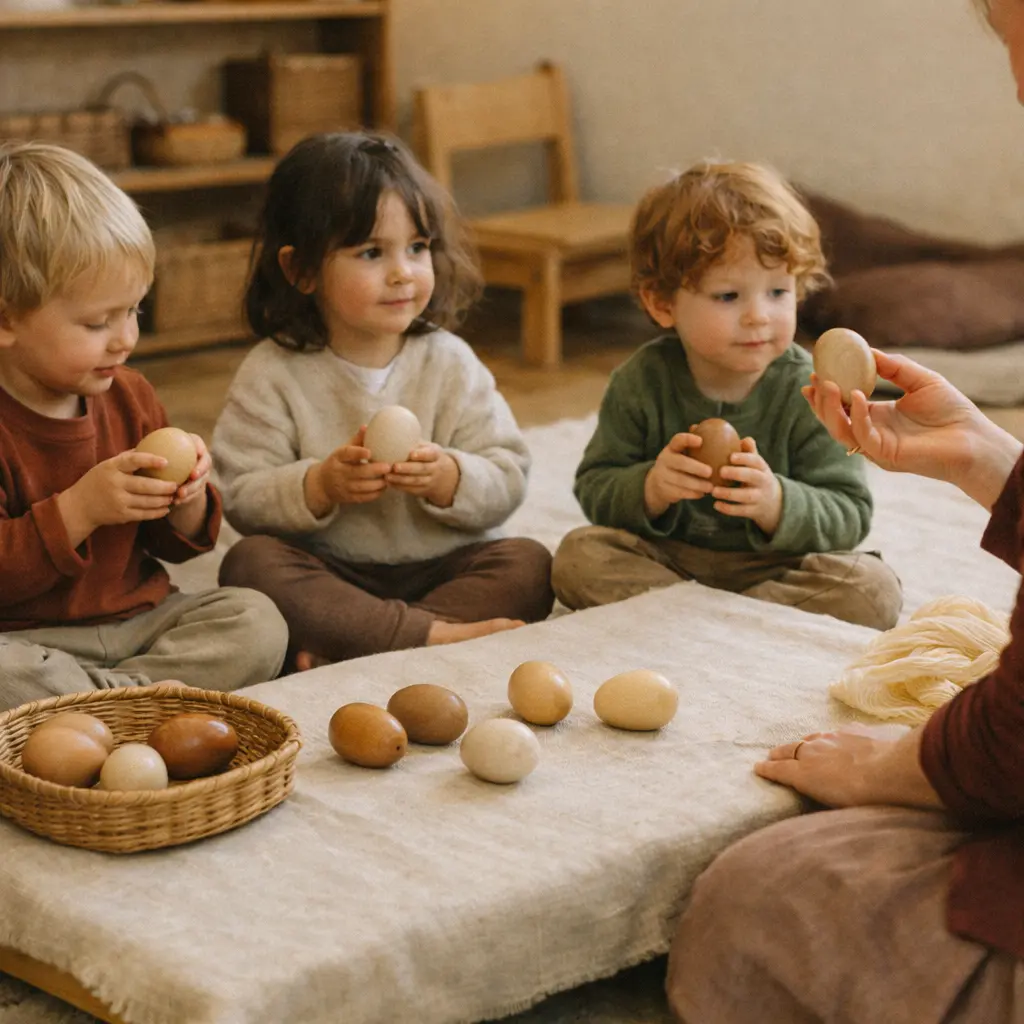
Prepare a calm floor space with a neutral cloth on the mat and place only a few egg shakers made from wood or other natural-feeling materials, keeping colours soft and the area uncluttered. The adult chooses one simple sound source (gentle humming or a familiar song) rather than recorded music, and keeps extra props out of sight so the sensory focus stays on weight, movement and sound.
The adult demonstrates a slow, steady shake and a clear pause, then remains quiet and present so children can learn through imitation. The adult decides when to speak and keeps language minimal and warm, using occasional simple words timed to what children are doing (for example, “soft”, “quiet”, “still”). The adult watches for children who startle or seek distance and responds by offering a quieter edge space, and the adult closes the session with the same tidy-away rhythm each time, modelling returning shakers to the cloth without adding new variations.