Exploring cooled water sensory bags during tummy time for babies on hot days
Sensory Play
Tummy Time
The adult lays a towel on the floor in a shaded corner and places a sealed bag of cold water and peas in front of the baby’s hands. The baby pats the bag, then pauses as the peas slide away, and the adult says, “cold… squish,” in a quiet voice. After a few presses, the baby lifts their head to look at the moving shapes, then rests their cheek for a moment while the adult keeps one hand close to stop the bag from slipping.
This is a calm, cooling tummy time experience using sealed sensory bags filled with cold or partially frozen items. Babies can press, pat and shift the contents while staying on a comfortable surface. The changing feel and movement inside the bag can hold attention for short bursts, especially on very warm days. The adult stays close to keep the experience safe and responsive.
Step-by-Step Guidance
1. Choose a cool, shaded indoor space and lay out a towel or wipe-clean mat for tummy time.
2. Prepare 2–3 sensory bags only. Fill each zip-lock freezer bag with cold water and one cooled item (for example, frozen peas or coloured ice cubes), leaving space so the contents can move.
3. Press out excess air, seal the bag fully, and check the seal by turning it over and squeezing gently over a sink.
4. For extra security, place each sealed bag inside a second bag and seal again. Wipe the outside dry so it is not slippery.
5. Place one bag flat on the mat. If needed, secure the edges to the mat with tape so the bag cannot slide, keeping tape well away from baby’s hands.
6. Position the baby for tummy time with the bag in front of their hands and line of sight. Stay within arm’s reach.
7. Let the baby explore. Use brief language to name what you notice (for example, “cold”, “squash”, “move”) and pause to allow the baby to respond.
8. If the baby loses interest or shows discomfort, swap to a different bag, adjust the distance, or offer a short break on their back or in arms.
9. End while the baby is still settled. Remove the bag, dry the mat if needed, and dispose of or refrigerate contents safely. Check bags for wear before storing.
Learning Objectives
Within Physical Development, babies can have supported opportunities to lift their head, shift weight, and reach while on their tummy. Within Communication and Language, babies may show attention through stilling, tracking movement in the bag, and vocalising or gesturing to continue. Within Personal, Social and Emotional Development, the adult’s calm presence can support babies to feel secure as they explore a new sensation.
Adult Role
Stay close and watch the baby’s face, breathing, and body tension so you can respond quickly if they seem uncomfortable or tired. Model simple, calm language that matches what the baby is doing, such as “press”, “cold”, “squish”, and wait for the baby’s look, movement, or sound before adding more. Offer light scaffolding by nudging the bag slightly to create movement or by repositioning it within reach, then step back so the baby leads the exploration. Observe how long the baby tolerates tummy time, which textures they return to, and whether they seek your reassurance with eye contact. Take full responsibility for safety by checking seals, preventing mouthing of the bag, and stopping immediately if there is any leak or damage.
Observation Cues
Baby turns head towards the bag and watches the contents move when it is pressed.
Baby pats, swipes, or presses with an open hand, then repeats the action.
Baby shifts weight onto forearms or pushes up briefly to get closer.
Baby shows a clear preference (reaches for one bag, turns away from another, relaxes when the bag is cooler).
Baby vocalises, smiles, or pauses and looks to the adult after a change in temperature or texture.
Baby attempts to mouth the bag or pulls at the seal, needing a quick adult response.
Time & Space
5–15 minutes, depending on the baby’s tolerance for tummy time and interest.
A shaded indoor floor space with room for a mat and an adult to sit within arm’s reach.
Materials
Safety
Age adaptations
Budding Adventurers
Provide three bags with different movement qualities (peas, larger ice cubes, and mostly water) and invite the child to notice what changes when they press with one hand versus two. The child can help fill the bag with cold water using a small cup, then watch the adult seal and double-bag it. Use short prompts that stay open, such as “What do you notice?” and “Show me gentle hands,” and allow the child to return to a preferred bag for longer exploration.
Curious Investigators
Offer a small set of bags and a simple way to label them (for example, a marker dot on the outside) so children can keep track of favourites. Children can suggest what to put inside from the available cooled items, then watch the adult seal and test the bag. Add language for describing sensation and change over time, such as “melting”, “slippery”, “lumpy”, and “smooth”, and invite children to notice how the bag feels after a few minutes.
Confident Discoverers
Provide bags with different amounts of water so children can compare how the contents move and how heavy each bag feels when lifted with two hands. Children can help make coloured ice cubes earlier in the day and choose which to use, then observe how the colour spreads as the ice melts. Keep the adult responsible for sealing and checking, while children take responsibility for gentle handling and returning bags to a designated cooling tray when finished.
EYFS Links
Physical Development: tummy time with an interesting, reachable object can support babies to practise lifting the head, pushing through forearms, and coordinating reach and touch. Communication and Language: adults can model simple words for actions and sensations while following the baby’s focus, supporting attention and early back-and-forth interaction. Personal, Social and Emotional Development: a calm adult nearby, responding to cues and ending when the baby has had enough, can support a sense of safety and comfort during sensory exploration.
Ethos adaptations

Place one prepared sensory bag on a small tray with a folded towel underneath to stop sliding, and keep all other bags out of sight. Choose one clear sensory contrast (for example, cold water with peas) and keep the bag size and fill level consistent so the movement is predictable and easy to control. Position the tray in the same spot each time and leave a clear, uncluttered floor space so the baby can focus on the single material.
Introduce the bag with one slow, silent demonstration of a gentle press, then move your hands away and keep language to a few neutral words only if the baby looks to you. The adult watches for repetition, longer pauses of concentration, and the baby adjusting hand pressure to change how the peas move, and responds by making one small change at a time (sliding the tray a little closer, rotating it, or offering a short rest) rather than adding new materials. The adult intervenes promptly to block mouthing at the seal, checks the bag surface for any dampness, and ends the experience if the baby shows discomfort.

Set up in a shaded outdoor area or at an open doorway where the air is cooler, using a waterproof groundsheet and a towel for tummy time. Use cooled natural items inside the sealed bags, such as cold water with peas and a second bag with ice cubes, and allow the bags to warm and melt naturally rather than swapping quickly for novelty.
The adult stays close to manage risk from heat and outdoor surfaces, offering short observations like “cold” and “melting” while letting the baby set the pace. The adult notices how the baby responds to changes in temperature and light, adjusts the position to keep the baby comfortable on the ground, and ends the session if the baby shows signs of overheating or fatigue.

Create a low, inviting floor space with a defined tummy-time area and a nearby “cooling station” where two or three sensory bags are visible and reachable for older children. Arrange the bags with clear spacing and a simple mirror or reflective surface beside them so children can see their hands and the moving contents from different angles, making the environment actively shape how they explore.
The adult takes a listening stance, using commentary such as “You’re pressing and the peas are moving away” and “The colour is spreading” rather than directing what to do next. The adult follows children’s theories about what is happening inside the bag, notes key words or gestures, and responds by offering a different bag or changing the position of the mirror, keeping the exploration open-ended and led by what children return to.
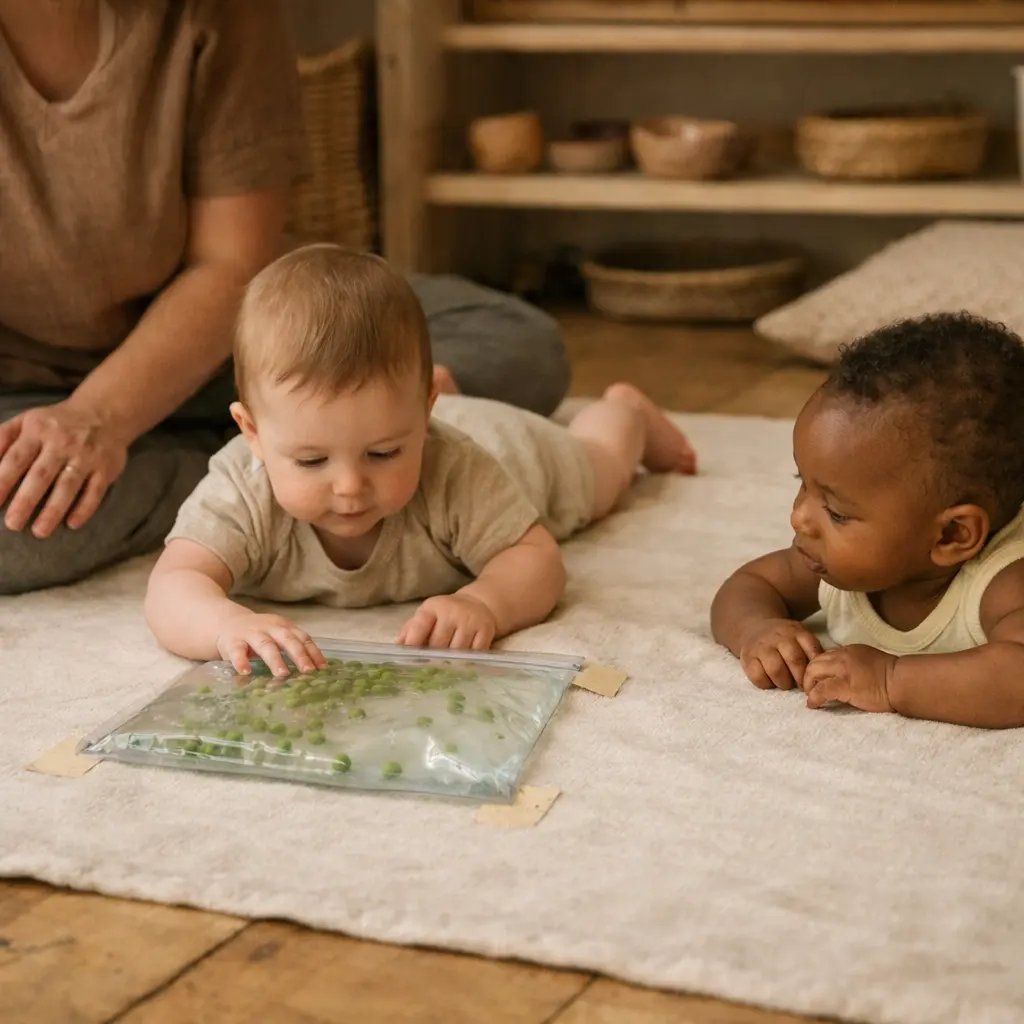
Prepare a calm, uncluttered tummy-time space with a neutral cloth on the floor and only one sensory bag offered at a time. Use simple, natural-looking contents such as clear water with peas or plain ice cubes, avoiding bright colours, and keep the bag soft and flexible so the sensation stays gentle.
The adult demonstrates one quiet, steady press and then remains mostly silent, present, and observant. The adult watches for the baby’s breathing, softening or tensing, and repeated hand movements, stepping in to reposition the bag or bring the session to a close with the same predictable tidy-away rhythm each time.