Exploring colour mixing and cause-and-effect with fizzing bicarbonate planets and vinegar in a deep tray
Sensory Play
Communication and Language
Children explore fizzing reactions by adding vinegar with pipettes to coloured bicarbonate “planets” in a deep tray, noticing bubbles, movement, and colour mixing. Adults keep the materials contained, offer simple language for change, and watch how children control pressure and quantity. The experience can suit quick bursts of curiosity or longer periods of repeating and comparing effects across colours.
Children explore cause-and-effect by adding vinegar to coloured bicarbonate “planets” and watching fizzing reactions spread through a tray. The experience offers rich opportunities to notice colour changes, bubbling, and movement across a contained surface. Children may choose to repeat actions, vary where they add liquid, and compare what happens to different colours. Adults can support curiosity with simple language and careful pacing.
Step-by-Step Guidance
1. Prepare the space: cover the table or floor surface and place a deep tray on a stable, low surface where children can reach without leaning their full weight on the edge.
2. Make the planets: combine bicarbonate of soda with a small amount of food colouring until it holds together when pressed. Compress into tight balls and wrap each ball in cling film to help it keep its shape until play begins.
3. Set out materials: place the wrapped planets in the tray, keep vinegar in a separate container, and offer pipettes in a small cup or shallow bowl so they do not roll.
4. Introduce the experience: show children the tray and the pipettes, naming key items simply (planet, vinegar, drops). Keep the introduction brief and allow children to choose where to focus.
5. Begin the reaction: unwrap one planet (or support children to unwrap) and place it in the tray. Offer vinegar via pipettes and allow children to add small amounts to the planet or nearby tray area.
6. Support exploration: allow children to decide how much vinegar to add and where. Notice aloud what is changing (bubbles, fizzing, colour spreading) without directing outcomes.
7. Extend gently: add another planet when interest remains, or offer a different colour. Allow children to compare what happens when vinegar is added to different spots.
8. Close the activity: slow the pace by reducing vinegar access, help children wipe hands, and clear the tray together where appropriate. Keep any remaining wrapped planets out of reach until the next session.
Learning Objectives
Children may develop early scientific thinking through Understanding the World by noticing changes when two materials meet and by comparing what they observe. Children may build Communication and Language by using words for colour, change, and action, and by listening to short adult models. Children may strengthen Physical Development through controlled squeezing and releasing when using pipettes.
Adult Role
Stay emotionally attuned by watching children’s comfort with fizzing sounds, strong smells, and splashes, and offer reassurance or distance if needed. Model simple, accurate language such as “fizz”, “bubble”, “mix”, “more/less”, and colour names, and pause to let children respond in their own way. Scaffold only when it helps access (steadying the tray, showing how to squeeze a pipette once, helping unwrap), and step back when children are absorbed in repeating and watching. Observe in the moment for how children control their hands, how they test ideas (same spot versus different spot), and how they communicate interest. Hold responsibility for safe handling of vinegar, preventing mouth contact with pipettes, and keeping the tray stable and contained.
Observation Cues
Repeats adding vinegar to the same spot and watches closely for changes in fizzing intensity. Uses or attempts colour words (or points) to indicate preferences and choices. Adjusts grip and pressure on the pipette to control drops or squirts. Moves vinegar to different areas to compare what happens across the tray. Pauses to look, leans in, or tracks the spread of colour with their eyes. Seeks adult attention to share a surprising change or asks for “more”.
Time & Space
10–25 minutes, depending on children’s interest and the number of planets offered.
A wipe-clean table or floor area with a stable surface for a deep tray; enough room for 1–4 children to stand or sit around without leaning heavily on the tray.
Materials
Safety
Age adaptations
Budding Adventurers
Provide two planets in different colours and one pipette per child where possible to reduce waiting. Encourage children to choose where to add vinegar (on the planet or beside it) and notice differences in fizzing and colour spread. Offer vocabulary for actions (squirt, drip, squeeze) and for change (fast/slow, lots/little bubbles). Keep vinegar in a controlled refill station to support turn-taking and reduce over-pouring.
Curious Investigators
Offer several planets and allow children to group them in the tray if they choose, keeping the tray stable and uncluttered. Invite children to predict using simple prompts like “What might happen if…?” and accept all responses without correcting. Encourage comparing colours as they mix and noticing where the fizzing is strongest. Introduce a simple recording option such as pointing to a colour chart or marking bubbles as “lots” or “a few” with adult support.
Confident Discoverers
Offer a wider range of colours and allow children to decide the order planets are unwrapped and placed. Support children to manage their own pipette refills with close supervision and clear boundaries about where vinegar stays. Encourage children to describe what they notice using more precise language (darker/lighter, spreading, pooling) and to compare across attempts. Where appropriate, invite children to help prepare the planets earlier in the day by pressing and shaping the mixture, focusing on firm compression and tidy handling.
EYFS Links
Understanding the World: children explore changes in materials and begin to notice patterns in what happens when vinegar meets bicarbonate, building early curiosity and comparison. Communication and Language: adults model words for actions, properties, and change, supporting children to share observations and preferences. Physical Development: children practise hand strength and coordination through controlled squeezing and releasing with pipettes, and through careful placement of drops in the tray. Personal, Social and Emotional Development: children may practise waiting, turn-taking around shared vinegar refills, and managing excitement or uncertainty around surprising fizzing.
Ethos adaptations
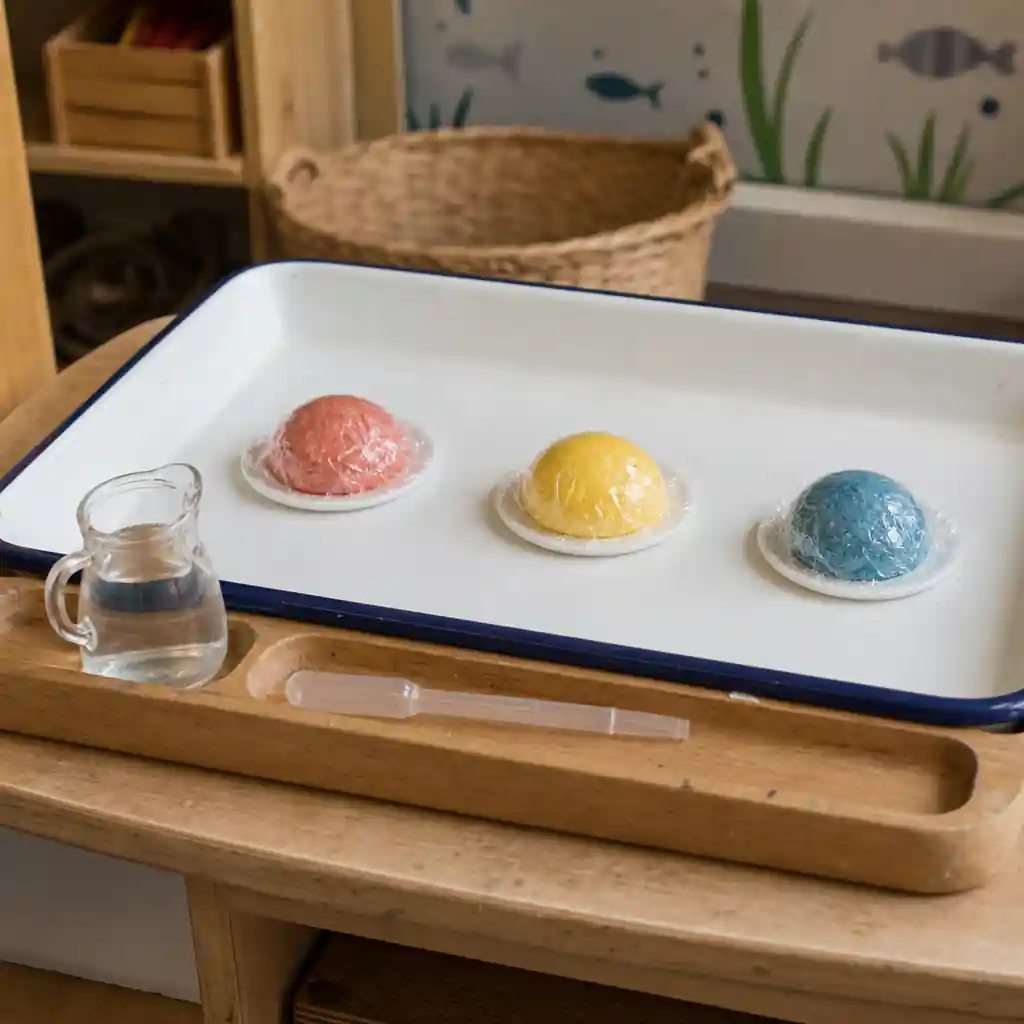
Prepare a shallow work tray with just three wrapped bicarbonate “planets” spaced left-to-right, each one coloured differently and placed on a small plate or cling-film disc so outcomes are visible. Provide one child-safe pipette per child and a single small squeeze bottle or jug of vinegar on a low tray edge. Remove extra colours and tools so the clear sequence is: choose a planet, place pipette, add vinegar and watch fizzing; this isolates cause-and-effect and hand control.
Demonstrate the full sequence once slowly and without commentary: pick up a pipette, draw vinegar, touch a single planet and release one drop, then set the pipette back. Step back and use minimal language (short labels or safety reminders only), watching for repetition, steady squeeze control, where children place drops, signs of concentration, and turn-taking at the vinegar supply. Note if children correct their own pouring or return to try a different colour rather than prompting them.

In an outdoor or nature-integrated space, place the deep tray on a low log, tree stump or sheltered picnic bench so children work at standing or kneeling height on grass or compacted soil. Materials such as bicarbonate “planets” coloured with food dye, white vinegar in a small jug or squeeze bottle, child-safe pipettes or small recyclable droppers, wooden spoons, shells and pebbles are provided in an open-ended way rather than pre-arranged. Materials are arranged so fizzing can run into channels formed by stones, leaves or shallow depressions; aprons and wipes are kept nearby.
The adult observes from close proximity, responding with brief prompts or a single word and intervening only to pour vinegar safely or manage spills. Children choose where to drop vinegar, experiment with force and angle, repeat actions, compare how colours spread and take turns with the jug or pipettes. The adult models one careful squeeze or a short phrase, then steps back to listen and notice, maintaining supervision for splashes and uneven ground.
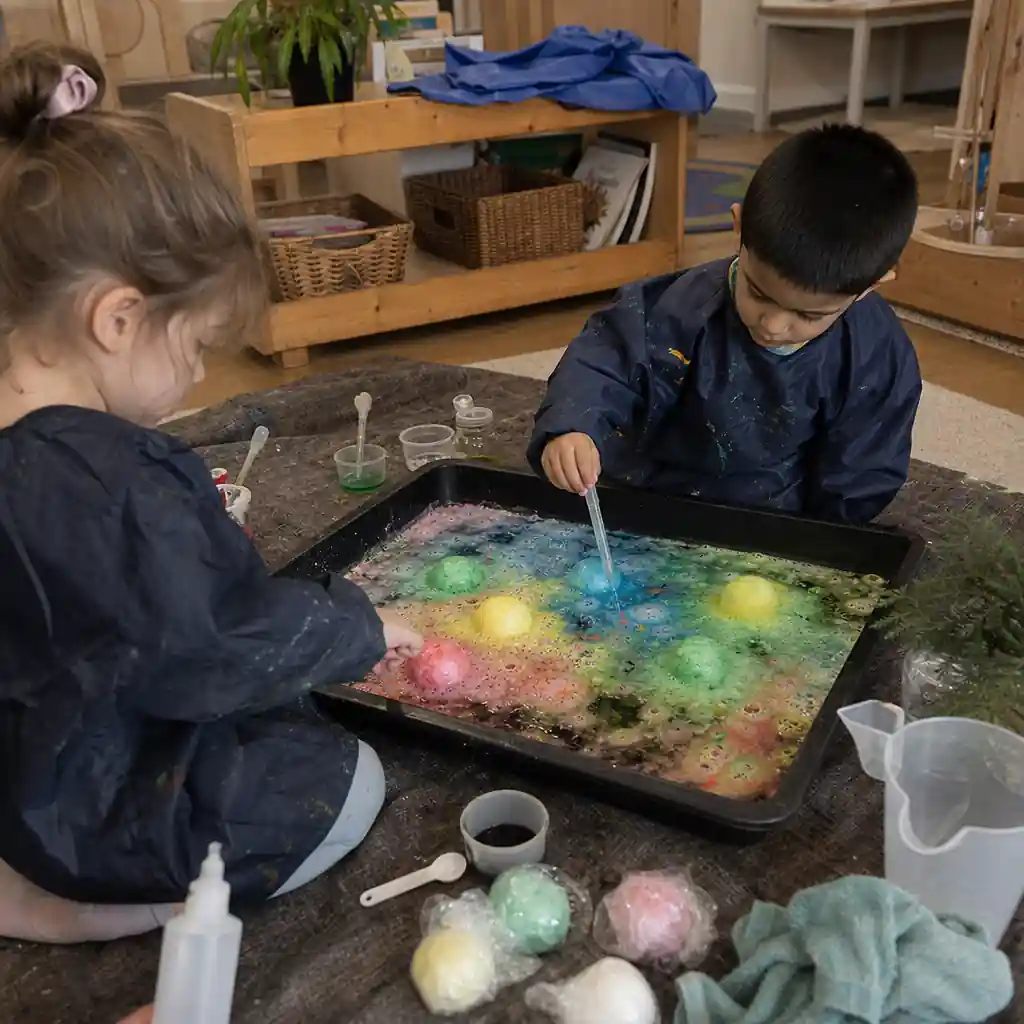
Ethos adaptation — arrange the deep tray on a low, central surface so children access it from all sides and materials sit openly nearby rather than being handed out. Offer a variety of loose elements alongside the coloured bicarbonate “planets”: extra small containers, droppers, spoons, lids and spare wrapped or unwrapped bicarbonate pieces so the child may choose how to position, break or layer them. Keep protective cloths and refill jugs visible to support independent decisions about supply and cleanup while maintaining safety.
The adult steps back as observer and co-researcher, using commentary: "I can see the colour spreading," "You’re trying a tiny drop there," "What happens if you add more here?" rather than giving directions. The child may select where, how often and with which tool to add vinegar, repeat actions, abandon and return or compare outcomes across colours. Embed observation by noticing sustained attention, changes in fizz patterns, colour blending, negotiation for resources and control of pipette squeezing as assessment moments linked to EYFS goals.
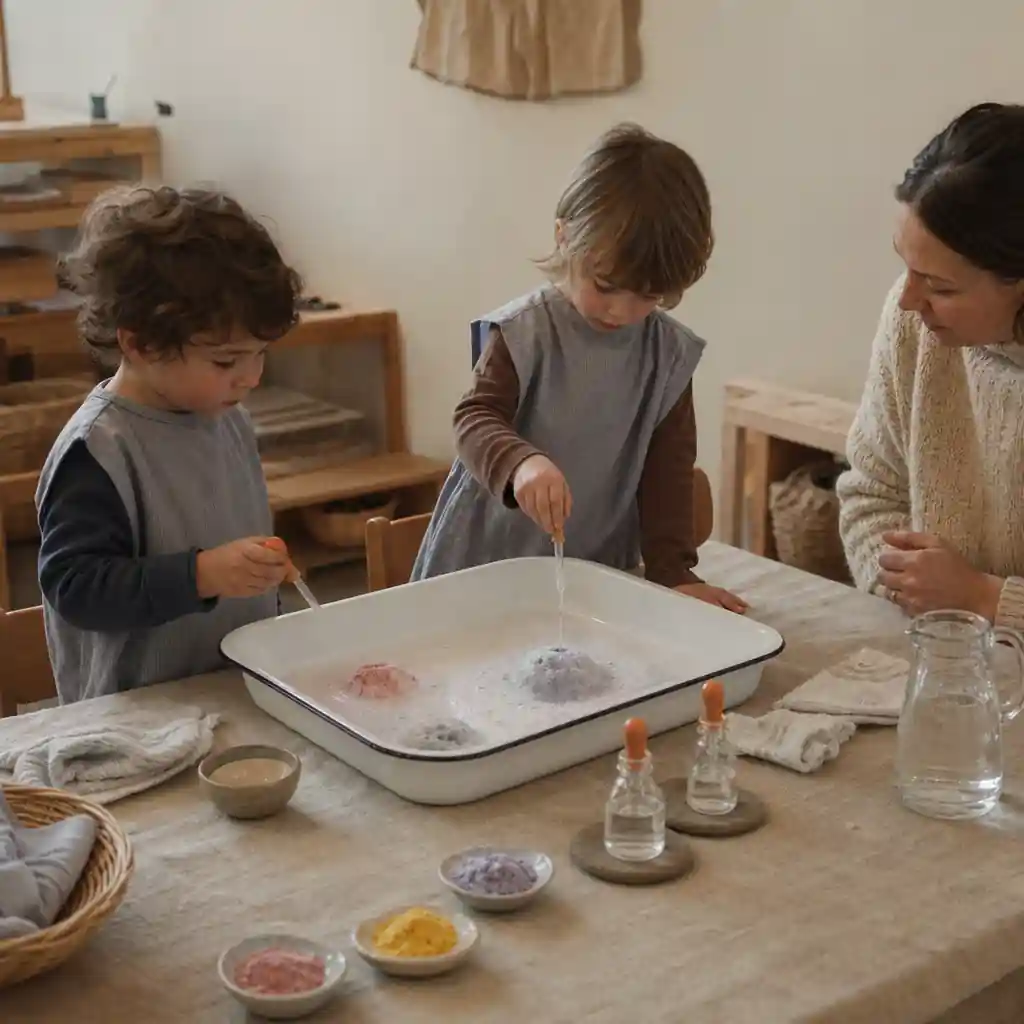
A calm table is set with a neutral cotton cloth and a deep enamel or stainless-steel tray with high sides. Small ceramic dishes hold bicarbonate shaped into a few palm-sized “planets,” each touched with a plant-based colour infusion (e.g., beetroot, blueberry, turmeric) rather than synthetic dyes. White vinegar is decanted into small glass dropper bottles with natural rubber bulbs, set on wool coasters to keep the space contained, with a jug nearby for adult refills. Only a small number of items are provided, with cotton aprons and cloths available at the edge.
The adult demonstrates one slow squeeze of vinegar onto a single planet, watches the fizz spread, then steps back without directing steps, offering brief words only for safety or naming a change. The child returns to selecting a bottle, placing drops in different spots, observing bubbling paths and colour shifts, and repeating at their own pace, including quiet pauses to compare mounds. The session keeps a steady rhythm of calm setup, unhurried exploration, and shared, simple tidy.