Exploring a taped-down water sensory aquarium bag with foam fish for babies and toddlers
Sensory Play
Communication and Language
Children explore a sealed water bag fixed to the floor, noticing how soft fish shapes shift under their hands. Adults stay close, offering simple words for what children touch and see, and watching for changes in pressure, attention, and regulation. The materials suit short, repeatable explorations where children can return to the same sensory surface across the day.
Children explore a sealed, water-filled sensory bag that contains soft foam fish shapes. The surface gives gentle resistance, inviting patting, pressing, and watching shapes drift. The experience can support early cause-and-effect noticing and shared attention with an adult nearby. It suits calm, floor-based play where children can return to the bag repeatedly.
Step-by-Step Guidance
1. Choose a clear floor space where an adult can sit close and children can approach safely.
2. Check the bag for holes and test the seal by closing it empty and pressing along the seam.
3. Add water to the bag, leaving enough air space for the contents to move when pressed.
4. Place the foam fish shapes into the water and remove excess air if it makes the bag balloon.
5. Seal the bag fully and press along the seal to confirm it is closed.
6. Lay the bag flat on the floor and use strong tape to secure all edges so the bag cannot slide or lift.
7. Invite the child to approach at their own pace. Position the adult close enough to support balance and prevent pulling at tape.
8. Model gentle patting and pressing with an open hand, then pause to allow the child to explore.
9. Offer simple language linked to what the child is attending to, such as naming a fish shape, describing movement, or noticing pressure.
10. If the child begins to mouth the bag, pick at tape, or becomes frustrated, redirect to pressing with hands or end the experience and remove the bag.
11. When finished, remove the bag from the floor, check for leaks, and dry the area.
Learning Objectives
Children may explore Physical Development through pressing, patting, and using two hands together on a responsive surface. Children may build Communication and Language as adults name what is seen and felt and follow the child’s focus. Children may begin to notice simple cause and effect as shapes move when pressure changes.
Adult Role
Stay physically close and emotionally steady, especially for babies who may startle at movement or dislike the feel of the bag. Follow the child’s lead and name what they focus on using short, clear language, such as “fish”, “squish”, “move”, and “stop”. Scaffold lightly by showing one simple action and waiting, or by guiding a hand only if the child seeks help; step back when the child repeats actions independently. Observe how the child uses hands, how long they watch movement, and what helps them stay regulated. Hold responsibility for safety by checking the seal, supervising continuously, and ending the activity if the bag or tape becomes a risk.
Observation Cues
Reaches out to touch the bag and repeats a press or pat in the same spot. Watches a foam fish move and shifts gaze back to the adult or back to the bag. Uses one hand, then brings the second hand to stabilise or press harder. Changes pressure (gentle tap, firm push) and pauses to notice the result. Attempts to point, vocalise, or gesture toward a fish shape or an area of movement.
Time & Space
5–15 minutes, with the option to return later for another short exploration.
A clear, flat floor area where the bag can be taped down fully and an adult can sit or kneel close by.
Materials
Safety
Age adaptations
Budding Adventurers
Include a small set of foam fish shapes with clear differences (size or colour) to support simple comparing. Encourage the child to use different parts of the hand (fingertips, palm) and notice how movement changes, without turning it into a test. Model short descriptive language such as “fast/slow” and “near/far” linked to what the child sees. If the child begins to pull at tape, offer a clear boundary and redirect to pressing the centre area.
Curious Investigators
Offer a slightly larger bag area or two separate taped bags spaced apart to support choosing and comparing, keeping supervision tight. Encourage the child to notice patterns such as where shapes collect when pressed, using language like “more here” and “empty there”. Invite the child to show an adult a preferred action, supporting confidence and shared attention. Keep the focus on sensory exploration rather than rules, and end the activity if play becomes rough enough to risk bursting.
Confident Discoverers
Use a larger sealed bag with a wider range of foam fish shapes to support sustained attention and careful hand control. Encourage the child to describe what they notice about movement and pressure using fuller sentences, reflecting their words back accurately. Offer a gentle challenge such as using one finger to move a shape across the bag, stopping if frustration rises. Maintain clear expectations about keeping the bag flat and hands-only to protect the seal.
EYFS Links
Physical Development: Children can practise hand and finger control through pressing, patting, and using two hands together on a resistant surface. Communication and Language: Adults can support understanding and early expressive attempts by naming what the child attends to and describing simple actions and changes. Personal, Social and Emotional Development: A calm, predictable sensory experience can support regulation and shared attention when an adult stays close, responsive, and unhurried.
Ethos adaptations
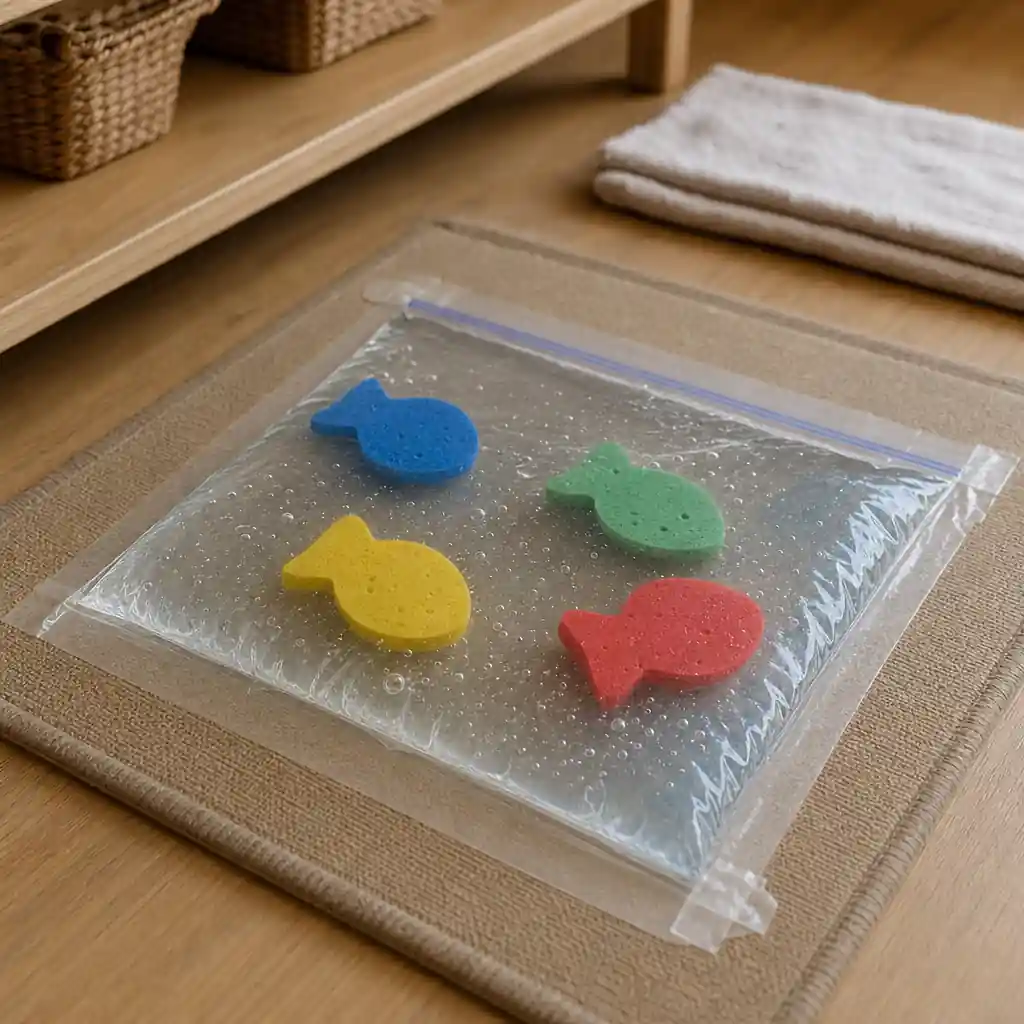
Prepare one large freezer bag half-filled with clean water and 3–4 large foam fish; press out excess air and seal. Tape all four edges flat to the floor on a small mat, creating a clear boundary the child can reach independently. Remove other toys from the area and place a towel just beyond, not on the workspace. The simple setup isolates pressing and patting: fish only drift when pressure changes, giving a visible self-check for cause and effect.
Sit beside the mat and give one slow, silent demonstration: place a flat hand, press gently, lift, watch the fish move, then pause. Offer a short phrase if needed (“press… move”), then step back and stay available, limiting further language to safety. Observe which hand(s) the child uses, the control of pressure, repetition, and moments of steady gaze. Notice any attempts to vocalise or look to you for shared attention, and signs of fatigue or frustration that signal when to end.

In an outdoor or nature-integrated space, the sealed water sensory bag is placed on a low wooden plank or absorbent mat on grass or compacted earth and surrounded by leaves, bark pieces and smooth stones to create tactile interest and a calm boundary. Materials are arranged so the bag sits securely and is visible among natural textures; foam fish or larger sponge shapes remain inside the intact sealed bag and are large enough to avoid choking hazards. The setting invites gentle patting and watching movement against an organic backdrop.
The adult observes from close proximity, checks the bag seal and taped edges, and stays ready to intervene for safety while otherwise offering minimal, responsive language such as single words or short phrases that mirror the child’s focus. Children choose how to press, pat and explore the responsive surface, may return repeatedly, and may share attention with the adult; the adult steps in only to manage risk, refill materials, or model a single action when needed.

Create a calm floor zone with soft lighting and space to approach from any side. Tape two or three sealed water bags securely to the mat with all edges sealed, leaving clear gaps between them so children can choose paths, pause, or move between surfaces. Vary water levels across bags to change resistance, and spread the foam fish loosely inside each so their movement differs. Keep the towel nearby and visible to normalise spills while maintaining safety and an unhurried, returnable space.
The adult stays close as a co-learner, mostly watching and naming what the child attends to: “I can see your hands pressing,” “That fish drifted to the edge,” “You’re using two hands together.” Follow shifts in focus—still watching, vigorous patting, or tracing along taped edges—without suggesting moves. The child may cluster fish, press-and-release to test speed, or rest a cheek to feel coolness. Notice bilateral coordination, pressure changes, shared gaze or vocal sounds, moments of calming, and any cause-and-effect experimenting to inform next offerings.

A calm floor space is defined with a neutral cotton cloth; a low wooden tray sits on top with a shallow glass or enamel dish half-filled with clean water. Large wooden or felted-wool fish shapes float inside. The dish is covered with a tightly stretched beeswax-coated cotton cloth, secured evenly with natural twine or a fitted wooden frame so the surface offers gentle resistance without leaks. Only a small number of items are provided, with a cotton towel at the edge for quick, quiet maintenance.
The adult demonstrates a slow palm press and release, then remains close, quiet, and observant. Brief words mirror the child’s focus—naming a fish, a movement, or the feeling—without directing steps. The child returns to patting, pressing, and using two hands together at their own pace, watching shapes drift as pressure changes. Repetition is expected and supported; the adult intervenes only for safety or to reseat or reseal the cover, maintaining the calm rhythm of explore, pause, and tidy.