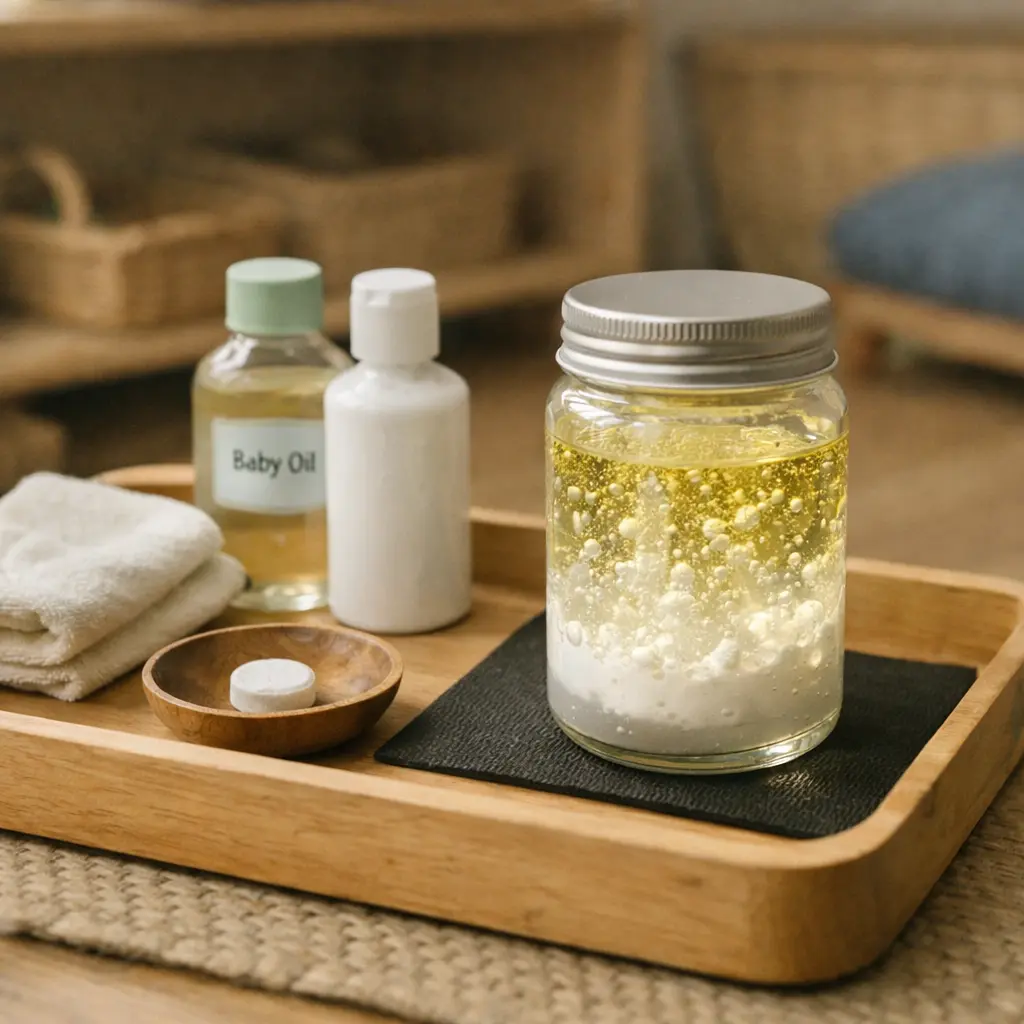
Creating a snowstorm in a jar using baby oil, white paint and an effervescent tablet

Winter
Water/sand tray
An adult places a clear, sealed bottle on an activity tray and sits with two children so they can see the sides. The children lean in as white swirls drift through the oil, and one child points and says, “Snow.” The adult turns the bottle slowly, then stops and rests both hands on the tray while the children watch the bubbles lift the white paint. When the movement slows, the adult slides the bottle towards the next child and says, “Two hands,” waiting as the child steadies it before making a gentle turn.
This activity invites children to watch a slow, swirling “snowstorm” form inside a clear jar as liquids and bubbles move and change. Children can notice cause and effect in real time, using their eyes and language to describe what they see. The experience is calm, repeatable, and easy to revisit across the day for short bursts of shared attention.

Time & Space

10–20 minutes, with the option to revisit for short bursts across the session.
Indoor table or floor space with a stable surface; an activity tray is helpful to contain any drips. A quiet corner works well for focused watching.
Materials
Safety

Step-by-Step Guidance

1. Prepare a stable surface where the jar can be placed down safely, ideally on an activity tray to catch drips. 2. Part-fill the jar with baby oil, leaving enough space for movement when the jar is tipped or gently shaken. 3. Add a small amount of white paint and allow it to sit briefly so children can notice the paint separating and forming blobs. 4. Invite children to look closely at what the paint is doing in the oil. Model simple language such as “floating”, “sinking”, “swirling”, “cloudy”. 5. Add an effervescent tablet and place the lid on securely before the jar is handled. 6. Offer the jar to children one at a time or in a small group. Encourage slow turning and gentle tipping so the “snow” can be watched as it rises and falls. 7. Pause regularly so children can see the storm settle. Repeat by adding another piece of tablet if needed, keeping the jar closed and the adult in control of the tablet.

Learning Objectives

This activity supports children to explore cause and effect and talk about changes they can see, linking to Communication and Language and Understanding the World. It also offers opportunities to practise careful hand control when holding, turning, or tapping the container, linking to Physical Development. Children may begin to use descriptive words (for example, fast/slow, up/down, cloudy/clear) as they observe the movement inside the jar.

Adult Role

Set up the jar so it is fully sealed before children handle it, and position yourself close enough to supervise hands-on use. Introduce the experience with calm, concrete language and give children time to watch before adding more action. Follow the child’s focus: if they are watching quietly, stay quiet and name only what is changing; if they are seeking repetition, help them slow down so they can see the difference between shaking and gentle turning. Scaffold turn-taking by offering a clear routine (“your turn to hold, my turn to add”) and support children to put the jar down safely between turns. Notice and reflect back what you see (“You tipped it and the white bits moved down”) to strengthen cause-and-effect understanding without turning it into a test.

Observation Cues

Do children track the movement with their eyes, lean in, or reposition themselves to see more clearly? Do children repeat an action (shake, turn, tap) and then pause to watch what changes? Listen for descriptive language or sounds: “snow”, “bubbles”, “go up”, “again”, “more”, “wow”. Do children show increasing control when holding the jar steady or rotating it slowly? Do children invite others over, point, or try to explain what is happening to a peer or adult? Do children tolerate waiting while the storm settles, or do they seek immediate repetition?

EYFS Links

Communication and Language: Children have a real, shared focus to talk about, which supports listening, attention, and using words to describe what they can see happening. Physical Development: Holding, turning, and placing the jar down carefully gives meaningful practice in hand control and coordination, especially when children try to move it slowly and with intention. Understanding the World: The visible changes inside the jar help children build early ideas about materials and change, including noticing that some liquids do not mix and that bubbles can move other materials around. Personal, Social and Emotional Development (PSED): Taking turns with an appealing object supports early self-control and helps children manage waiting with adult support.

Age adaptations

Budding Adventurers

Offer the jar on an activity tray and invite children to choose how to move it: slow roll, tip, or gentle shake. Add a short pause routine (“shake… stop… look”) to help children notice the difference their actions make. Support emerging language by offering two choices of describing words (“fast or slow?”, “up or down?”) and accepting single-word responses.

Curious Investigators

Invite children to describe what they predict they might see when the jar is turned, then give time to check by watching closely. Encourage children to compare two movements (for example, a slow turn versus a quick shake) and talk about what changed. Offer vocabulary that matches what is visible (cloudy, clear, swirl, bubble, float) and let children take the lead in explaining to a friend what is happening.

Confident Discoverers

Support children to take more responsibility for the process while keeping the adult in charge of the tablet and sealing the lid. Invite children to agree a “fair test” style approach in play terms, such as doing one slow turn and one fast shake and then describing differences they notice. Encourage longer explanations and shared thinking (“What do you think the bubbles are doing to the paint?”) and record children’s words for display or learning journeys.

Ethos adaptations

Prepare the environment as a simple, orderly invitation on a low table: one sealed, shatterproof jar on a small tray, with a cloth for wiping and a clear space to place the jar down. Keep the materials minimal and consistent so children can repeat the same actions and notice small differences over time. The adult controls the effervescent tablet and refreshes the jar away from the child’s hands, returning it ready for independent handling. The adult demonstrates one slow, precise movement (for example, a gentle half-turn) and then steps back to allow uninterrupted exploration. Use sparse, exact language that names what is observable (“turn”, “stop”, “bubbles rising”) and avoid over-questioning. Observe for concentration, careful movement, and the child’s ability to return the jar to the tray; respond by adjusting the environment (heavier bottle, non-slip mat, quieter spot) rather than adding more adult direction.
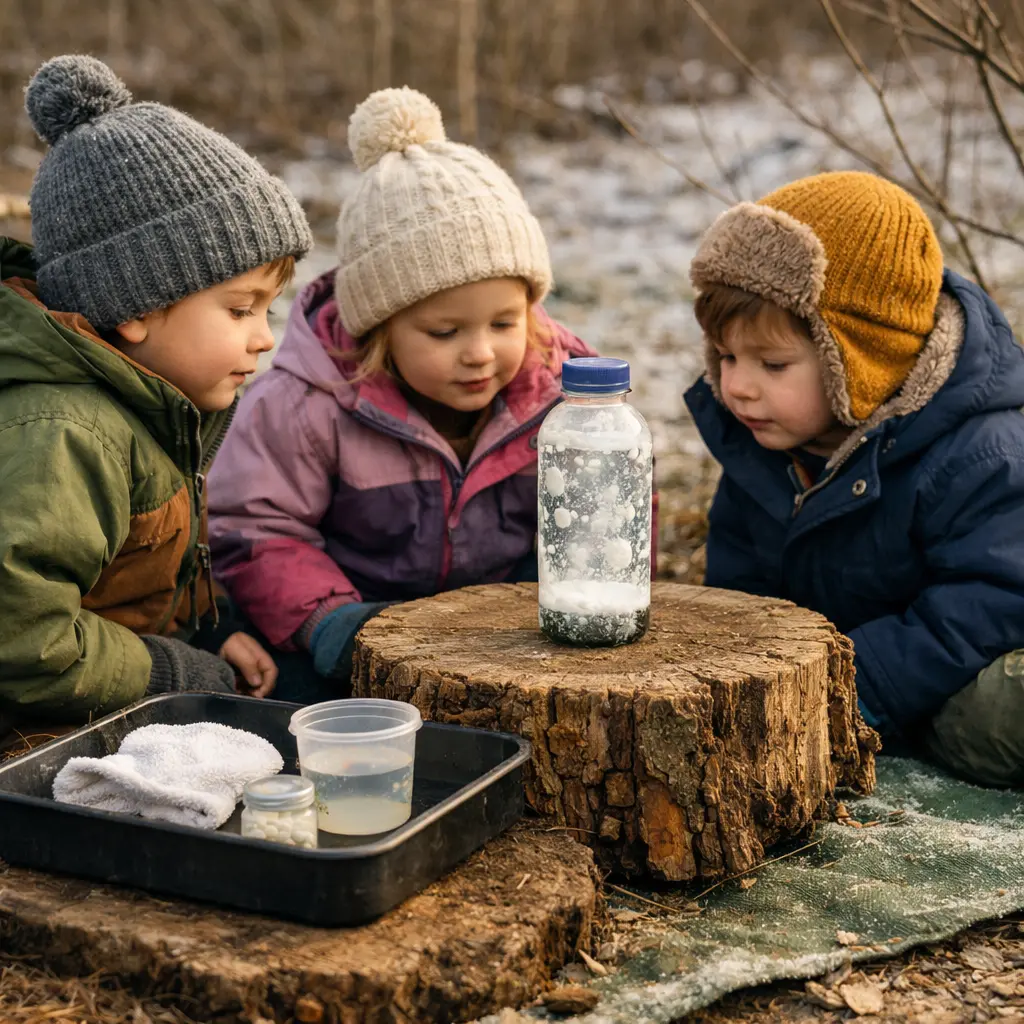
Set the activity up outdoors on a stable surface such as a low stump or a waterproof groundsheet, using a robust, sealed plastic bottle that can be wiped clean. Position it near a winter interest point (for example, a frosty patch or bare branches) so children can connect what they see in the jar with the season around them. Keep a small container of water and a cloth nearby for quick clean-up, and choose a sheltered spot so wind does not knock the bottle over. The adult frames the experience with nature-linked language (“It looks like snow falling in the wind”) and then gives children time to watch quietly, noticing how outdoor light changes what they can see. Support risk-managed handling: remind children to keep the bottle low and to place it down before swapping turns. Observe how children compare the jar “storm” to real weather, and respond by following their comparisons rather than steering them back to a fixed explanation.
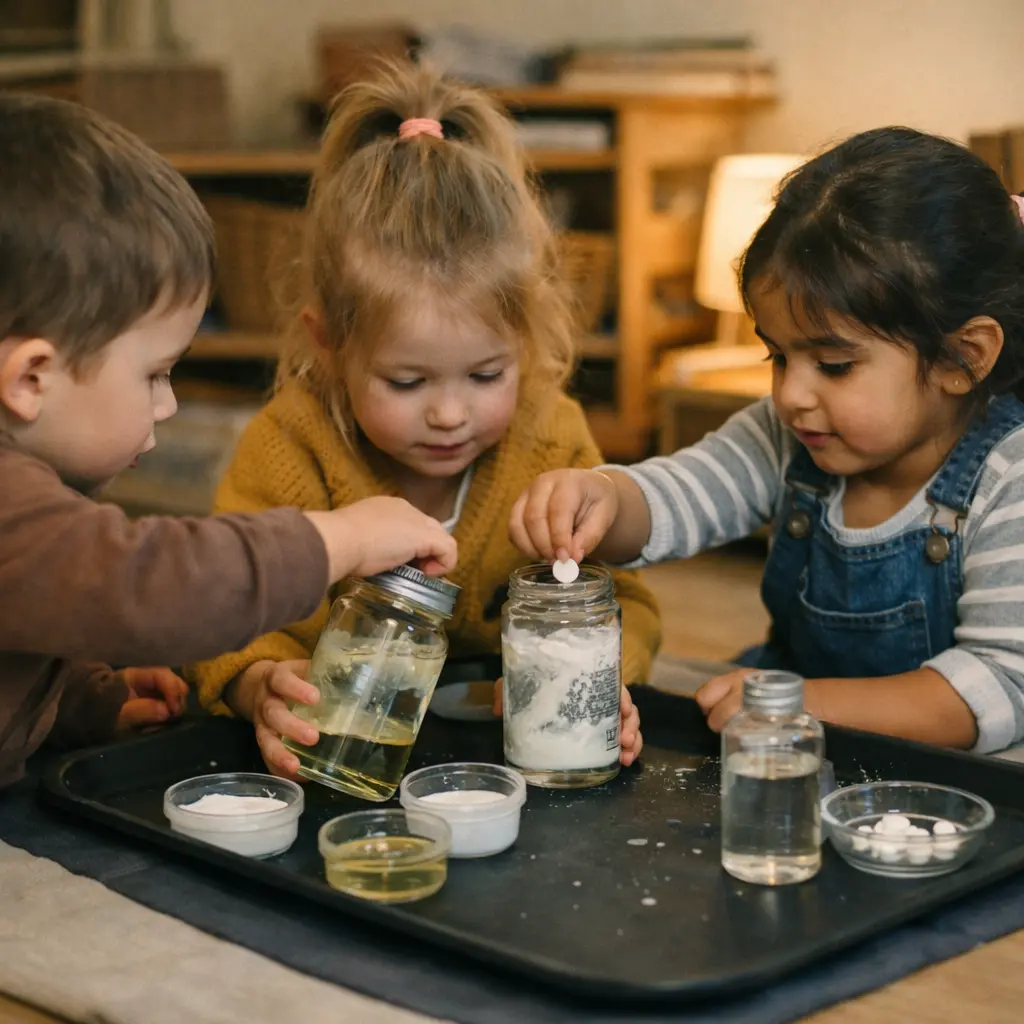
Prepare a calm, low table with waterproof mats and a soft light nearby. Offer clear jars and bottles with lids, small open pots of baby oil and white paint, and empty space for mixing; duplicate items and display them at child height. Keep effervescent tablets visible in a transparent dish within adult reach for safe, shared access; space jars apart so children can return, compare, combine, tilt, roll, or leave mixtures to rest. The adult observes and wonders aloud: "I can see the paint drifting," "You’re turning it slowly," "What happens if it stays still?" Children may choose proportions, timing, tapping or rolling, one container or several, with or without a tablet, and may pause, revisit, or compare jars. The adult notices descriptive language, links between actions and effects, careful hand control when holding and placing, moments of waiting or negotiating turns, and briefly captures child-chosen moments for revisiting.

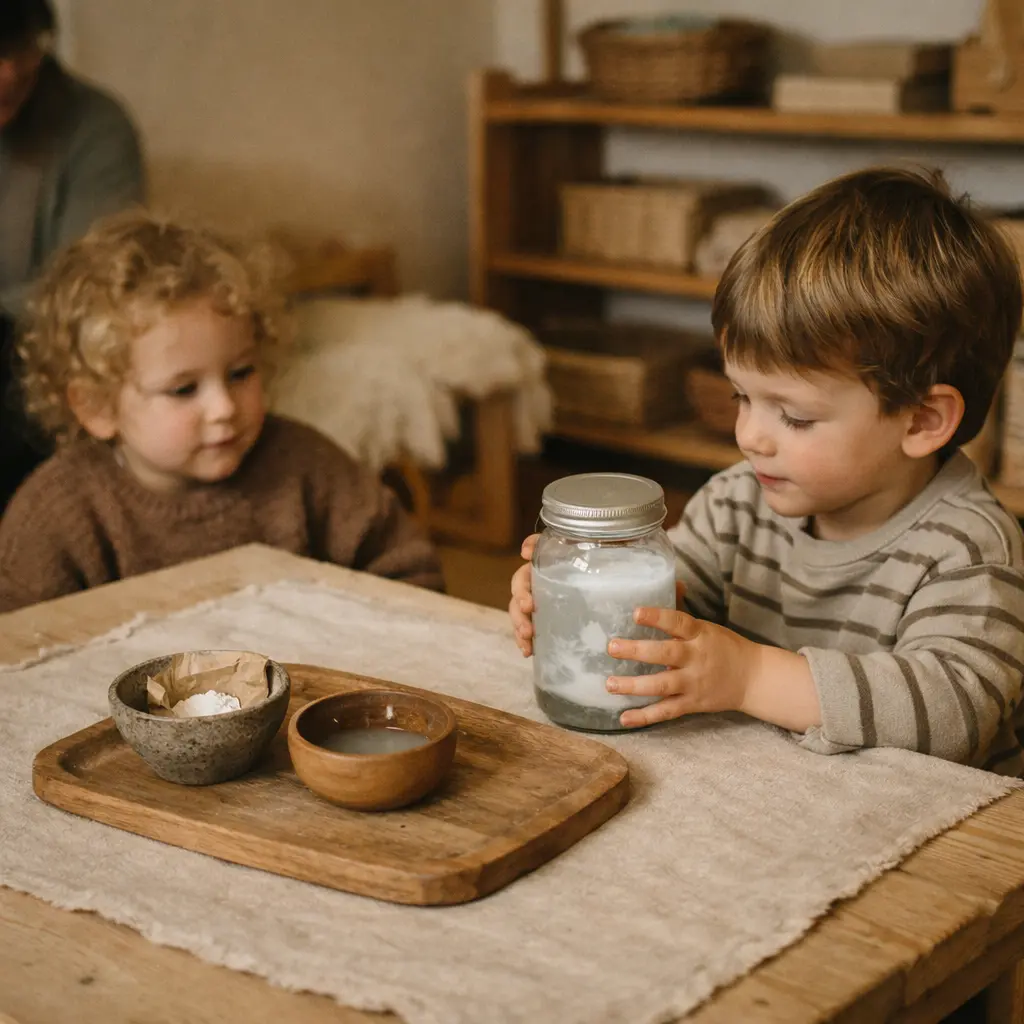
A single, calm workspace is prepared: a neutral cloth on a low table or tray defines the area with only one glass jar with a secure lid and two natural accompaniments. The jar is half-filled with water; clouding comes from a small pinch of powdered chalk or a splash of full‑fat milk, and gentle fizz is created by a tiny paper pouch of baking soda kept separate from a small cup of vinegar for adult use. Only these essentials are presented to keep textures and colours soft and uncluttered.

The adult demonstrates once, quietly and slowly pouring or tipping to show the movement without verbal steps, then moves to a nearby seat to observe. The adult remains attentive and speaks minimally, intervening only for safety or to model a calm gesture; the child returns to watching, holding and turning the jar at their own pace, repeating observations and hand movements as interest dictates. The session follows a simple rhythm: set out, explore, and tidy, allowing repeated short visits.

Join the Club
Always have an idea ready
Unlock the full FloPo library and spend less time wondering what to do next. Find purposeful activities for different ages, interests and moments — ready whenever you need them.