Create a spring butterfly sticky wall collage using sticky-back plastic and natural petals
Colours
Children work at a wall-mounted sticky butterfly using real petals, leaves and grass, making their own choices about colour and texture. An adult stays close, keeping the baskets of spring finds within reach and noticing how children manage space at the wall. Children may press, lift and reposition pieces as they explore what sticks and what drops. The adult uses a few calm words to name materials and colours without directing a finished design.
Children explore a large, sticky butterfly shape displayed on a wall and use spring natural materials to build up colour and texture. The vertical surface invites reaching, standing, and whole-body movement alongside careful finger work. The experience can open simple conversations about butterflies as minibeasts and what children notice outdoors. Shared access to the same space can create natural opportunities for turn taking and watching others’ ideas.
Step-by-Step Guidance
1. Choose a clear wall space at child height where children can stand safely without blocking a doorway.
2. Draw a large butterfly outline on card or paper and cut it out to create a template.
3. Cut a piece of sticky-back plastic larger than the template. Use the template to mark the butterfly shape and cut the sticky-back plastic into a butterfly silhouette.
4. Fix the butterfly sticky-back plastic to the wall with masking tape around the edges, keeping the sticky surface facing out. Peel away the backing to reveal the sticky texture.
5. Place natural spring materials in shallow trays or baskets nearby. Offer a small, manageable selection at first and top up as needed.
6. Invite children to add materials to the sticky butterfly. Allow children to choose where to place items and how full to make different areas.
7. Stay close to support sharing of space. If several children gather, name what you notice and help children find a place to work without taking over the design.
8. As children work, model simple language about colour and nature items (for example naming petals, leaves, and colours) and reflect what children are doing.
9. When interest fades, pause the activity with children. Leave the butterfly up for revisiting if the materials remain safe and fresh, or remove and dispose of plant material and recycle what you can.
10. Support tidy-up by returning trays and clearing any dropped plant pieces from the floor.
Learning Objectives
Children may develop fine motor control as they pick up, place, press, and adjust small natural items on a sticky surface (Physical Development). Children may build early colour awareness as they compare petals, leaves, and grasses and notice differences in shade and pattern (Expressive Arts and Design). Children may use words, gestures, and attention to share space and materials with others (Communication and Language; Personal, Social and Emotional Development).
Adult Role
Stay emotionally attuned, noticing when children want closeness, space, or help to join in, and respond calmly without taking control of the collage. Model simple, accurate language for colours and natural items, and add short comments about what you can see rather than quizzing children. Scaffold only when needed: offer a smaller pinch of materials, point out an open area on the butterfly, or demonstrate a gentle press if a child is frustrated, then step back to let them continue. Observe how children choose materials, manage the shared wall space, and persist with tricky pieces, and use this to decide whether to reduce the crowding, refresh the selection, or offer a second sticky area. Maintain safety by checking plant materials, supervising closely at the wall, and managing any mouthing risk for younger children.
Observation Cues
Reaches up, stands close, steps back, or changes position to access different parts of the butterfly
Uses fingertips or whole hand to press materials and adjusts placement when items fold or fall
Sorts or selects materials by colour, size, or texture without adult direction
Watches another child’s placement and chooses to add alongside, copy, or create a different area
Waits, offers, or negotiates for a preferred petal or a space on the butterfly
Uses words or sounds linked to colour, nature finds, or the butterfly (for example naming “flower”, “leaf”, or a colour)
Time & Space
10–25 minutes, with the option to revisit briefly across the day if the display remains safe and supervised.
A clear wall section at child height with enough floor space for 2–4 children to stand and step back safely; a nearby surface for trays of natural materials.
Materials
Safety
Age adaptations
Budding Adventurers
Place the butterfly at standing height with a clear space to step back and return, and add trays sorted by colour (for example yellows, greens, pinks) to invite simple matching. Offer a mix of petals, grass, and small leaves, and allow children to build up dense areas or leave gaps. The adult models short phrases about colour and position (top, bottom, wing, middle) and supports sharing by offering a second “waiting tray” of items to hold while another child uses the wall.
Curious Investigators
Add a second sticky shape beside the butterfly (for example a small circle “flower patch”) so children can choose where to work and reduce crowding. Include a wider range of natural materials with visible differences (smooth leaves, feathery grass, different petal sizes) and optional child-safe tweezers for children who want extra challenge. The adult follows children’s interest in the minibeast theme by naming butterfly body parts in simple terms (wings, body) and noticing patterns children create, without directing a final design.
Confident Discoverers
Offer a larger butterfly outline with a clearer body and wing sections so children can decide how to organise colour across areas. Provide more deliberate colour choices and allow children to sort, compare shades, and plan where to place materials, including using tweezers if appropriate. The adult supports collaboration by helping children agree on shared space (for example one wing each, or a shared colour area) and observes how children negotiate, adapt plans, and return to refine placement.
EYFS Links
Physical Development: Children use hands and fingers to pick up, pinch, press, and adjust small natural items on a vertical surface, and they may practise balance and posture as they stand, reach, and step back.
Communication and Language: Adults can model and repeat simple vocabulary for colours and nature items, and children may use words, sounds, or gestures to request materials and share attention.
Personal, Social and Emotional Development: A shared sticky wall creates real reasons to wait, take turns, and negotiate space, with adult support to manage feelings when materials are limited.
Expressive Arts and Design: Children explore colour, texture, and arrangement using open-ended natural materials, making choices about where and how to place items without a fixed end product.
Understanding the World: Using spring finds can link to noticing living things outdoors and beginning to recognise a butterfly as a minibeast through real materials and observation-led talk.
Ethos adaptations

Cut the sticky-back plastic to a single large butterfly shape and fix it at child height on a clear wall space. Limit the loose materials to small shallow trays, each sorted by colour or texture and placed on a low shelf beside the wall; provide one tray per two children and a single pair of child tweezers as an option. Remove extra tools and keep only enough petals, leaves and grasses for focussed placement so the task isolates careful picking, pressing and colour matching on the vertical surface.
Show the child a one-time, silent demonstration: pick up one item, place it deliberately on the butterfly, press once and step back. After that, stay nearby but give no step-by-step commentary, offer only brief safety reminders, and intervene only for physical safety or sharing pauses. Observe who repeats the same placement, who refines pressure and alignment, the child’s choices of colour and pattern, and how children wait, take turns or negotiate space rather than directing their decisions.
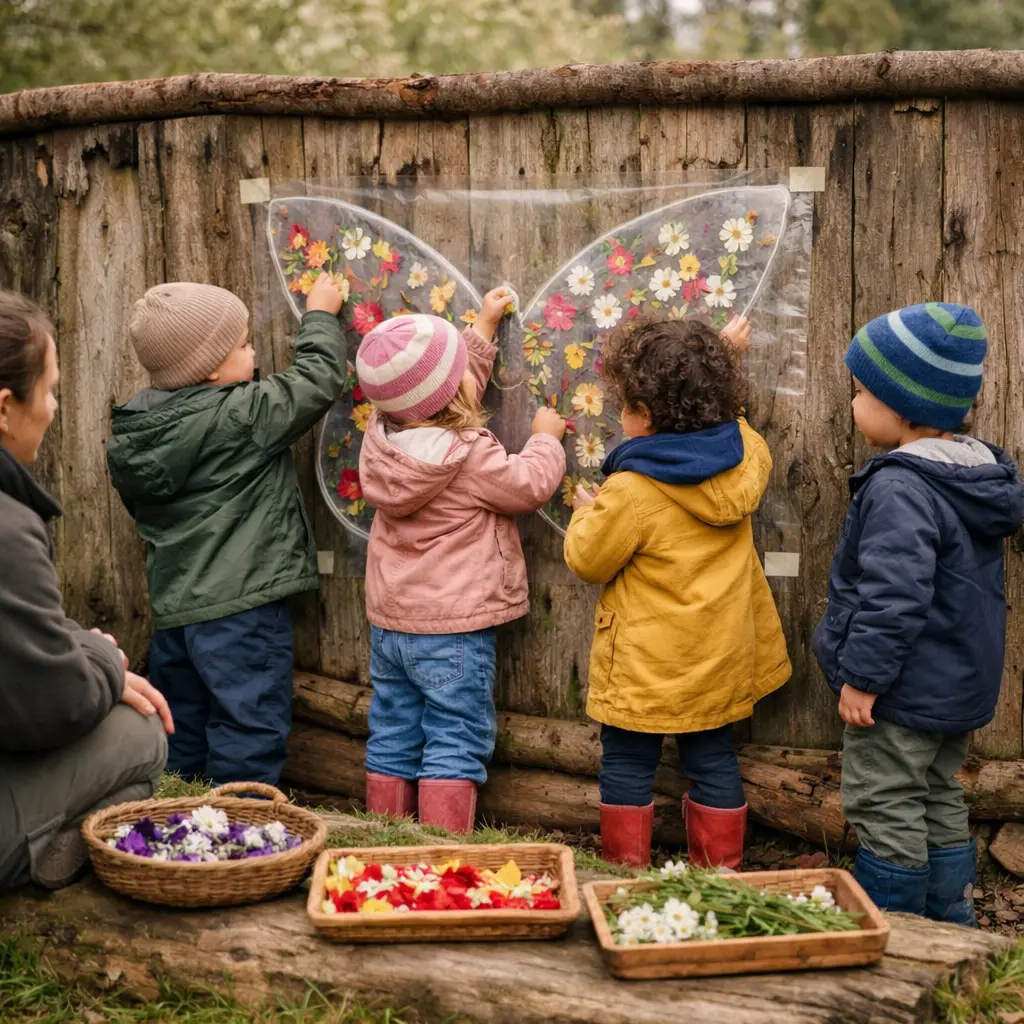
In an outdoor or nature-integrated space, the butterfly shape is mounted on a sheltered garden wall, fence panel or low tree trunk so children stand on grass or a firm path and reach, step back and move around the vertical surface. Materials are arranged in shallow trays or baskets: spring petals, small leaves, grasses and checked small flowers are collected and left imperfect and open-ended beside the sticky-back plastic so children may pick, press and layer natural pieces rather than pre-ordered kits.
The adult observes from close by, checking edges and safety, offering one-word prompts or short observations and modelling careful handling before stepping back to reduce directive instruction. Children choose where to place items, take turns, negotiate space and experiment with pressing and adjusting at their own pace while the adult responds with concise comments, manages any needed tidying or hand-wipes, and only intervenes to maintain safety or offer a brief prompt.
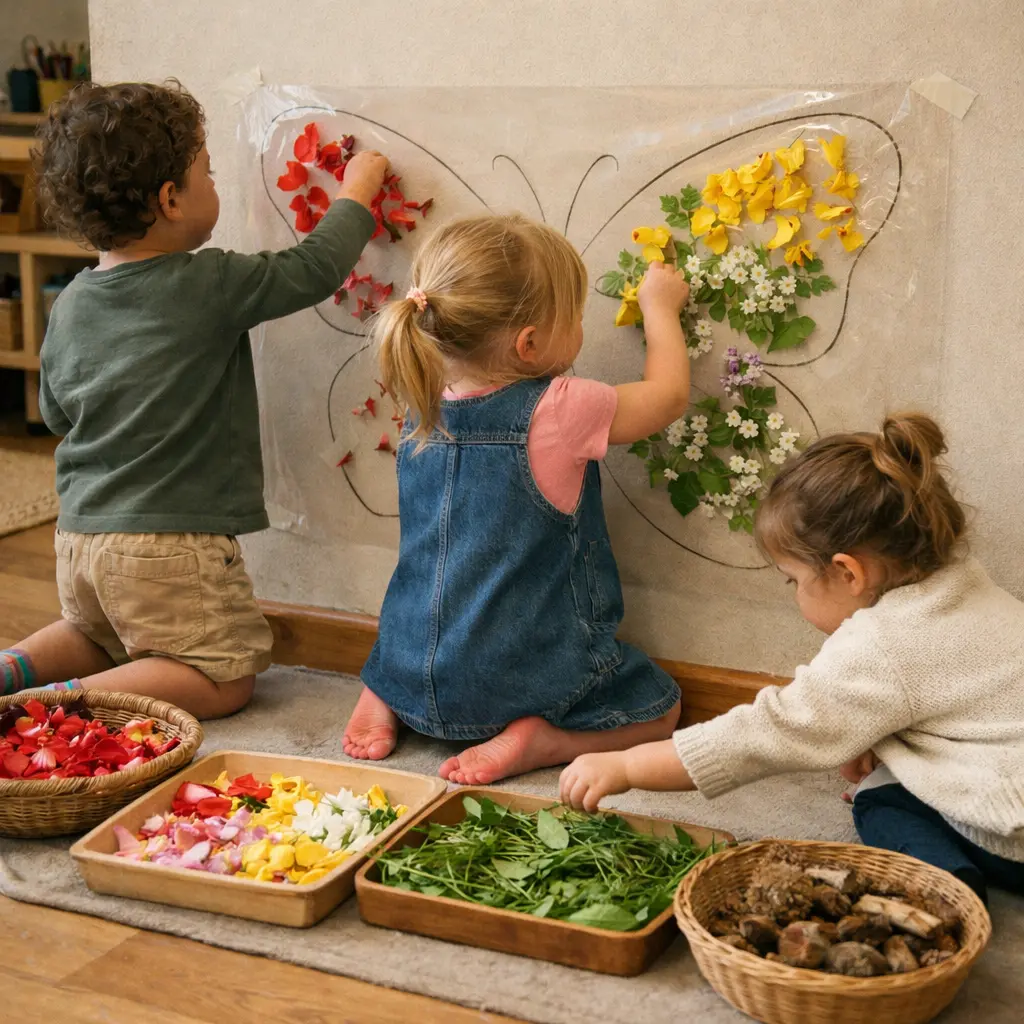
Arrange the space so a large butterfly-shaped sticky sheet is positioned at child height with clear floor space for standing, stepping back and viewing. Present natural loose parts in shallow trays and baskets nearby rather than handing items out: mixed petals, grasses, leaves, bark and small seedheads invite multiple uses. Remove single-purpose tools (replace coded templates with open card frames) so materials remain ambiguous and reusable, allowing children to choose scale, colour and layering independently.
The adult steps back as observer and co-researcher, offering short, open commentary: "I can see red petals layered here," "You’re trying to make a pattern," or "What happens if you press more gently?" The child may move between adding, removing and rearranging, invite others, or begin sorting by shade or texture. The adult notices posture, negotiation around the wall, repetition and language use as embedded observation cues rather than directing activity.
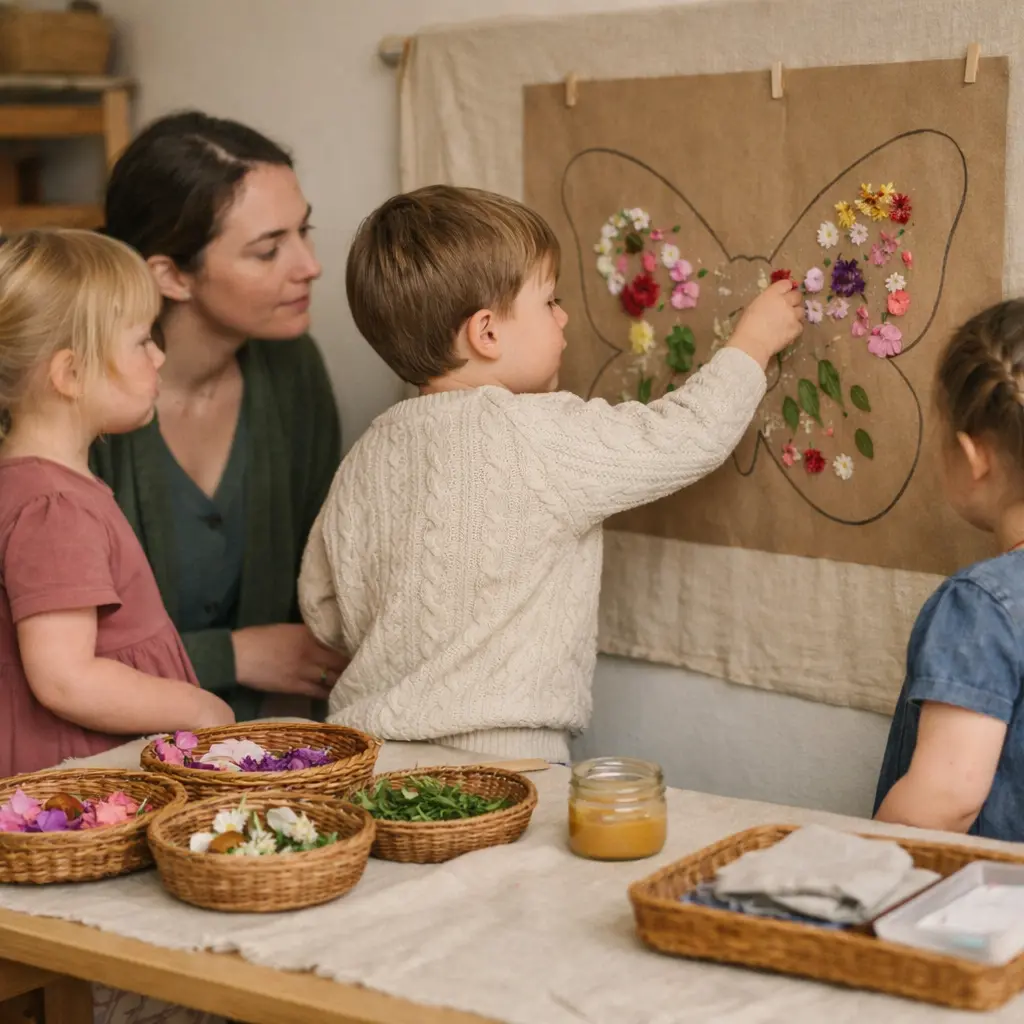
Steady the activity on a calm, low-contrast wall space where a plain cotton or linen cloth is stretched over a simple wooden frame and attached with small wooden pegs; a large butterfly outline is drawn on kraft card pinned to the cloth so the shape is clear without bright colours. Only a few shallow baskets contain sorted spring finds — petals, small leaves, grasses — and a small jar of beeswax-based tack is available for adhering items; trays at the edge hold spare materials and wipes for tidy-up.
The adult demonstrates, with a quiet, slow placement of a petal and an occasional model of using fingers or tweezers, then steps back to observe, using minimal language except for safety prompts. The child returns to the wall, repeating placements and stepping back to view, sharing space by watching others and waiting their turn; the adult intervenes only to support safety, supply materials, or gently model a movement.