Decorating cress head pots with collage and paint to explore planting and care
Gardening
Children decorate small pots or cups with facial features using paint, pens, and collage materials, and prepare them for growing cress. The experience can support early ideas about what plants may need and how living things change over time. Adults may notice children’s fine motor control in transferring and pouring, and how they manage attention within a shared group process. Children often show strong preferences for particular materials and may talk about plants they know.
Children create simple “cress heads” by decorating a small pot or cup with facial features and preparing it for growing seeds. The experience combines creative choices with early planting knowledge, including what living things may need to grow. Children often become curious about changes over time and may connect the activity to plants they notice at home or outdoors.
Step-by-Step Guidance
1. Prepare the space with a messy mat and place cleaning cloths within reach. Set out pots/cups and a limited, clear selection of decorating resources (paint, pens, magazine pieces, glue and spreaders).
2. Invite children to choose a pot/cup and decide how they want to create a face. Offer a simple prompt such as noticing where eyes, nose, and mouth might go, without correcting their design.
3. Support children to use glue spreaders and paintbrushes with control. Keep materials in small amounts so children can manage “emptying and filling” without the table becoming overwhelmed.
4. When children are ready, introduce cotton wool and cress seeds. Present them in small containers so children can transfer and sprinkle with their fingers or a pinch grip.
5. Encourage children to notice the pot/cup as they add cotton wool and seeds, using language such as “empty, full, more, less, sprinkle, cover.”
6. Offer watering cans/jugs with a small amount of water. Support careful pouring so the cotton wool becomes damp rather than flooded.
7. Help children place their pots/cups in a warm, light place. Agree a simple care routine with the group (checking and watering with adult support).
8. Revisit over the following days to notice changes. Offer drawing or mark-making alongside observation if children show interest.
Learning Objectives
In Understanding the World, children may begin to notice that plants change over time and can be cared for through simple routines. In Expressive Arts and Design, children can explore combining materials to represent facial features and make choices about colour and texture. In Communication and Language, children may practise listening and attention within a small-group sequence and use new words linked to planting and growth. In Physical Development, children can practise fine motor control through transferring, spreading glue, and careful pouring.
Adult Role
Stay emotionally attuned by noticing children’s confidence with messy materials and offering calm reassurance when spills or sticky hands feel uncomfortable. Model simple, accurate language for facial features and planting (eyes, mouth, seeds, water, grow) and add comparative words (more/less, wet/dry, empty/full) as children act. Scaffold when a child is stuck with tool control or sequencing by demonstrating once and returning the tool, and step back when a child is absorbed in choosing, placing, or transferring. Observe closely for what holds attention (seeds, pouring, collage, paint) and adjust the amount and variety of materials to support sustained play without taking over. Hold responsibility for safety by supervising seed handling, managing spill risks, and checking pots/cups for chips or sharp edges.
Observation Cues
Notices and comments on what is “empty” and “full” when adding cotton wool, seeds, or water.
Chooses and places facial features with increasing control (positioning eyes, mouth, hair).
Talks about plants at home or outdoors, or describes ways they have seen adults care for plants.
Shows preference for particular tools or materials (paint, magazine collage, glue spreader) and sustains attention with them.
Responds to a shared sequence by waiting, watching, copying, or asking for clarification.
Returns to check the pot over time and comments on changes (new growth, colour, height).
Time & Space
10–15 minutes to set up. 20–45 minutes for the main making and planting, with flexible finishing time based on children’s interest; short daily check-ins over several days.
Indoors on a wipe-clean table or floor space with a messy mat; optional outdoor setup in suitable weather. A warm, light place is needed for ongoing observation of growth.
Materials
Safety
Age adaptations
Budding Adventurers
Provide both paint and collage but limit quantities so children can manage tools independently. Encourage children to identify and place facial features, accepting unconventional placement while naming what they have chosen. Offer a small watering can with a controlled flow and support children to judge “enough” water by noticing damp cotton wool. Revisit daily with a brief check-in routine led by the adult, inviting children to point, name changes, and help with watering.
Curious Investigators
Invite children to plan their face by selecting materials for eyes, nose, mouth, and “hair,” and to describe their choices using colour and texture words. Encourage children to take more responsibility for the planting stage by transferring cotton wool, sprinkling seeds evenly, and pouring carefully with minimal adult help. Add simple growth documentation such as a quick drawing of what they notice each day, or a shared group chart with adult scribing of children’s words.
Confident Discoverers
Offer children greater independence with a clearly organised set of materials and encourage them to manage their own workspace and clean small spills with support. Extend thinking by prompting what plants might need (light, water, warmth) and inviting children to predict what they might see over time, without requiring a correct answer. Support children to refine fine motor control by using smaller collage pieces or more detailed pen features, and to take a lead role in the care routine for the group’s pots.
EYFS Links
Understanding the World: Children can explore what plants may need to grow and notice changes over time when they revisit their cress. Adults can support this by using everyday language about care routines and by helping children compare what they see across days.
Expressive Arts and Design: Children can combine paint, pens, and collage materials to represent facial features and make creative choices about colour, shape, and texture. Adults can support by offering a manageable range of materials and valuing children’s own designs.
Communication and Language: The shared process can support listening and attention in a small group, with children following a simple sequence and using new vocabulary linked to planting and growth. Adults can extend language by modelling short phrases and adding descriptive words as children act.
Physical Development: Children can practise fine motor control through spreading glue, placing small pieces, sprinkling seeds, and controlled pouring. Adults can support by offering appropriately sized tools and by demonstrating safe, careful movements when needed.
Ethos adaptations
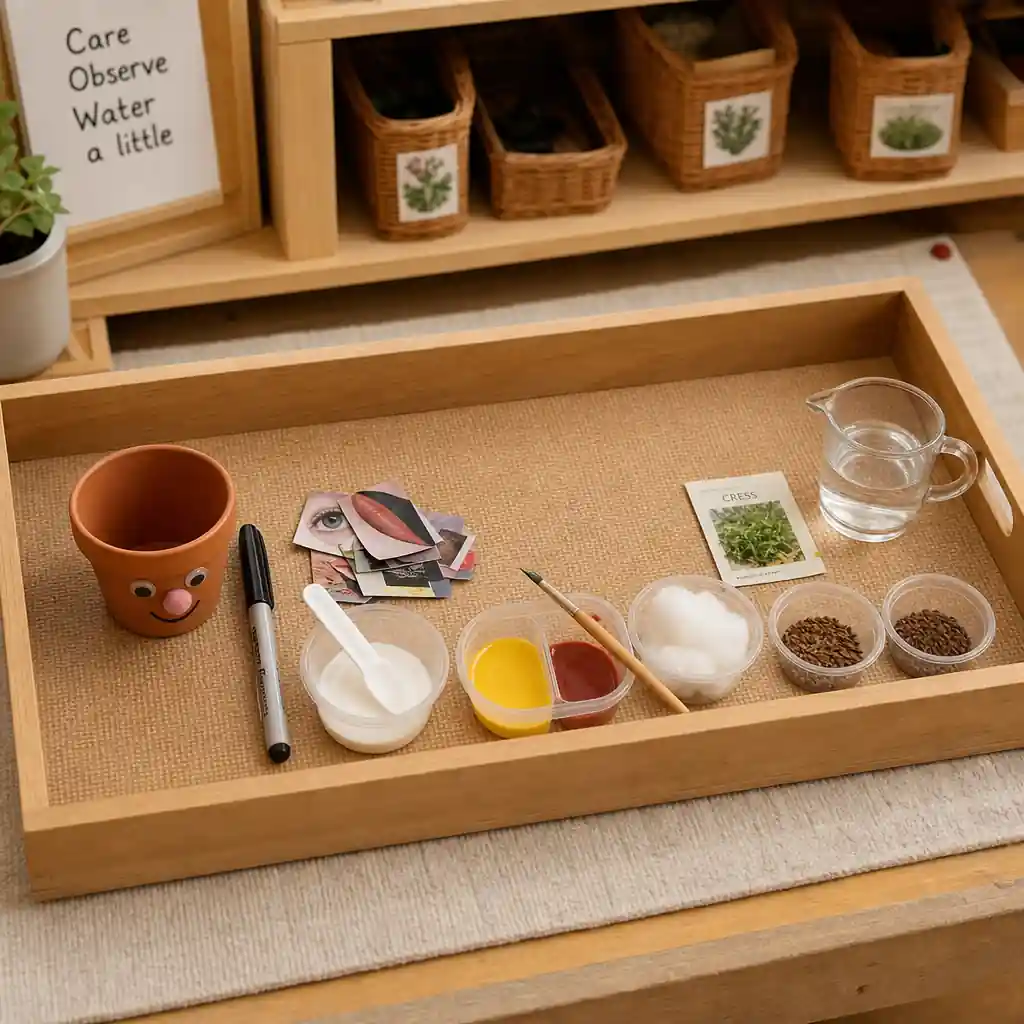
On the messy mat, set a clear left-to-right sequence each child can reach: pot or cup, one marker, a small selection of pre-cut magazine features (6–8 pieces), PVA with one spreader, a small amount of paint with one brush, cotton wool, cress seed packet, then a small jug with only a little water. Offer only two paint colours. Keep one pot per child and a defined space for finished pots. The setup makes control of error visible: cotton to the rim, seeds on top, and any over-watering shows as pooling.
Give one slow, quiet demonstration of the full sequence—add a face, glue one or two pieces, place cotton wool, sprinkle a small pinch of seeds, pour just until the cotton looks damp, then set the pot in the defined space—then step back. Keep words to brief labels or safety reminders. Watch for careful grip, controlled pouring, returning tools to place, and repetition of the sequence. Over days, observe who checks moisture, notices sprouting, and uses new planting words.
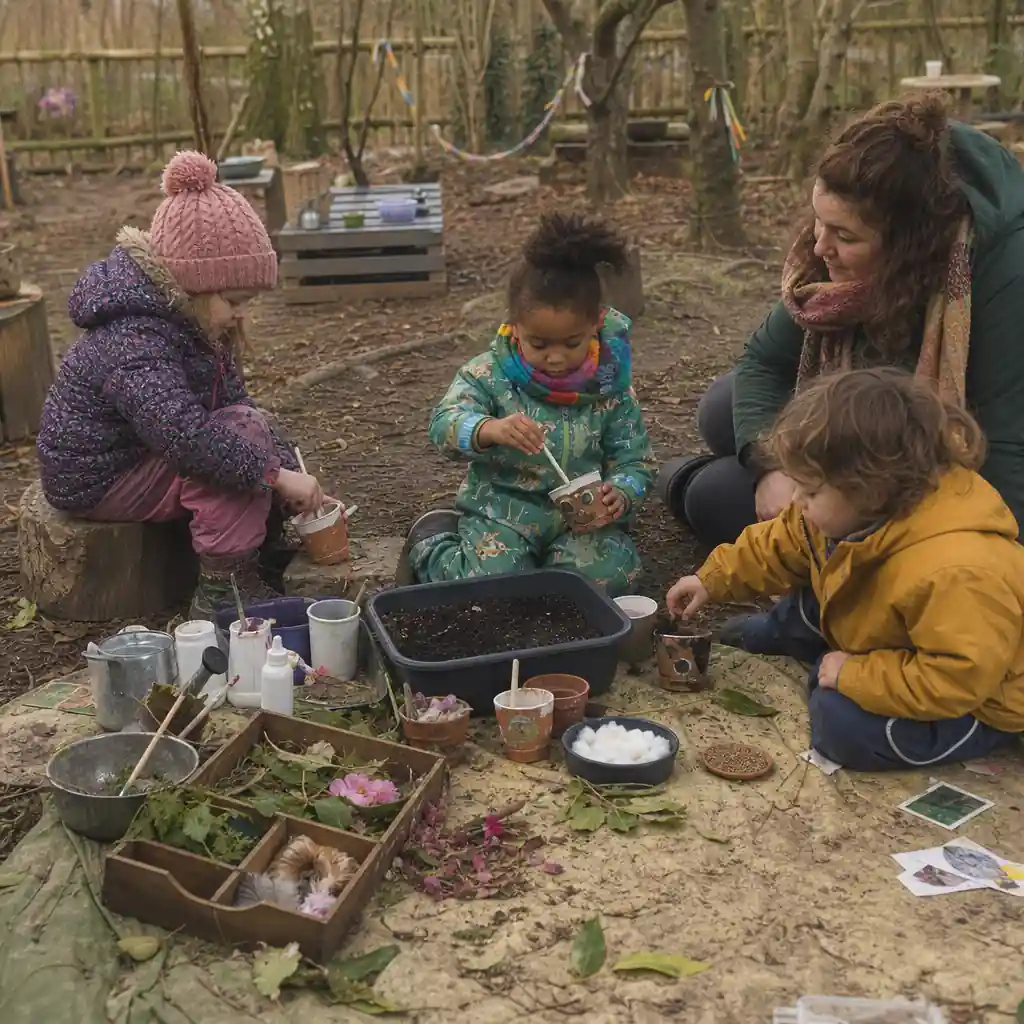
In an outdoor or nature-integrated space such as a sheltered corner of the garden or a firm picnic blanket by a raised bed, materials are moved out from a table into an open, slightly uneven surface with natural seating (logs, crates). Materials are arranged as real, open-ended supplies: soil in tubs, small ceramic pots or sturdy cups, natural collage bits (leaves, petals, bark, feathers, wool or yarn), natural sponges and washable mud paint alongside safe PVA, cotton wool and cress seeds, and small wooden or metal jugs for pouring.
The adult observes from close by, offering brief, responsive prompts or single-word questions and demonstrating safe pouring or glue handling only when needed, then stepping back to reduce direction. Children choose collage pieces, test textures, transfer soil, sprinkle seeds and water, and may revisit their pot across days to notice change; the adult monitors risk around uneven ground and water, intervening calmly if required while prioritising child-led pace and choices.
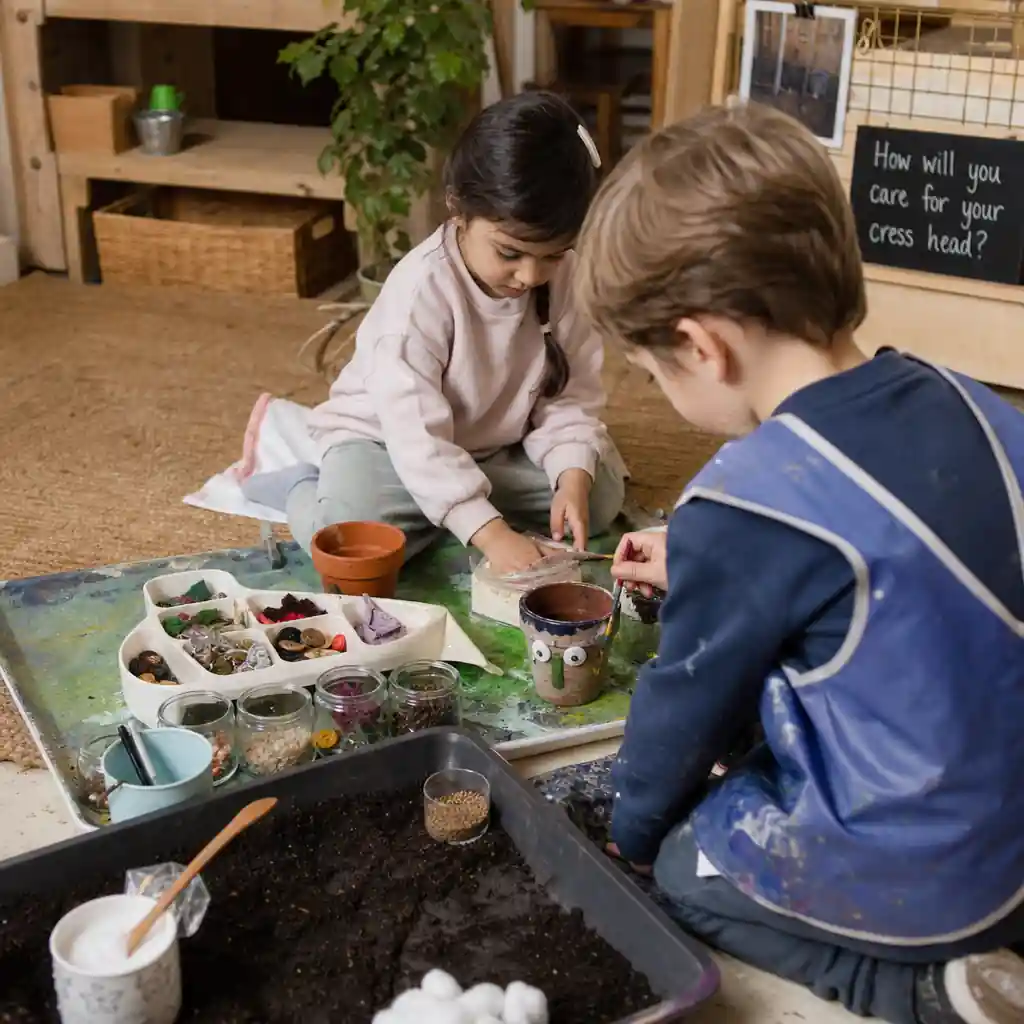
Arrange low tables and open trays so each child can access a range of materials visible and within reach: recycled cups and pots, soil, cotton, cress seeds, paint, loose collage pieces (fabric scraps, buttons, natural bits) and varied brushes and spreaders. Present materials as choices rather than a preset kit; leave gaps in instructions and allow children to select containers, decide how much soil or water, and combine collage and planting materials in unexpected ways while adults keep safety items like water and glue within supervised reach.
The adult steps back as observer and co-researcher, using short commentaries such as "I can see the seeds are in the cup" or "You’re trying different textures" and questions like "What happens if you add a little more soil?" rather than giving step-by-step directions. The child may shift between decorating, pouring, and caring routines, return to work over days, or test watering strategies; the adult notices patterns of repetition, emerging vocabulary about growth, fine-motor control during glue and pouring, and problem-solving moments as embedded cues for assessment and next exploration.
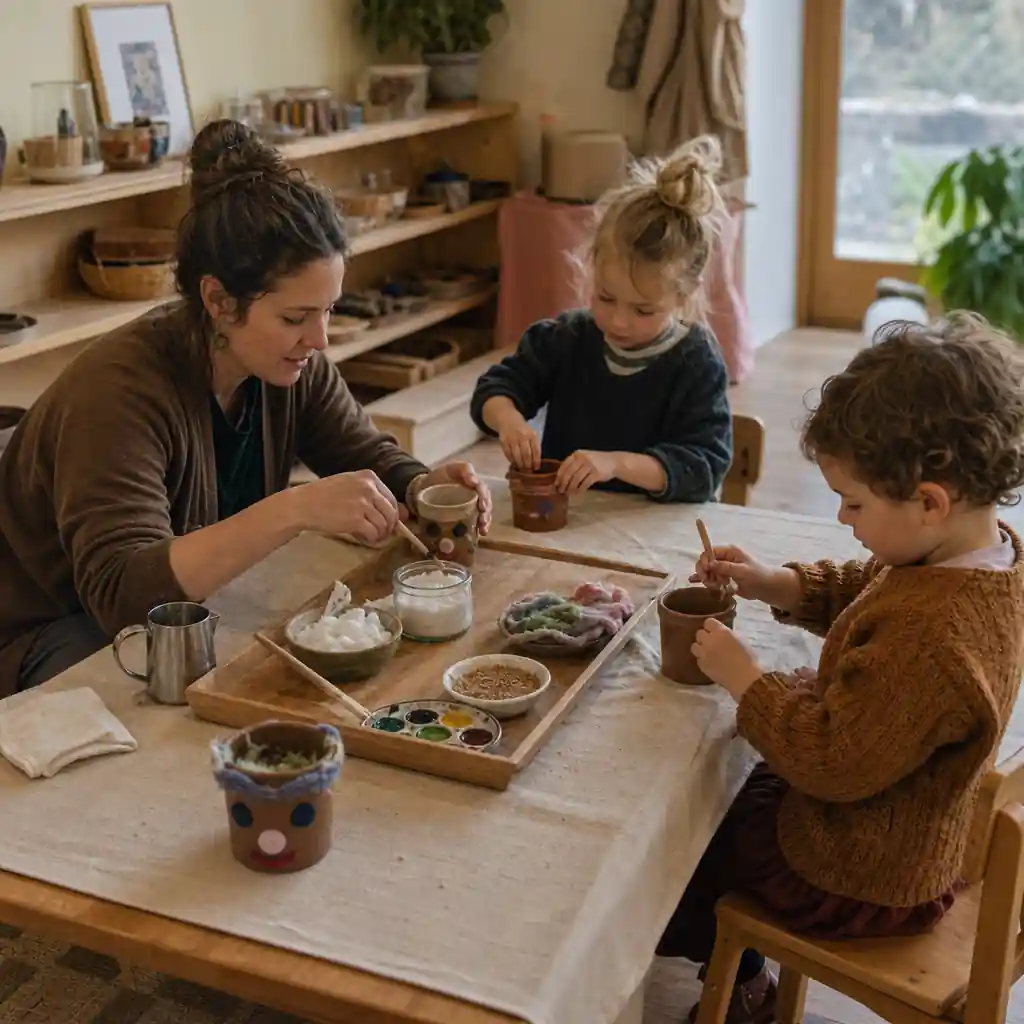
A calm table is defined with a neutral cotton cloth and a wooden tray to contain the work. Each child has a small unglazed clay pot; materials are limited to a ceramic dish of homemade starch paste, a few wooden spatulas, soft wool yarn and small cotton fabric pieces for features, and a small dish of natural watercolour paint with two sable brushes. Cotton wool (or carded cotton) and cress seeds sit in separate ceramic bowls, with a small metal jug for water and a folded cotton cloth for spills at the edge.
The adult demonstrates quietly: brushing a little paste, placing one or two wool or fabric pieces, settling cotton into the pot, moistening it, and sprinkling a pinch of seeds, then sets the pot on a lighted shelf. The child chooses materials and repeats the movements at their own pace, returning to add or adjust pieces and to pour a small amount of water with steady hands. Language stays minimal and practical; the rhythm remains consistent—lay cloth, work, water, place, tidy—and the child revisits daily to care and observe.